



Hello fellow strange pilgrims, today’s short story is a fairy-tale full of splendor and violence as well as a historical fantasy and a feminist fable. I remember first reading it and then immediately wanting to re-read it from the top out-loud. The musical cadence throughout the piece might just lull you into thinking this is a feel-good story, and I mean it is…but not in the way you might think!



Mother of the Beast
The beast was her gift, an ugly thing given to pay for a pretty thing taken—to bed, to brood, to Italy. While her husband gave his mistress everything she was denied, Queen Catherine threw pitted plums through cage bars and watched the beast devour them, his beard slick with sweet juice. While her husband the king consulted his mistress on affairs of state, knowledge no doubt acquired at the cocks of previous consorts, Catherine the Queen commissioned portraits of the beast. She sent them to her relatives. See the fruits of your machinations. Though my husband has not given me a child, he has given me a beast.
I am Pavel of the Far Isles, the beast said. Please let me go.
Queen Catherine laughed, and flicked an apricot through the bars. Well Pavel of the Far Isles. I am Catherine of Italy, and see what that has gotten me.
For the first year following the beast’s arrival, noblemen and women pressed velvet pouches swollen with coin into Catherine’s plump palm just for a chance to see the beast, to speak to him, to paint him, to touch him. For more coin, Catherine left them alone with the beast. For a young man such as Pavel, pig-snouted and covered in hair, any attention was a gift, the only rational response, gratitude. To be a prized possession of the powerful is a privilege people would pay for. Though Pavel had not.
But the year passed, and with it, the beast’s novelty. Queen Catherine saved the plums for herself, plugged her ears with putty at night to drown out the snorts and sniffles that emanated from the cage. They said her husband had started a war, that his mistress walked amongst the soldiers, protected by the new bulge of her belly. Queen Catherine tossed in her goosedown bed, the beast on the flagstones at its foot. Queen Catherine dreamt of bellies and babies and beasts and beauty, and when she awoke, she knew what she would do next.
Wife of the Beast
The peasant girl Catherine trekked to the palace from the town. When she arrived, her muslin skirt was muddled with mud, hairline honeyed with sweat. In a long line of better-dressed hopefuls, the Queen pointed at Catherine and said, “That one.”
Catherine curtsied, and in hoisting her skirt, she revealed still muddier shoes.
“Clean her up,” said the Queen.
Catherine stood naked in a gleaming copper tub. The Queen’s hard-faced attendants scrubbed scrolls of skin loose with horsehair bristles. But Catherine didn’t mind the pain. She was transfixed by the room, by the sumptuous surfaces that beckoned in velvet, brocade, and silk. She felt she was inside a jewelry box, the kind she’d only seen in shop windows.
Once she was clean, the attendants rubbed her pink with thick, warm towels.
Legs crossed, clutching her nascent breasts, Catherine asked, “When will my family receive their money?”
But the attendant only shrugged. When she left the room, a key clunked in the lock.
Catherine stood in the center of the room until the attendant returned, water plunking in fat droplets from the tips of her hair. She worried a scabbed, red welt at the base of her neck.
The door opened again to a cloud of shimmering white. All that was visible of the attendant was her hand, hoisting the dress by its high collar.
As Catherine stepped into the dress, she asked, “When will I meet him?”
The attendant chuckled. “Sooner than you’d like.” She sucked her teeth and clicked her tongue. “Sooner than you’d like,” she repeated, cinching the dress tight as a vice.
Mother of the Beast
The common girl resembled her husband’s mistress in the same way all pretty girls resemble each other. The same pert noses and breasts. The same wide, surprised eyes. The same heart-shaped lips. The same placid skin, marked only by the occasional girlish flush of blood to their cheeks, a reminder of their physicality, of the pink that lay just beneath the surface of their skin. Queen Catherine snapped her fan open in front of her face.
The girl leaned forward as she walked down the aisle of the great hall, bobbing slightly with the effort required to drag her dress. She was weak. That much was clear.
When the girl curtsied, Queen Catherine snapped her fingers. “Bring out the beast.”
The cardinal bent his hatted head in acknowledgement, before disappearing behind the dais. Moments later, two shuffling sets of footsteps approached, but the Queen did not care to see the beast. Him, she had seen plenty. She fixed her eyes on the girl. She wanted to see the moment the pretty face cracked, the moment she saw what her beauty had bought her.
The girl inhaled sharply through her nose, lips pursing in towards her delicate cheekbones. Queen Catherine leaned forward.
The girl exhaled. Her lips blossomed back into a heart, face placid as a reflecting pool. The beast took his place across from her.
Long fronds of black hair swayed from every pore in his face, clipped artfully so his black eyes were visible in their deep sockets. His strange hands, gnarled in a claw-like rictus poked from the embroidered ruffs of his wedding costume. He extended them to the girl. She did not flinch as she took them, as the cardinal bound their hands together with a length of lace, symbolic of their eternal union. She did not shed a tear as the cardinal spoke the words to pronounce them husband and wife.
When the ceremony was concluded, the girl thanked Queen Catherine and said, “The money will be sent to my family today.”
Queen Catherine nodded and waved her away. Unabashed trollop. Concerned only with money. Beauty is no indication of character.
Wife of the Beast
Back in the jewel box of a room, the beast would not look at Catherine. She couldn’t look away from him. He removed his jacket, placed it on the back of a chair. Beneath the billowy white muslin of his tunic, hair was visible, thick as a second shirt. Still not looking at Catherine, he said, “I won’t touch you.”
Catherine said nothing, only sat and unlaced the ribbons of her shoes, pulled the heeled slippers from her feet, and began to massage the arches of her feet.
“I’m sorry,” he said.
“For what?” asked Catherine.
This, at last made him turn around. Beneath the fur, his eyes were glassy, his jaw clenched. “I know this isn’t what you want.”
Catherine turned her back to the beast. “Can you unlace this please? It’s quite painful.”
The beast fumbled his knotty fingers in the corset strings. As he worked the tight knot at the base of Catherine’s spine she spoke again, “I got what I needed. Just not how I expected.”
The knot sprung free, and Catherine peeled the boned cage loose from her chest. She turned to face the beast.
“What is your name?” she asked.
“Pavel,” he said, averting his eyes from the pique of her nipples beneath her undershirt.
“I knew it. I told my sisters you must have a name other than beast.” She sunk onto the edge of the bed, sighing. “Though I warrant I’ll never return to the village to tell them I was right.”
The red welt on Catherine’s neck glimmered with pus.
Mother of the Beast
Despite the beast’s relocation, Queen Catherine had not removed his cage from her chambers. Seated at her writing desk, she stared at it now, the threadbare mattress, spitting feathers on to the flagstones, the bars beside the bed worn shiny with the beast’s nervous ministrations.
“Is she with child yet?” Queen Catherine asked her attendant, who was also the village girl’s attendant.
“No, your highness,” the attendant said, hands full with a full chamberpot. “She’s just bled again the day before last.”
“Take that out, will you,” Queen Catherine responded, snapping at the malodorous pot.
“Yes, your highness.”
Queen Catherine returned to writing her letter to her mother.
The girl will be with child soon. A beast cannot resist such a pretty, young thing for long. What are beasts but men, and men but beasts, after all? I pray my next letter will bring tidings of miniature beast children. They will occupy me as the beast once did, pass the time until my noble husband, the king, returns from war. Perhaps you will visit to see the strange creatures as you did the beast? I miss you—and our home. All my love, Catherine.
Wife of the Beast
The room became their cage. It was bigger than Pavel’s previous cage, and had a better view of the lush fields and distant mountains, but a cage with a window is still a cage. Catherine spent long hours at the window. Pavel knew the difficulty of adjusting to a life of confinement, and so he spent hours speaking stories to her back, telling tales of princesses, dragons, knights, talking frogs, wishing wells, and spinning wheels.
After one story about a maiden who shed the skin of a swan, Catherine turned to Pavel and said, “How is it you know such stories? Are you able to read?”
Pavel shook his huge head, sending the fronds of hair dangling from his face swishing back and forth. “My mother.”
“And did she look like you?”
“No,” said Pavel. “But my father did.”
Catherine nodded. “Does the Queen know this?”
“Unfortunately,” Pavel said. Then, he asked, “And what of your family?”
“What of them,” said Catherine to the bees beneath the window.
“They sent you here,” Pavel said, but his statement was a question.
Catherine turned to face him. “I am one of seven sisters. We raised sheep.”
“Do you miss them?”
“As much as you miss your family,” Catherine nodded. “But we had too many sisters, not enough sheep. Something had to be done.” She shrugged, “I was the oldest.”
“I’m sorry,” said Pavel.
She shook her head. “Nothing is promised.” Her hand jumped to the puckered white scar on her neck. “Who knows? A worse fate might have awaited me.”
“Do you—” Pavel began to ask.
But Catherine interrupted him, “We used to tell stories while we spun the wool to yarn,” she said. “My sisters and I.” She turned back to the window. “So, I’d like to hear another story, please. If you know one.”
And so Pavel resumed speaking, his rumbling, tumbling voice joining the hum of bees outside the window as they pollinated lavender just out of reach.
Mother of the Beast
Queen Catherine could not understand the girl’s barrenness. Surely, the pair had consummated their union. Men could not resist, after all.
She sealed a letter to the King and thought of their wedding night. It had hurt to make him happy. But she had taken pleasure in the pain, pride in the successful fulfillment of her duty. She may never know the ecstasy of men, but she knew a fraction of it when she watched the King’s brow knit in pleasure, lips part and pant in satisfaction—satisfaction with her. Her pleasure, anyways, was in what the pain promised. She would never be king, but she could create her own kingdom from what lay between her legs. A kingdom of love within these castle walls unlike any she had ever known, its only subjects her, her husband, and their children.
She pressed the wax seal to the parchment. Her attendant approached as she wafted the letter in the air, letting the seal set. When it had dried, she placed the envelope in her attendant’s hands.
“See that he gets this,” she said.
And as the attendant’s head bobbed in a curtsy, something flashed in her placid face, something the Queen did not like at all—a swift, sad smile.
The Queen would consider the appropriate punishment for this insubordination later. Now, she had visitors.
Wife of the Beast
Pavel was finishing a story when the attendant opened the door to their bedroom. She never knocked.
“Guests,” she said in that flat-as-a-pan voice so unlike Pavel’s.
As the two followed the attendant from the room, Catherine slipped her hand in Pavel’s. He flinched only slightly before letting his fingers relax around hers.
The attendant did not tell them which guests were visiting or why. It did not matter. These visits always proceeded in more or less the same fashion, varying only in degrees of horror.
Today, it was only a mother and her two daughters. Catherine watched Pavel’s shoulders relax, though he still flinched at the children’s shrieks. Catherine had never asked Pavel about his past. She had not needed to. She knew enough from her time in the village to recognize the prints left by pain.
“Oh my,” the noblewoman exclaimed, pressing her white palm against the crepey wrinkles of her bosom. She lifted a bottle of smelling salts from a gold chain between her breasts and waved them under her nose, repeating the admonishment. Oh my.
Her daughter burst into tears and buried her face in her mother’s skirts, begging her mother to put it away.
The boy ran in circles around them chanting gleefully. Beast. Beast. Beast. Beast.
These noble people were so wearily predictable, Catherine thought. Pavel, at least, was singular.
Back in their room, when the attendant closed the door, Catherine did not release Pavel’s hand.
She brought her other hand to the thick fur on his cheek. He flinched away.
“It’s what she wants,” Pavel said. “Little beasts.”
“I know,” Catherine said, stroking his face. “But it’s what I want too.”
She moved in closer, but paused, her pillowy lips inches from his furred ones. “I don’t want to be like her,” she whispered.
“You’re not,” Pavel said.
“You want this?” she asked.
And Pavel kissed her.
Mother of the Beast
Queen Catherine watched the peasant girl writhe on the bed. She was shrieking for Pavel, but though it was a beast’s birth, there were still standards of decorum to uphold. Men were not permitted in the delivery room. The King had not been there, after all, when the Queen delivered her first child, or her second, or her third. He had been visiting foreign dignitaries. And hunting. She did not know where he had been for the fourth, and final, stillbirth, but it was soon after that he sent Queen Catherine the beast.
The attendants’ hands probed amidst the blood and excrement to extract, first a head, and then a body, and then tiny, flailing legs. The girl shrieked and heaved and gasped like a cow, like a beast herself. But then the attendant wiped the baby with a towel, and Queen Catherine had eyes only for it.
She took the beast as the girl reached for it. It was everything she hoped for—covered tip to tail in thick fur, but with the same bland beauty as its mother. A pink gem of a monster in miniature. A truly singular creature, one lords and ladies would travel far and wide to see. Even the King, she thought, might be compelled by such a temptation. Or, perhaps, her family?
Wife of the Beast
Bella, named for Catherine’s mother, was barely a month old when Queen Catherine opened the family’s room for public viewing. Noble friends from far and wide visited to see, as Queen Catherine called her, “The Incredible Miniature Monster.”
Catherine was forced to nurse the baby while onlookers peered at her child’s furry face. The Queen advised them to observe the flare of the nostrils, a tell-tale sign of a developing snout. She pointed out the size of Bella’s ears, turned out in the manner of an elephant from India. The knuckles! The curl of the lips! A bump on the backside! Could it be a tail?
And Catherine remained silent throughout it all, clutching Bella, as if her arms could shield her child from the onslaught.
Mother of the Beast
When the child was six months old, Queen Catherine received a visitation request from another Queen, the wife of a King of a neighboring kingdom. Queen Catherine accepted happily. The miniature monster’s fame was growing, to garner such a visitor. Soon, she thought, her husband the King would visit. Or her mother.
Queen Catherine ensured the creature was dressed in the embroidered blue velvet of her house, displayed in a hand-woven bassinet, frocked with lace. The mother of the beast lurked like a swollen shadow. Childbirth had not treated her well. Everything about her seemed to spread and sag—her features, her breasts, her hips. With her lips turned down in a sullen frown, she completed the picture of the bestial little family.
The visiting Queen tittered appreciatively when she saw the three of them arranged so in the room. It was a gruesomely satisfying tableau, one which Queen Catherine knew would supply months of anecdotes for her visitor.
But, the visiting Queen wanted more.
After a few rotations around the bassinet, stalked by the sulking shamble of the beast’s mother, the visiting Queen turned to Queen Catherine.
I would like to buy the little beast, she said. How much?
The neck of the beast’s mother snapped at this statement, eyes fixing fast on Queen Catherine’s. Queen Catherine was surprised, but not displeased. The peasant girl was already with child again. The attendant had informed her. Clearly, the couple could not control their animal instincts. A little market of beasts. It would make the castle a compelling attraction. Important people may come from far and wide if they know they could not only behold a beast, but have one for themselves.
That could be arranged, Queen Catherine said. Let us retire to the parlor to discuss specifics.
A low growl escaped Pavel’s lips. The visiting Queen hitched her skirts like a shield, stepping back from his bared teeth with a simpering disgust.
After all this time, I thought he was domesticated, she hissed at Queen Catherine.
Oh he is, the Queen assured her, shooting a chastising glance at Pavel. She did not want him to disrupt this potential deal.
Well, said the visiting Queen, releasing her skirts, and relaxing somewhat. If you’re sure. I’d have to know they could be domesticated, you see. She pointed at the baby. If I’m going to have that one around my children.
The baby’s furry paw protruded from the bassinet, reaching for its mother. It let out a tiny, strangled cry, like the mewling of a cat.
Wife of the Beast
It wasn’t Pavel that leapt at the Queen then. It was Catherine. There are beasts that are born and beasts that are made. Beasts beget beasts. Beasts birth beasts. But Catherine thought of none of this as she leapt towards the Queen, vaulting over her baby’s bassinet. Claws clamped on corset until they found purchase. Teeth sunk into skin. The white, fluttering flesh of the Queen’s neck, one of the last beautiful bits left of her, was shaken loose from the red wet of her esophagus.
Catherine’s head snapped back and forth, blood flying from her lips, spattering the squealing noblewoman who ran from the room, arms over her head, red speckling the pale pink of her gown. Queen Catherine fell, and Catherine fell on top of her, the two Catherines tangled upon the floor in a pool of blood that spread inexorably. Catherine stared at the growing puddle, head cocked, contemplating how this small wound might soon touch everything.
Mother of the Beast
And as Queen Catherine died, upon the floor where she’d once caged the beast, her lips spread in a small smile. Maybe this would be enough to bring her husband home. Or, at the very least, her mother. It had been so long since she had seen either of them. Since she was a girl, really. Not much older than Catherine. They would come soon. She smiled at the thought. Blood bubbled up her throat to line the spaces between her teeth before dripping like drool from her yawning jowls.
Wife of the Beast
Pavel brought Bella to her as she spit a scrap of skin to the stone. She took Bella in one arm, shielding her blooming belly with the other. In months, this second child would cleave her open. She wasn’t afraid. Life was demarcated by cleavings—from innocence, from family, from children. But not yet, not yet. Pavel hugged her, Bella, and her belly safe between their bodies. For now, for now.

Tell us your origin story as a writer. When did you begin? What first drew you to writing as an instrument for asking questions that can’t be explored any other way?
Caroline Beuley: I came to writing because I have always love reading more than almost anything else. As a child I especially loved reading fantasy. I loved the magical worlds, and I loved how the words on the page worked their own kind of magic to conjure them. I had a very sad period in my life where I got lost in the wild woods of the corporate world and stopped writing, but even then I was always reading. Eventually, reading brought me back to writing. I've been writing consistently for the last six years, and it's been absolutely amazing. I think writing is the closest thing to real magic—the way simple words, when said in the right order, make a whole world.

What does your writing routine look like? Do you thrive in structure or wildness? And when you begin a piece of writing, what tends to announce itself first: a voice, an image, an unease, a philosophical conundrum?
CB: I am obsessed with structure, deadlines, and to-do lists. I map out my week every Sunday night to make sure I have time to get my work done for my job, write two pieces for my Substack, and make progress on my novel. Occasionally, there is time for a short story, and it's always amazing when that happens. When I’m writing a story, I find that the concept usually comes first. For “Two Catherines,” for example, I read a piece on Substack about how “Beauty and the Beast” was based on a real genetic condition that causes hair growth everywhere. I knew I wanted to tell the story of someone with that condition. As I wrote, it became “Two Catherines.”
Most artists are preoccupied by certain obsessions: lust, longing, death, the self. What persistent preoccupation—emotional, intellectual, or spiritual—threads through your work? Are there motifs, themes, or impulses you’ve tried to abandon but that keep returning, insisting on their relevance?
CB: Shit is hard for women. I would say that is the theme/message that weaves itself into my writing even when I don't mean for it to. It feels more important to write about now than ever, and it seems I just can’t resist its pull!
If not a writer, who would you be?
CB: Something in fashion! After writing, fashion and styling is my favorite way to be creative.
What’s the best piece of writing advice you’ve ever received? Alternatively/additionally, what’s something you’d like to offer as advice to emerging writers trying to make a mark?
CB: The factor that will most determine whether you make it as a writer is not innate ability but rather your ability to keep writing after rejection. If you don’t let rejection stop you and you keep writing eventually you will be a published writer. My professor and mentor, Jason Mott, told me that. I think about it at least once a day. It’s so simple, but also so hard. You just have to keep writing.
What are you working on now and how is it trying to ruin your life (in a good, necessary way, of course)?
CB: I am working on Hunted, a young adult fantasy novel inspired by fairy tales (very on brand). I described the concept to my friend and she said it sounded like “a much more violent Shrek,” which is now my favorite way to describe it. Basically, all the magical fairy tale beasts and creatures have been rounded up by humans and banished beyond a wall. The protagonist is competing to become a Huntsman, the elite force that patrols the wall. But as the novel progresses, the boundaries between good and evil, magic and humanity become much more blurry. I hope the novel will, in it’s final form, say something about who is allowed to live where, how we treat difference, and how magic cannot be conveniently divorced from the people who possess it. I’m really excited about it, but I’m on my fourth draft, so I’m also very ready to be done with it.
Who are the artists—writers, filmmakers, thinkers, internet oddities—that have shaped your sense of narrative? How have they rearranged the way you see the world on the page?
CB: George Saunders’ craft book A Swim in the Pond in the Rain forever impacted the way I wrote short stories. Kelly Link and Karen Russell’s wildly imaginative short stories have really pushed me to be more weird and creative in my writing. I have always really admired Carmen Maria Machado’s ability to write a brilliant, engaging, story that floors you at the end with a resonant message about our world, so I always aspire to do the same in my writing. And, of course, fairy tales are probably my greatest and most impactful source of inspiration. I love to draw on the fairy tale aesthetic and imbue my writing with the magic, wildness, darkness, and bravery that are so emblematic of the fairy tale tradition.
Please recommend a piece of art (a painting, a film, an album, anything that's not a piece of creative writing, really) that you love and would like everyone to experience.
CB: My favorite movie this year was Strange Darling because of its creative structure and unique approach to storytelling. It’s a thriller told in six chapters, but the chapters aren’t presented in order, and its’ amazing to see how the chosen order and structure changes everything.

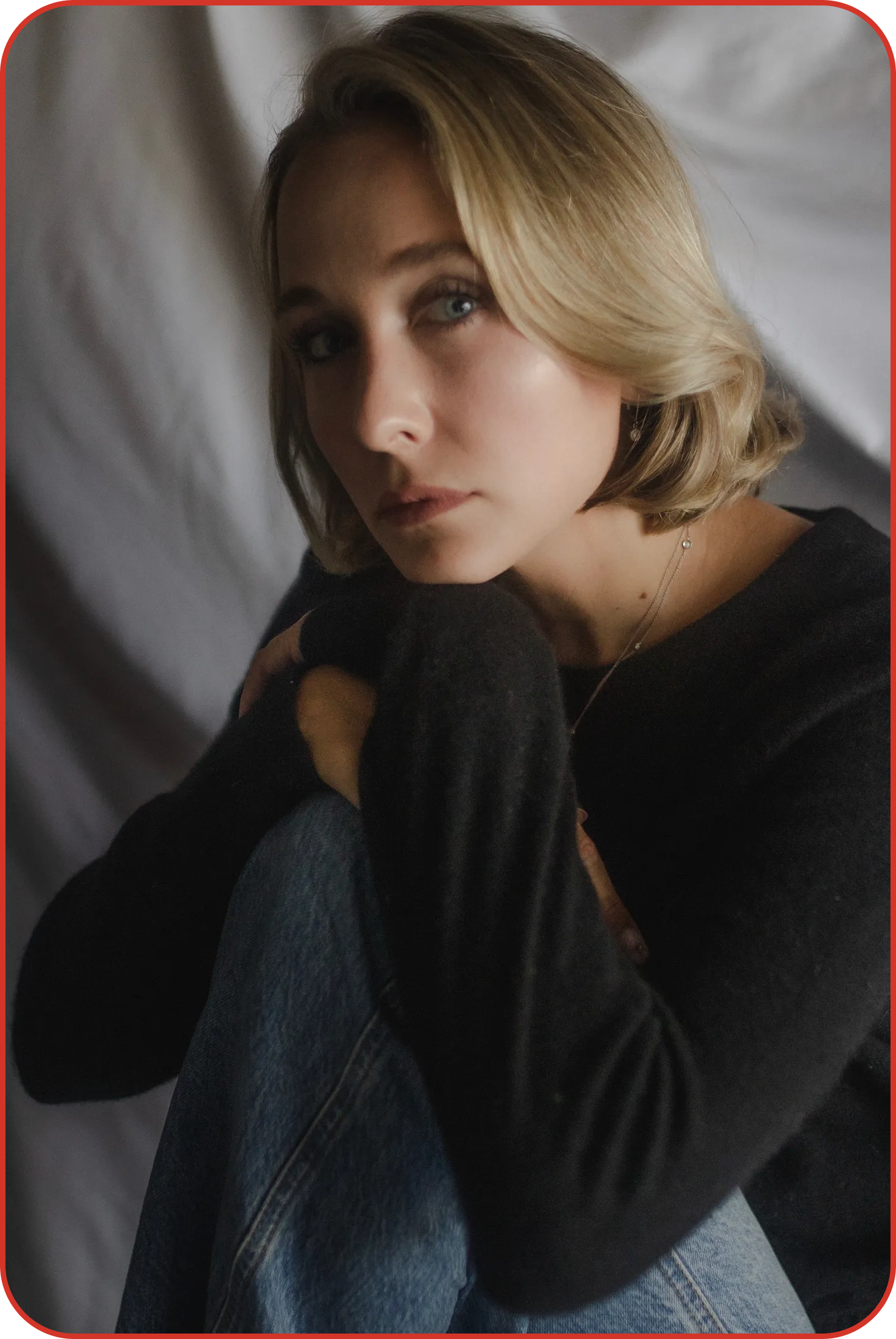
CAROLINE BEULEY is an alumni of the Breadloaf Writers’ Conference and is pursuing a Fiction Writing MFA at UNCW. Her writing has been nominated for Wigleaf's Top 50 and Best of the Net. She is at work on a story collection and YA fantasy novel. She is co-editing an anthology, Between Our Legs, forthcoming from University of Iowa Press Fall 2026.
Notes on Art
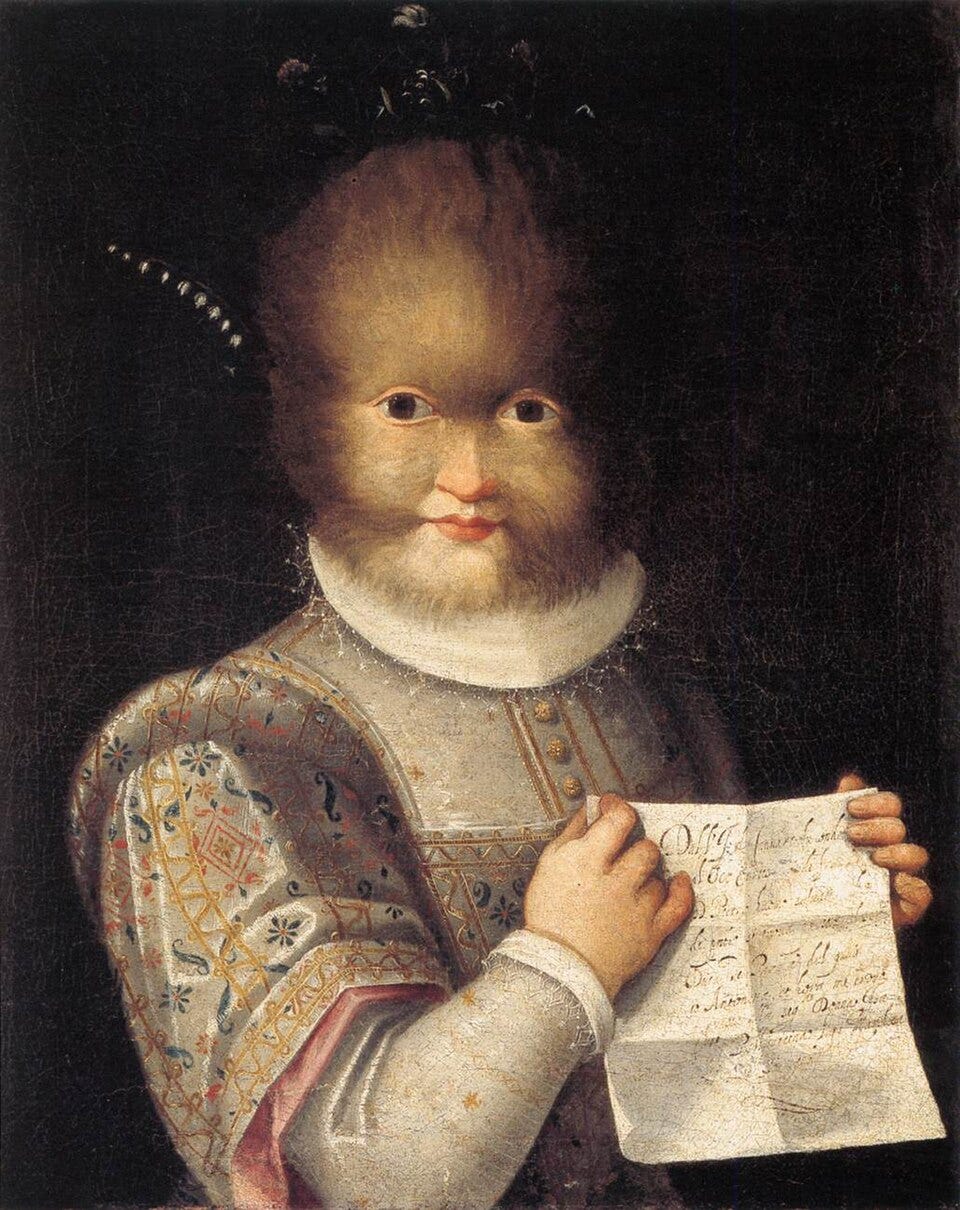
Lavinia Fontana’s portrait of Antonietta Gonsalvus (c. 1595) is a painting1 of the daughter of Petrus Gonsalvus, a man with hypertrichosis who was kept at the French court of Henry II and Catherine de' Medici. Antonietta is maybe six years old in the portrait, dressed in the brocade and lace of nobility, holding a letter that explains what she is.
Fontana was one of the first professional women painters in Europe, and there’s something in the care of her gaze that resists the voyeurism the portrait was commissioned to satisfy. She painted the child…as a child. The letter in Antonietta’s hand, though, tells you someone else decided what the painting was for. “Two Catherines” lives in the gap between those two impulses — the human gaze and the transactional one — and asks what happens when a woman caged by one system turns the key on someone else.

Image: The Portrait of Antonietta Gonzales by Lavinia Fontana. Used for editorial commentary purposes only. All rights reserved.
Thank you Shannan and Karan for believing in my story and being the best editors!! I have loved working with y'all on this one <3
I love Caroline’s work and this might be one of my fav short stories from her!!! I loved it from start to finish, as Pavel and Catherine try to survive in their way the cruel machinations of the Queen (who is herself extremely troubled by her beastly inclinations). The narrative voice reminds me of Angela Carter, but Caroline has honed her style so much that it is strictly her own, into what I call “literary fairytailism”, with characters motivations, personality, and moral codes shown rather than told, and all accompanied by by lavish descriptions. The story wouldn’t be complete without the questions it raises, however, and I love that it makes us wonder what can make us beastly, and what Beasts exist in each of us (Pavel’s external appearance, of course, but also the Queen’s resentment, Catherine’s impulse to act, etc). One of the beastlier characters in the whole of the story is, of course, the King, as his neglect and cruelty of his wife serves as catalyst and framing of the entire story, and how individual actions often do affect entire stories and populations. The glimmer of hope comes with Pavel and Catherine and their growing family, and what each of them will do to protect each other against a beastly world. Just magic!!!