



Hello fellow strange pilgrims, it is the day before our new theme is announced for August’s micro challenge, so I hope you’ve been sharpening your internal and external pencils (did that sound weird…probably, but oh well!). To help bring about some charming inspiration, do spend time with Lucy’s brilliant short story today, the seventh (!!) short story we’ve published in our Substack-y pages. Ever grateful for your readership.




When the bellies of Thread women swell with children, the women must not step outside. Threads can sense the young and will strangle the embryo from within. After all, Threads give people here life—not food or water or sunlight, but rather the energy of microscopic waves pulsing in the atmosphere. So when you start formulating an organism without the consent of Threads, they self-correct for the unsanctioned heartbeats. Stepping outside while pregnant is a death sentence.
At least, this is what Saya’s mother tells her the moment Saya’s monthly bleeds stop. But what can you do indoors besides sweeping the floors, wiping already dust-free cabinets and countertops, and picking at the bowl of dried, fermented fish strips rotting in a clay bowl? She’d go crazy if not from the aimless roaming in this limited surface area, then from her mother’s insistence that she eat yet another bowl of plain sardine gruel. Perhaps it was a mistake—to live with her mother, to let her womb fill unnaturally, to defy the Threads. She has already carved seven scratch marks into her room’s walls out of sheer frustration, a beast trying to claw free of these confines. Then just take this stupid thing in my belly, Saya wishes to the Threads silently.
“You aren’t thinking about going outside, are you?” Her mother asks again. Saya looks away, her breath fogging the window as she presses her forehead against the cold glass.
“Never,” Saya says solemnly. She drapes a blanket over her stomach, covering the slightest bump that becomes visible only after she’s eaten all her meals for the day.
“It’s dangerous out there, for both you and the baby. Threads are hostile to those with wills of their own.”
“Then why even bother to have a will?” Saya is willing to sacrifice this “will” to go outside.
“It’s an honorable duty to have a child,” her mother lectures. “You’ll only know true happiness once you see this delivery to its conclusion.”
“Could it also be will if I will myself to go outside?”
“It’s dangerous,” her mother repeats. “The Threads will seep into you and rewire your innards. The baby will die. And don’t assume that you’d be spared from the damage.”
“The thing inside me is growing just fine. At this rate, I’ll die sooner from the mental stress you’re creating than anything else.”
Thread women are built delicately and meticulously—one wrong wiring and you end up with a deformed mass of organs left to decompose in the forests. Most come from the confluence of Threads into one functional, complex system. A rare few unnatural ones, like Saya, come from mothers. In fact, she’s not sure why the Threads never attacked her when she roamed outdoors, since her existence too defied their instruction. Saya’s mother never explained much, operating more on anecdotes from dubious sources than true experience. Saya suspects her death is imminent anyway. None of those born from women rather than Threads survive long enough to birth their own. And if they do, the later children are even shorter-lived. Like little squares of frayed silk waiting to dissolve back into the atmosphere.
“I won’t go outside,” Saya reassures her mother who prepares to leave the house with a bag of fish bones. The bones sell for a decent price since they can be cooked down to collagen and fed to livestock in cubes.
Saya waits several minutes before her mother disappears around the corner. She ties a scarf around her neck, buttons her jacket to her throat, holds her hands to her stomach for several seconds, and then steps outside.
Women have lived here for a long time, so long that no one remembers who is the eldest or who has been reabsorbed. Most forget Threads exist in their daily lives. But if you quiet your heartbeat, close your eyes, and listen carefully, you can sense them moving like strands of wind, weaving between your goosebumps and humming quietly. In a sense, it’s more harmonious to exist outdoors than indoors, the way a plant bends toward sunlight.
Freedom is more than worth the death of the organism in Saya’s womb. She hasn’t even taken three steps away from the house and already feels some semblance of living again. Her mother should know better than to keep her cooped up. Saya has been a wild thing since young. “Thing,” not “girl.” She’d roll around the swamps in a thin sundress and pick bayberries alongside the Forbidden Pond, guarded by dense layers of Threads that she always felt buoyed her forward more than they dragged her down. Threads are life forces. They fuel her so she can spend hours digging up wild mushrooms, foraging odd flowers, and following ant trails. As a child, she’d stay out until the sun disappeared, relying solely on Threads guiding the way. If you pay attention, you can read them. But only if they want to be read.
Saya escapes to the Forbidden Pond, which is really only forbidden because people fear the Threads as much as they revere them.
“A pond of too much desire and greed,” others call it.
Silly. There’s nothing greedy about Threads unless Saya were to say that the desire to live is greedy. How is that greedy when she never had a choice?
She bends her head near the calm water surface and sips. The water tastes more like nectar than water. It feels like eons have passed since she hydrated with anything but gruel, and since she tasted anything sweeter than rice she’d hoard in her mouth so the starches would break down to sugar.
“If I could have this forever, I’d give you this baby for free,” Saya declares to the open air, knowing no one can hear. Threads don’t respond to wishes anyway. They operate beyond her level of understanding—gods who don’t speak the same language. Saya rubs her abdomen, pressing over the harder part of her stomach. She had thought she’d be soft and plush like a cloud, not dense and springy like an overfilled milk sac.
“There’s no softness to bringing a child into this world,” her mother would say. “It’s a testament to your endurance.”
The unborn child’s father had wished Saya would become softer. But he’s out of the picture now: Thread men don’t associate with pregnant Thread women, taboo creatures bound to hasten ends to their long-lasting lifespans. But he had been a good man. He would’ve stayed with Saya had the elders not pushed him away and her mother not siphoned her into the house under the guise of protection. He would’ve loved her unnatural, dense, cramping abdomen bump once it grew large enough to distend past her breasts. At least, so she imagines. She can’t quite remember his face anymore. Individuality is unimportant among Thread people. They all come from and return to the same source. After staying in the house for so long, the only face Saya remembers is her mother’s, and even that grows fuzzy now that she leans over the lake, watching ripples shake her reflection.
But Saya possesses common sense and self-restraint. She hurries home well before her mother finishes bargaining off the fish bones. Her mother can spend hours arguing and tiring her opponent into submission. By the time her mother returns, Saya is sitting by the window, sipping a new mug of hot water, her body an immovable accessory attached to the wall.
“Five bags of lily buds in exchange for those bones!” Her mother declares triumphantly as she steps inside. She stops suddenly and scans the house as though detecting an imbalance in the atmosphere. She takes three large strides toward Saya and immediately clasps Saya’s stomach.
Saya jumps and slaps her mother away.
“I need to make sure my grandchild is alive!” Her mother demands. “Something is wrong here. Why are there more than trace Threads indoors?”
“The thing is alive. Don’t be paranoid,” Saya replies while shielding her torso away. “What can you sense anyway? It’s not like you can hear a heartbeat from outside my stomach.”
“A mother’s intuition. A sense you still lack,” her mother tsks. “Now let me listen or else I’ll have to call several Aunties to hold you down.”
“Not necessary. I know it’s alive. I have this…mother’s intuition.” Saya is just saying whatever will get her mother to stop pulling at her arms. “Mother’s intuition” probably doesn’t even exist. It’s certainly not something the Threads would design into their systems. Like how childbirth was something they came up with all on their own, deviations from their origins.
Her mother swipes at her arm again, scratching Saya’s eyelid in the process. Saya’s hands fly to her eye to nurse the sting. Her mother immediately swoops down to press an ear to Saya’s stomach. Even though her mother’s ear rests on Saya’s stomach for only a second before Saya knocks her mother to the ground, her mother shrieks. A long, shrill sound that resembles nothing Saya has ever heard before.
“Dead!” Her mother despairs. “The baby is dead and gone. A life clipped short, before it even had a chance to prosper. It’s gone. There’s nothing we can do to get it back. Gone gone gone.”
As her mother’s moans fill the house, Saya can’t help but feel a tiny bit of relief. So she can step outside now without her mother freaking out? She can eat the wild mulberries and bayberries without hearing about poisoning the baby into delirium? It’s a blessing. The Threads must be on her side.
Her mother kneels on the ground, swaying back and forth. “What can we do if you don’t give birth to a child? What is there left to do? Is there anything? Anything at all?” She murmurs. “In the end, must we still bend to the will of the Threads?”
Yes, Saya is certain that the will of the Threads is definitively better than the will of her mother. Saya approaches her mother slowly and crouches next to her like taming a wild cat.
“I’m ok,” Saya soothes. “The Threads will claim an unnatural existence like me sooner or later. I’m sure this unborn child wouldn’t have lived long anyway.” Her mother ignores her and starts hitting the ground with her fists in staggered gestures.
“You would’ve lived! Your child would’ve lived. I’d make sure of it. But all that surrounds me is now death.”
What death? Proper Thread people live so long Saya might as well describe it as infinite. Not that she is a proper Thread woman.
“I can make you another one,” Saya promises even though she desperately does not want to make another one. But the immediate task: stop her mother from bloodying her hand and brushing her knees.
“Can you?” Her mother asks blearily. “It’s a lot, you know. One is an honorable undertaking. Two…no one has done two before. That gets dangerously close to playing god.”
You should’ve thought about that before you decided to have me, Saya thinks. “I’ll get you some fresh water from the springs. That’ll help. You’ve gone too long without submerging yourself with Threads.” Her mother, at least, is a proper Thread woman despite engaging in taboo acts. Submersion in Threads should help her regain her sanity.
She rushes out of the house, not sure if her mother has registered her words or disappearance. Likely not. Her mother acts like Saya is already dead, a ghost carrying a once living womb. Although now, Saya is just a ghost with a ghost womb.
Saya carries a bottle with her to fill up at the pond. As much as her mother hates living according to the whims of Threads, she is still a Thread woman. A creature who needs revitalization outdoors more than Saya and her body of blasphemous origins do. Saya still loves the forbidden pond—the way it nurtures with a warmth and calm of the whole land supporting you.
“Please let my mother recover quickly. Let her stop dreaming of a grandchild. Let her forget that one once lived long enough to be heard from within my stomach. Let her think I’m dead,” Saya asks of the Threads as she places the unsealed bottle at the pond’s edge and watches the water fill. Even in the bottle, the water glistens clear.
The Threads seem to beckon her forth. Saya holds the full bottle to her chest as she wades through the waters. The bottom of the pond drops steeply, more than she imagined from such a light blue-green-colored surface. The water level rises suddenly from her ankles to her waist, but the sudden submersion into the cold hardly bothers her. Rather, Saya feels buoyed, a sensation so contrary to the denseness in her torso and heaviness of her limbs that she’d argue this is as close to flying as she can get.
Saya has never thought she was empty: not after her womb emptied, and not because she lacked the Thread’s blessings. But now, sinking into the water with each step, she decides there must’ve been a lurking emptiness within her, else where does this feeling of fullness come from?
“Are you accepting me?” Saya asks. Was her child deemed an adequate sacrifice in exchange for welcoming Saya into the Threads’ governance of the natural world? Maybe this is what her mother should’ve done instead of birthing Saya. Maybe her mother would’ve been happier. Without the delusion that she had to deliver Saya.
“She’ll be upset if you decide to cut my thread now though,” Saya laughs, though the sound rings hollow. Her mother would simply become like all the other Thread women sane enough not to get pregnant, letting their undying existences stretch until neither past nor future existed anymore.
Thread women embrace nature as an extension of their bodies. They roam naked at dawn and dusk, and braid thin grass blades into their hair during the day, only for those blades to shake loose to the ground, surrendering the rest of the day to braiding and re-braiding. Might as well be straw instead of human, her mother would scoff. Saya doesn’t remember a single moment when her mother wore braids. Her hair always hung loose and freely, without even a sprinkling of jasmine flowers, an accessory so easy to adorn that even the most careless Thread women would still cover their heads in petals.
Saya likes to braid her hair, but only because the loose strands get in her face and mouth when she eats. She has tried to learn to weave grass into her locks, but the grass would always fall out the moment she released her fingers. Properly braided hair should retain at least one blade of grass by the end of the day. But Saya has never been a proper Thread woman.
This is the deepest and furthest she’s ever gone, but she knows better than to roam too deep. It is said the pond is where Threads circulate life, which sounds fine and invigorating, but you can’t underestimate an entity with neither a sense of self-restraint nor fair exchange. She brushes a hand against her abdomen. If you lose a life, you should be able to gain life, right? Saya tightens the cap on the bottle and begins wading out of the pond, back to her mother kneeling on the floor, hair sprawled over wood planks like undone yarn. Saya would rather get this bottle of water to her first.

1.
Tell us your origin story as a writer. When did you begin? What first drew you to writing as an instrument for asking questions that can’t be explored any other way?
LUCY ZHANG: I’ve been a writer since at least middle school. I’ve always been a fan of stories in any form: novels, anime, manga, word-of-mouth. I like the written form above all else because it 1) has the capacity for imagination (in a way that visual forms mostly supplement) 2) allows the creator plenty of time to pause and examine avenues of expression 3) connects with people without the burden of physical socialization, an introvert’s nightmare.

2.
What does your writing routine look like? Do you thrive in structure or wildness? And when you begin a piece of writing, what tends to announce itself first: a voice, an image, an unease, a philosophical conundrum?
LZ: I usually start with a voice or image. Rarely do I know what I’m trying to tackle thematically or philosophically from the get-go. But that part comes naturally when the characters I create end up paving paths down more complex roads of conflict.
I suppose I prefer “wildness” over “structure,” especially for short stories. However, I’ve found that I need some structure when writing novels, else I create a dumpster fire that is incredibly difficult to revise.
3.
Most artists are preoccupied by certain obsessions: lust, longing, death, the self. What persistent preoccupation—emotional, intellectual, or spiritual—threads through your work? Are there motifs, themes, or impulses you’ve tried to abandon but that keep returning, insisting on their relevance?
LZ: Isolation, family, motherhood, coming-of-age, and the desperation that comes with the aforementioned things.
I have long since come to terms that I will always be writing about these themes until I die. What’s there to abandon? It’s part of who I am as a writer :)
4.
If not a writer, who would you be?
LZ: The same me, minus the writer part (aka the anime fan and engineer). Maybe I would dabble more in the illustrative arts. Who knows!
5.
What’s the best piece of writing advice you’ve ever received? Alternatively/additionally, what’s something you’d like to offer as advice to emerging writers trying to make a mark?
LZ: “This is jaw-breakingly bad” —my English professor on a piece of fiction I submitted.
It was a fantastic slap-in-the-face to me. I learned I had pretty tough skin early on. I was able to take that feedback (with no actual constructive substance) and somehow, improve my writing significantly. All I knew was it was “bad.” The rest was up to me to find out. I liked the challenge.
At a broader level, that was probably the last most traumatic thing anyone has said to me. Since then, I’ve had little regard for higher authorities in all aspects of my life.
6.
What are you working on now and how is it trying to ruin your life (in a good, necessary way, of course)?
LZ: I was working on a fourth novel manuscript, but must now return to revising the third novel since it needs a lot of work. I continue to put it off by writing short stories. Procrastination finds its ways.
I am also working on my day job work (the work-work) as well as raising an infant (the real work).
I guess all of these things are ruining my life in a good, necessary way.
7.
Who are the artists—writers, filmmakers, thinkers, internet oddities—that have shaped your sense of narrative? How have they rearranged the way you see the world on the page?
LZ: “No Longer Human” by Osamu Dazai
“Frieren: Beyond Journey’s End” (the anime)
“March Comes in Like a Lion” (the anime)
I can’t say these “rearranged” the way I see the world, but they definitely left a lasting impact on me. I revisit all of them every few years.
8.
Please recommend a piece of art (a painting, a film, an album, anything that’s not a piece of creative writing, really) that you love and would like everyone to experience.
LZ: It will only take ~6 minutes of your time to watch/listen to “Shelter” by Porter Robinson & Madeon :)
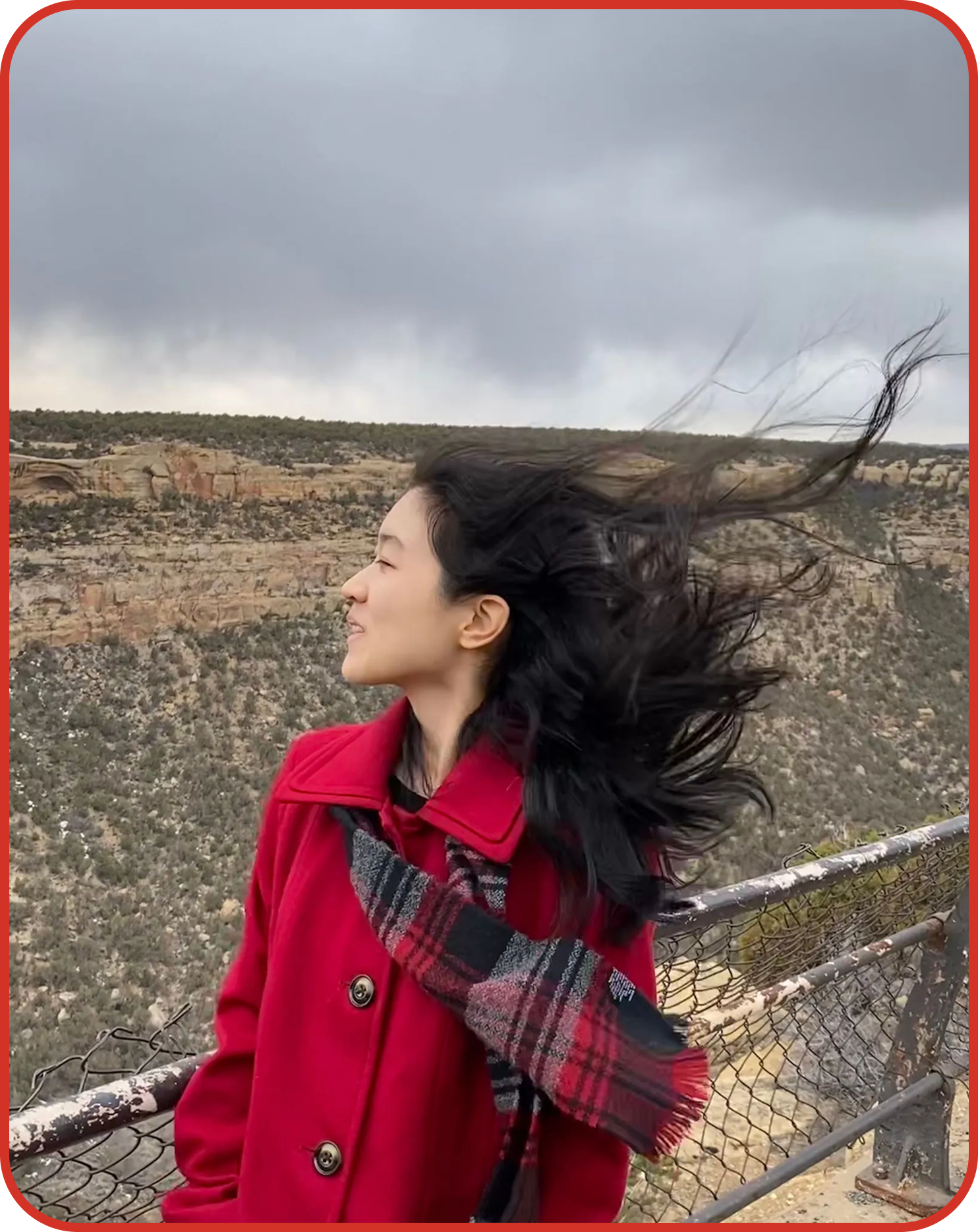
LUCY ZHANG writes, codes, and watches anime. Her work has appeared in Virginia Quarterly Review, Shenandoah, The Massachusetts Review, and elsewhere.
Notes on Art
We’ve paired this piece with Ithell Colquhoun’s Scylla (1938)1. I must say I feel slightly ashamed that I didn’t know this existed before I started digging through differnet arts archives to find the perfect pairing for Lucy’s story. But I’m so happy that I now know! The title evokes the myth of Scylla, a sea monster from Homer’s Odyssey as well as Ovid’s Metamorphoses. Emma Jones in this lovely essay writes:
In a letter from 1977, Colquhoun writes that Scylla was borne out of ‘what I could see of myself in the bath’. She saw cliffs and a channel, a homeric myth, but also the potential to cause destruction. It is that boat I keep returning to, so small against the cliffs and attempting its futile passage. According to Colquhoun’s ex-husband, Toni del Renzio, the work is part of a series of paintings inspired by an affair she had with a fisherman while on holiday in Corsica.
Image: Scylla © Ithell Colquhoun (1938). Used for editorial commentary purposes only. All rights reserved.
Love this. Really wanted to know more about this world, although I enjoyed the hints dropped in. It also feels very topical, as the desire to control new mothers is seemingly universal
delicious read