



Hello fellow strange pilgrims, today’s essay may well be the opening pages of a play or a novel or an enticing heady surreal Apple TV series or a short story collection, but indeed it an essay in its intended iteration. I love this about creative nonfiction specifically, it is so malleable in the ways it can take shape and influence us, indeed reshape right before our eyes as we read. I think more of us, especially if we’re fiction writers, should try our hand at CNF. And if you already write it, then see if you can “weird” it a little, and then a little more.


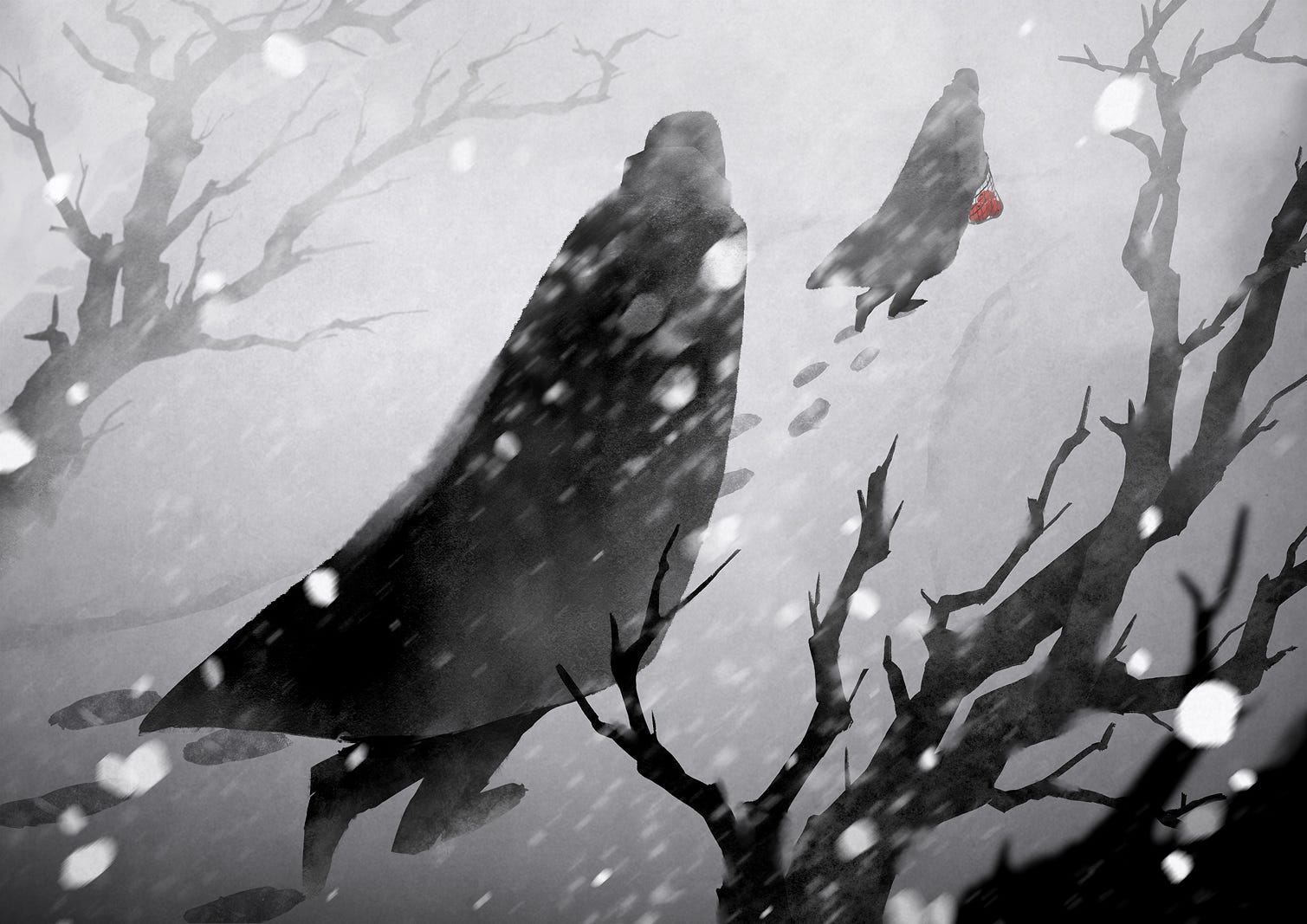
I saw him again. At the new bookstore on Slavyanska St. Prizewinner! I wanted to shout. It’s me!
It was the fifth time in the last two weeks that we have seen each other. Well, that I’ve seen him. I’m pretty sure he has never seen me.
I was all alone and a bit further away from the neighborhood where I usually run into him. I convinced myself I needed to get out of the house and go walk or something. I am here in Sofia for five months on a scholarship to teach and write poetry.
But so far, I haven’t taught much and haven’t written much poetry. Or at least not any poetry that I like. Not because of lack of effort. I sit here every day feeling like a complete failure and wonder why anyone would have given me a scholarship.
Before the Prizewinner became a prizewinning novelist, he was a poet. In fact, the first thing I ever read by him were his poems. I’d go as far as to say that I actually prefer his poetry. It is the kind I like, clear and straightforward with a little humor while his novels can be complex, overly full of references to mythology and history.
I wrote a novel once. I wrote three actually. The first two were practice. The third one was published on a small press and it came out during the pandemic. Nobody read it. Okay, a few people did. My friends, mostly. But not even all of them. Some lied and said they read it but didn’t. I spent years of my life on it. I think it turned out okay. Maybe I’ll write another one if poetry fails me. Why not write a second novel for nobody to read?
At the bookstore, the Prizewinner wore his long black coat that looked exactly like the one I was wearing. But that’s the only thing similar about us. Although my wife Diliana says I kind of look like him. I don’t really see the resemblance. Does he have a wife?
It was still cold in Sofia even though it was April. It snowed only a few days before. As someone from LA, the first few months of snow charmed me, but I was ready for change. Diliana, who grew up here and had just left to go back to LA after visiting for ten days, said this was unusual weather for April.
Of course he’s at the bookstore, I texted her when I saw him.

When she was here, Diliana had been the first to notice him in the neighborhood. He was seated at this dessert place on Ivan Asen St., a place I pass by every day, usually on my way to the Tokyo bar across the street, where I drink beer and stare at my phone. I saw a man and woman sitting at a table and the woman eating a dessert, some kind of mascarpone cake I was admiring, when Diliana nudged me. And that’s when I saw the Prizewinner sitting with the woman.
The second time, he was walking down the street with a bag of oranges. Of course he was. Just like a prizewinner to be healthy, I later joked, as I opened a second bottle of wine in the kitchen. That night, Diliana’s sister was over, staying with us for a few days, and we were all sitting around my dining room table, having a laugh. Mostly they were making fun of my attempts to speak their language. The one bedroom apartment I rented for five months felt full. And crowded. At the time, I remember thinking it felt chaotic to have two other people in my little sanctuary. After all, how was I supposed to get any work done?
I admit, I’d gotten used to my solitude, which isn’t to say I hadn’t missed my wife. For almost two months, I’d existed entirely in my head. I missed her, of course, but I also needed to write. We joked that she arrived like an “agent of chaos” upsetting the orderly universe I’d created. Then she invited her sister to join us for four days. I could have gone to one of the many cafes in this city or to my temporary office at the university, but I didn’t. Instead, I used it as an excuse not to do anything.
The next time we saw him, I’d been joking with Diliana as we walked down the street, “So where are we going to see the Prizewinner today?” and the minute I said it, swear to the International Booker Prize committee, we turned and looked inside a café and he was standing in line for a coffee. It was a new place in the neighborhood. It’s called Stories. Of course it is.
At that point, I became convinced maybe the Prizewinner was stalking me. There’s no reason I shouldn’t talk to him, Diliana suggested. “You should just come here and hang out until he shows up.” “And say what? Hi, I don’t know you, but I’m a writer too.” A normal person might, she says. An annoying person might also.
I did go into Stories once. A misunderstanding led them to charge me extra for the espresso in my cappuccino which, last time I checked, I’m pretty sure comes with cappuccino. The guy asked me what kind of espresso I wanted and I had no preference and didn’t realize he was asking if I wanted an extra shot of espresso. Just to appease him, I chose one from Mexico, maybe out of some kind of homesickness for LA. At first, I thought maybe there was confusion because of the language barrier, but later realized the whole exchange had been in English.
Next time, the Prizewinner was coming out of a market, again on the same street, Diliana was still here and he looked straight at us and made a face, not sure what kind of face exactly, the face of recognition, the face of disappointment, the face of why are these nonimportant people looking at me? Worse, he no doubt wasn’t thinking any of that stuff. He was probably thinking about the next prizewinning novel he was going to write or about that time he met the pope which he’d recently posted about on Facebook.
Ten days went fast.
Diliana’s visit had come to an end and she had an early departure to Frankfurt where she’d catch her flight to LA. We took a cab to the airport at 4 in the morning. Coming back, I’d decided to wait it out in the terminal until the subway opened at 5:26 am to be exact. It wasn’t that I was too cheap to take a cab, it’s that it can sometimes be a little intimidating trying to explain to the driver in a foreign language exactly where I live. And it can also be that sometimes taxi drivers try to rip you off.
By 4:55, Diliana was already through security and I had 31 minutes to go so I waited in the airport café. I ordered a dulgo kafe which is a long coffee, but which is still short as opposed to the normale kafe, which is the regular and even shorter. I watched as families came in to Terminal 2, some traveling together, some saying goodbye to individual members just like I had done to Diliana, waving as she ascended the escalator then disappeared. It was strange given that I was here in her hometown waving goodbye as she flew back to my hometown. It felt equally strange when she’d dropped me off at LAX to come to Sofia.
Outside the airport, smokers all huddled in the cold getting in a last dose of nicotine before they checked in for their flights. Maybe I needed a cigarette. I used to smoke. I made the mistake of quitting last year. Maybe I can’t write well because I’m not smoking. They say that nicotine stimulates the brain, even as it ruins the lungs. Which did I care about more? But the Prizewinner didn’t smoke. All the times we’d seen him, he’d never had a cigarette. Surprisingly, I’d made it two months here without one, which is kind of a miracle in a country that consumes the largest amount of tobacco in Europe. My friend Ninko, who is translating my first book of poems to be published in Bulgaria, handrolls his own smokes and sent me a picture of a tobacco chunk formed into a heart and said, “For all my friends who smoke.” I said I will always have a tobacco heart but that I hadn’t smoked since I got here. “That explains why I am smoking for two,” he wrote.
As I waited at the airport café with still 28 minutes to go. I read the display with all the departing destinations: London, Frankfurt, Warsaw, Tel Aviv, Doha, Belgrade. Maybe I should get out of here and go somewhere. But wait, am I not already somewhere else?
On the subway home, it was freezing. I got on about five minutes before departure. Others had boarded. I sat across from an elderly woman wearing a mask next to who I presumed was her middle-aged daughter, snuggled together with their suitcases in front of them. Along the way, the car filled with workers heading to the city center to pick up trash or drive buses or work at the grocery store or on a construction site or at the hospital. Real jobs unlike what I was doing, flopping around the city pretending I was a writer.
At Orlov Most, my stop, I exited then walked through the April snow down my street at 6 in the morning, the only one out. When I got to my apartment, it was dark and empty. Now that Diliana had been here, her absence was prevalent. The solitude I thought I’d missed was replaced by dread and loneliness.
The writing life is a lonely life, says the Prizewinner.
Somedays I don’t even open my mouth to speak to anyone. But not only writers are lonely. A lot of lives are lonely. A lot of people come home to dark and empty apartments. It doesn’t take a prizewinner to figure that out. It’s not like writers are special. The crane operating life can be a lonely life. The flight attendant life. Scanning items as a clerk at a grocery store can be a lonely life. Emptying bedpans at a hospital. Driving a taxi. Most lives are lonely lives in one way or another. In fact, the writer at least has the advantage of filling up a lonely life by writing. But I was a fool. I wasn’t a writer. An imposter. I had people in my life who loved me. Look at all this time I was wasting by being away from them. For what?
The new bookstore is named Umberto & Co, a play on Umberto Eco. They even have a full statue of the author. The Prizewinner likes him, I’m sure, as he was standing in front of the statue taking a picture of it. I also took a picture right after the Prizewinner; maybe I should have taken a picture of the Prizewinner taking a picture of the other prizewinner.
This time he was with a woman and younger girl, maybe his wife, maybe his daughter, maybe a friend, maybe his publisher, maybe his agent, I don’t know anything about his personal life. I care as little about the details of an author’s life as I do his awards. Honestly, I even hate that I noticed him at all. Not once, not twice, but five times. Even though it became a funny joke between Diliana and me. What is it we want from another writer outside of their words? Some kind of assurance? Some kind of company? You feel a connection, of course, because you’ve lounged on the sofa of their imagination for days, even weeks. Sometimes through many books. Maybe I was just looking for a familiar face.
As I left the bookstore, the Prizewinner was at the checkout buying books and smiling and charming all the clerks. I don’t know what he said because despite the classes I’ve taken, I still can’t speak the language, which makes it kind of funny I was there in the first place, since I can’t read any of the books. But I had nothing else to do. If I were the Prizewinner, who obviously not only speaks the language but is a master at it, I’d feel pressured to buy something at the new bookstore too even if there was nothing I wanted. There must be something annoying about being a prizewinner. The prizewinner’s life is a lonely life too in a different way. Everywhere you go, the feeling you have to perform. People who you don’t know, like me, either hate you with jealousy or think they know you and already come with preconceived notions about you. Even when you’re just buying a coffee. Though one of the nice things and maybe one of the curses about being a writer, even the prizewinning ones, is that outside of a small circle most people don’t know who you are, much less read your books.
But nobody was more anonymous than me at that moment. Just a random stranger in a foreign country. I didn’t feel any pressure to buy or be anything. In fact, it would have been embarrassing to buy a book in a language when I couldn’t even understand the person ringing me up. So I left.
That was two weeks ago. As for the Prizewinner, I haven’t seen him since. Maybe he’s traveling, accepting another award in some far off place, or hunkered down writing the next prizewinning book. Maybe he’s left town like everyone else to visit family for the Easter holiday. As for me, with nowhere to go and no family here, I plan to take a walk around the empty city. The weather is changing and it’s getting warmer now, at least.

1.
Tell us your origin story as a writer. When did you begin? What first drew you to writing as an instrument for asking questions that can’t be explored any other way?
CLINT MARGRAVE: The first stories I remember writing were when I was five years old. Then, at around ten, my father used to bring his electric typewriter home from the office on weekends so I could sit in my room and write. I wrote my first “novel” then, which was really only about forty pages. For a while, as a teenager, I chose music over writing then came back to it in my early twenties. For those years I played guitar in various bands, but it wasn’t enough to express myself only through the strings and a fretboard of a musical instrument. I needed to do it with words.

2.
What does your writing routine look like? Do you thrive in structure or wildness? And when you begin a piece of writing, what tends to announce itself first: a voice, an image, an unease, a philosophical conundrum?
CM: I try to write every morning. I get up early and spend at least some time free writing before I have to get ready for work and confront the day. Maybe I’m inspired by a note I jotted down the day before, maybe an image, or question, or something I read, or that came to me in the middle of the night. I might have nothing and have to jog my memory for an idea. It may or may not turn into something at a later date when I have more time and can go back through my journals and see what I find. Occasionally, a poem, or essay, or story, will just announce itself and demand to be told and come out close on the first try, but it usually takes more effort than that.
3.
Most artists are preoccupied by certain obsessions: lust, longing, death, the self. What persistent preoccupation—emotional, intellectual, or spiritual—threads through your work? Are there motifs, themes, or impulses you’ve tried to abandon but that keep returning, insisting on their relevance?
CM: The old goth in me still seems to be obsessed with death. I don’t think it’s from a desire to be morbid or depressing but more as an existential snort, a way to acknowledge and defy death by remembering to laugh and live and love life. But I’m still always pleased when I write something that doesn’t have to do with death.
4.
If not a writer, who would you be?
CM: If not a writer, I’d be pretty lost. I can’t imagine going through the world and not being able to turn the raw experience of life into some form of art. In my fantasy life outside of being a writer, maybe I’d love to have been a great singer. I imagine how good it must feel to be able to belt out those notes. Maybe that would still involve words. Or maybe I’d take up something like painting. I’ve never been good at visual art and have always been in awe of those who are.
5.
What’s the best piece of writing advice you’ve ever received? Alternatively/additionally, what’s something you’d like to offer as advice to emerging writers trying to make a mark?
CM: I’ve always appreciated the epitaph on Bukowski’s grave that says, “Don’t Try” as good writing advice. Get out of your own way. Don’t try to write “literature.” Just write what you’d want to read yourself. There really are no rules except maybe try to enjoy yourself. As for advice to emerging writers, maybe I’d echo such advice by saying “don’t try to make your mark.” You have to have more than good writing skills. You have to have style and personality and something to say. Don’t be boring! Don’t worry about being a “good literary citizen.” Don’t spend your life thinking about publishing or making connections or being famous or winning awards. Don’t waste all your money at AWP and entering contests. Go out and see the world, make some mistakes, “do the wrong thing” as Irving Layton used to tell Leonard Cohen.
6.
What are you working on now and how is it trying to ruin your life (in a good, necessary way, of course)?
CM: Mostly poems and a few essays. Many of which have to do with my time abroad as depicted in “The Prizewinner.”
7.
Who are the artists—writers, filmmakers, thinkers, internet oddities—that have shaped your sense of narrative? How have they rearranged the way you see the world on the page?
CM: There are so many.
Adam Zagajewski, Wislawa Szymborska, Gerald Locklin, Tony Hoagland, Charles Bukowski, Charles Baudelaire, Charles Simic, Fernando Pessoa, Fyodor Dostoevsky, Albert Camus, James Baldwin, Jean Paul Sartre, Simone de Beauvoir, John Fante, Leonard Cohen, Michel Houellebecq, Carson McCullers, Ernest Hemingway, Paul Auster, Raymond Carver, Ralph Ellison, Carl Sagan, Borges, Karl Knausgaard, Oscar Wilde, Christopher Hitchens, Thomas Bernhard, Egon Schiele, Lucien Freud, Otto Dix, Remedios Varo, Van Gogh, Emil Stoychev, Godard, Lars Von Trier, and many more.
Not to mention late seventies British punk and post punk which had a huge influence on my attitude about art in general.
8.
Please recommend a piece of art (a painting, a film, an album, anything that’s not a piece of creative writing, really) that you love and would like everyone to experience.
CM: Listen to the album Strange Times by The Chameleons.
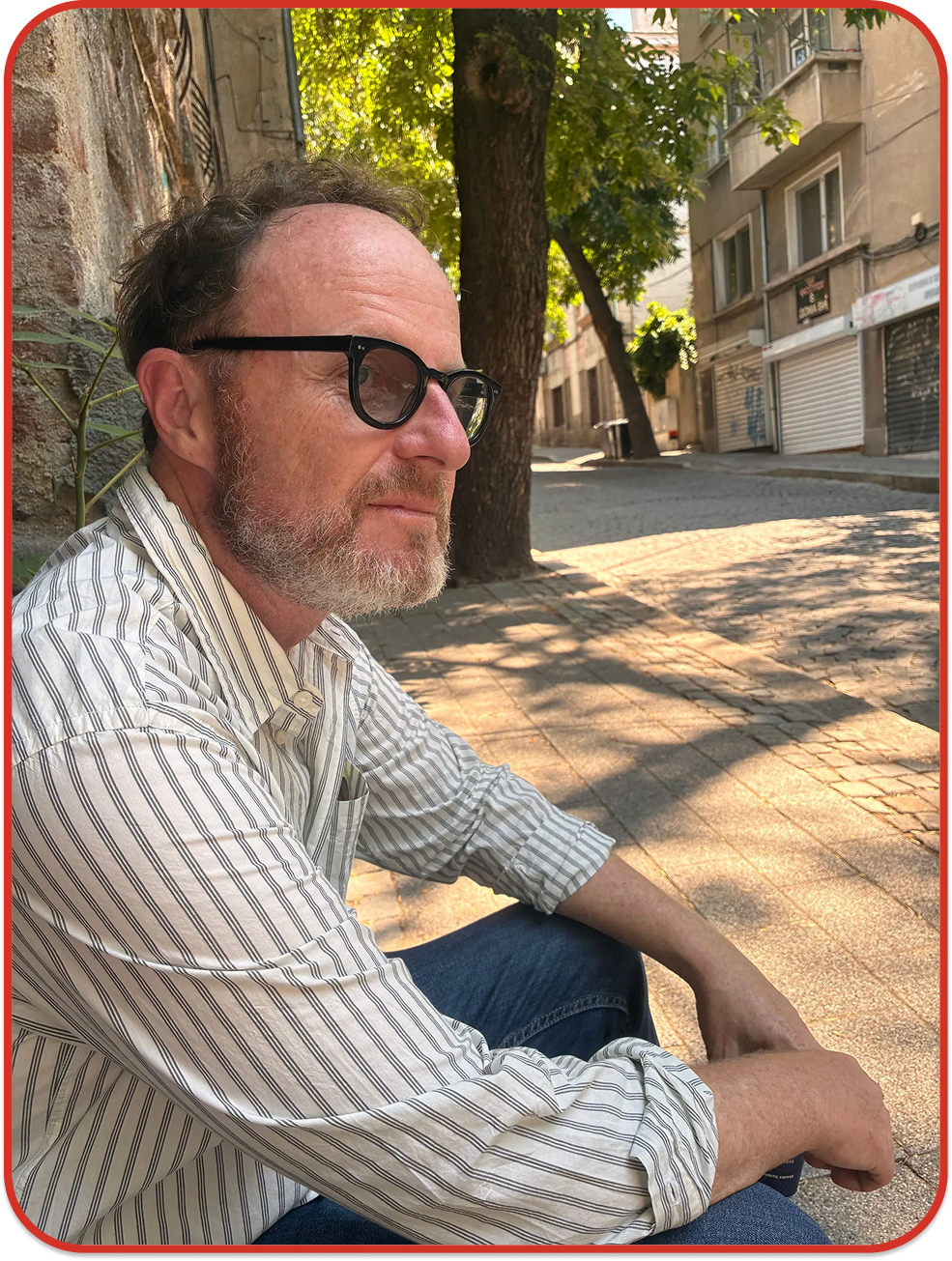
CLINT MARGRAVE is the author of the poetry collections Salute the Wreckage, The Early Death of Men, and most recently, Visitor, all from NYQ Books. His work has appeared in The Threepenny Review, The Sun, Rattle, and Los Angeles Review of Books, among others. In 2024-2025, he served as a Fulbright U.S. Scholar to Bulgaria, living in Sofia, and teaching creative writing at Sofia University.

This essay feels so beautifully, humorously human. "The second time, he was walking down the street with a bag of oranges. Of course he was. Just like a prizewinner to be healthy, I later joked, as I opened a second bottle of wine in the kitchen."
I loved this bc it was unpretentious and the struggle was so internal. I don’t read writing like this a lot. Unique and as a writer we compare ourselves which gets in our way and I saw all of this.
Beautiful