



Hello fellow strange pilgrims, today’s flash fiction is meditative as it is mysterious. Take a coffee/tea/smoke/fake smoke break and sit down with for a few moments. I’m positive you’ll be as charmed as I was.


One requirement for the job of keeper at the Last Bird Eggs exhibit is being good with children. I have enough grandkids to not be bothered by a horde of urchins storming the museum but none patter through my halls. Kids pile instead into the VR rooms, where Maite whisks them off to the Flying Raptors Simulator.
Yet Maite doesn’t get a single adult. All of them come to me, to see the real things, the last bird eggs left on Earth.
I stay out of the way, leave the patrons be. They mill in timidly, the way people must have stepped into church once. There are no birds in our skies anymore, except the metal ones they used to call “drones” and now call “birds” because the word became available. You can learn about the real birds from fairy tales and the people who’ve seen them, although many, myself included, have begun to wonder: did we ever really see those birds or did our minds conjure them up?
The eggs here are our last reminder. I stand by as visitors walk past the polished glass displays, staring wistfully at the pale blue egg of the jackdaw, the glossy pinks and purples of the tinamous, the milky-white oval of the Alpine swift.
Dead things, I mutter to myself because it’s easy to forget what you’re really looking at. Before you know it, you’re seeing phantoms ready to lure you into believing again.
Today, a girl of six or seven wanders in. Tiny sparrow of a child, birdie bones showing through translucent skin. She marches up to the guillemot’s case, looks at the green cone of the shell and smacks her tiny fists onto the display.
I hobble over on my weak, arthritic legs as the child crashes her whole body against the impenetrable glass. I take her balled hands into my big leathered paws. Her knuckles are red, raw, angry. The child looks at me and I see guilt in those wide eyes. Defiance, too.
“Is this where the birds come from?” she asks.
“It is, indeed. Are you in search of a bird?”
She eyes me suspiciously. “Maybe.”
I give her a thoughtful nod. “Perhaps I could be of help? I know where every bird is, here.”
The girl considers. “It’s that big”—she throws her hands out—“and grey, and it has black on the wings.”
“Well, let’s see. Could it be a her—”
“It killed my brother Kevin, who was my big brother and the bird killed him with those sharp claws and now I’m… I’m gonna…”
She’s shaking and for the first time in my twenty years here, I do not know what to do. I’m just a sack of old bones and a heart that’s cracked in one too many places. A deep fissure opens up inside me and starts seeping, and I’ll need to sew it back quickly because my boy is not coming back and it was so long ago anyway and I thought drones were under stricter regulation now and this child, right here, needs me.
But she’s not a sparrow I can scoop up in my palms and shield from the world.
“I’m sorry, young lady,” I say, uselessly, with the little voice I have left. “I’m afraid you won’t find that fellow here. My birds are not that kind of bird.”
Slowly, the child lifts her head and I can see, through the soft mist of tears, a glint. “What kind are your birds?”
I might not be good for much but I have stories to last me a lifetime—and this child is starved for a good tale. So I give her my favorite, one I heard as a little devil myself and return to whenever hope leaches out of me. It’s the story of how the cosmic eggs birthed the world and it goes like this:
Once when there was nothing but primordial waters, a little duck flew over the dark currents looking for a place to nest. The Mother of the Waters raised a leg above the white-tipped waves and the duck swooped down, laying four eggs, three golden and one iron. Just as they were about to hatch into four ducklings, the Mother of the Waters twitched her leg and the eggs whisked down it and shattered into the waves. There, they mingled, their shells sweeping into the sky and the earth, their yolks fusing into the sun, their whites becoming the moon.
When I finish, the girl is quiet. She looks into the glass case she tried to break minutes before, studying the elaborate scrawls inked on the surface of the guillemot’s egg. “Are you waiting for them to hatch? Like the little duck?”
I open my mouth to tell her there’s nothing in those eggs, but the girl’s eyes are so big and bright, as if they see something I don’t. The words dry up in my throat.
“Why yes, indeed,” I say instead. “Would you like to help?”
She nods with the eagerness of a chick pecking at a worm that wiggles from its mama’s beak. My mind’s eye summons the ghost of the guillemot and I tell her about the velvety feathers of its chocolate-brown head. I mime the piping staccato of its calls. The girl leans into the glass display and puts a finger over her mouth: Shhh. She listens—for a beat, a chirp—squinting to catch the tip of a beak poking through.
The lights in the hall have dimmed. The gloom swallows the thin stems the eggs perch upon, so they seem suspended in the air, like so many candles flickering in the dark. And though I should know better, as I behold the last bird eggs on earth, I find myself looking for the cosmic egg among them. I, too, listen for the tiny crack, the tap of a beak on shell, and then: the yolk spilling like a golden river, the feathery white billowing out into a new sky.

1.
Tell us your origin story as a writer. When did you begin? What first drew you to writing as an instrument for asking questions that can’t be explored any other way?
ELITSA DERMENDZHIYSKA: I’ve always loved reading. As a kid, I devoured the children’s classics, but by the time I got out of high school, I was convinced I had nothing of note to say and should probably stick with math. It wasn’t until two years ago, actually, that I began writing. I was part of a team that created a fantasy mental health game and perhaps this provided an impetus and permission to try things out? Or maybe I just got less self-conscious with age and went for it.

2.
What does your writing routine look like? Do you thrive in structure or wildness? And when you begin a piece of writing, what tends to announce itself first: a voice, an image, an unease, a philosophical conundrum?
ED: I write for an hour in the morning and an hour in the afternoon. I don’t count words or set goals: that’d be a surefire way to discourage myself and quit writing. I usually start with an image that springs into my mind – sometimes in ways completely mysterious to me, other times from the mash-up of half-formed snippets I’ve jotted down in my notebook.
Before I start writing, I like to have some rough plan for where the story is going. However, as I proceed, the plan often changes because I’m able to see new connections and possibilities that weren’t available to me at the start.
3.
Most artists are preoccupied by certain obsessions: lust, longing, death, the self. What persistent preoccupation—emotional, intellectual, or spiritual—threads through your work? Are there motifs, themes, or impulses you’ve tried to abandon but that keep returning, insisting on their relevance?
ED: I don’t consciously write with motifs in mind. But looking back over the stories I’ve written, they all explore relationships – mother-child, father-child, siblings, friends, strangers – and how these relationships evolve under strain and changing circumstances.
I also love writing older characters who find new relevance, and I seem to have written a fair amount about death, too.
4.
If not a writer, who would you be?
ED: I’m not primarily a writer, actually. I’ve been an entrepreneur in mental health for the past seven years and it suits my personality. No day is the same. I don’t have set responsibilities. I need to hop between jobs and functions all the time. I love having ideas and being able to try them out without having to go through committees and what not.
5.
What’s the best piece of writing advice you’ve ever received? Alternatively/additionally, what’s something you’d like to offer as advice to emerging writers trying to make a mark?
ED: One piece of advice that has always served me well is to look at the first draft as extruding the material. It’s a crude, ugly process and I just need to get through it so I can have the raw material to shape later. If I find myself stuck on how to describe something during that first draft, I’d often write XXXX or “some description here” and move on. It’s been very liberating.
6.
What are you working on now and how is it trying to ruin your life (in a good, necessary way, of course)?
ED: I just received feedback notes on a story. As I look at them, I feel the usual low-grade dread and wonder if I have what it takes to wade in and make all the necessary changes. As usual, I’m also bewildered about how clear, in hindsight, the issues are and then tell myself that if I was a real writer, I’d have been able to foresee them ahead of time. Of course, that’s never the case, since we’re too close to the material to be able to see it with fresh eyes, but it still bothers me even if I get it intellectually.
7.
Who are the artists—writers, filmmakers, thinkers, internet oddities—that have shaped your sense of narrative? How have they rearranged the way you see the world on the page?
ED: Some of my favorite writers are Michael Cunningham, Daniel Woodrell, and Wallace Stegner. I love the way they can turn a small, ordinary moment into something you can feel viscerally. I also adore the epic scope of Larry McMurtry’s novels and the sheer imagination of Karen Russell’s short stories.
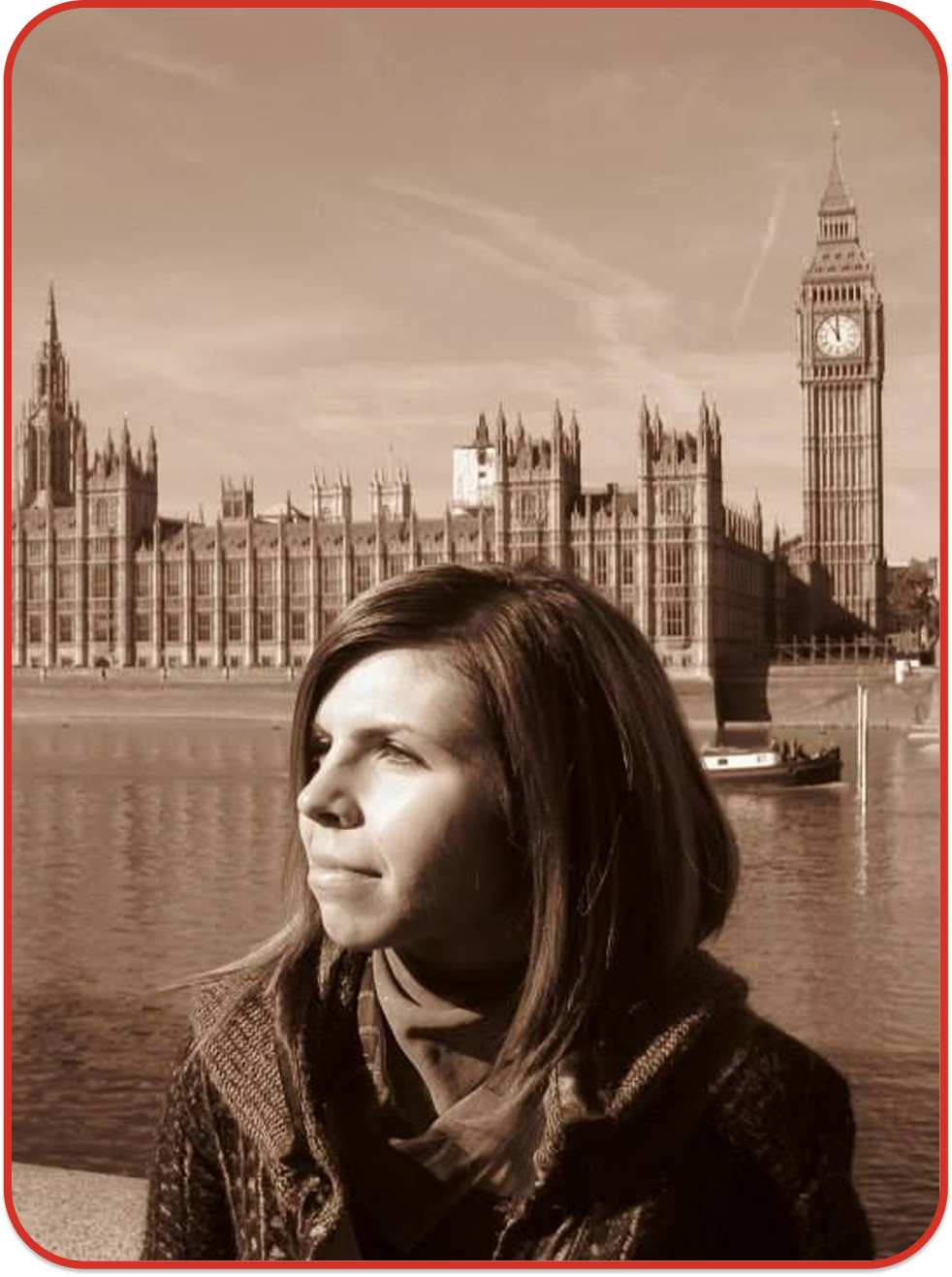
ELITSA DERMENDZHIYSKA is a Bulgarian writer based in Sofia. She’s the co-creator of a mental health game and a former science writer in psychology who has only recently begun to reclaim her imagination. Her work has been nominated for the BSFA awards, and her stories have been published in Flash Fiction Online, Flame Tree Press and Small Wonders Magazine.

Really interesting how the language changes in this story around the definition of the word "bird." Gives just enough world-building context, along with the mention of the "Last Bird Eggs" exhibit, to give room to explore the characters!
the image of her listening for a beak through the glass at the end is going to stay in my head