



Hello fellow strange pilgrims, there’s something special and secret and so exciting brewing behind the scenes over here at our indie lit mag and we can’t wait to share it with you, but you’ll need to wait just a few more days! For now, here’s a heart-stoppingly (no but in the best way) luscious alive essay to help you ride the waves of time.



I told my friend I want to visit Antarctica. She said you love cold places and I said no, I love expanse.
Antarctica, it turns out, was once green. Deep down in the guts of the ice continent, there are deposits of amber, smaller than grains of sand. Amber comes from trees, and not just any trees. Rainforest trees. Antarctica was once a temperate rainforest.
Who was there, is my first thought. Second thought is, I was. This is how people get it into their heads that they’ve been reincarnated. One day a self-aggrandising little thought occurs: I was there. And they can’t undo it. They think, this explains so much. It explains a whole range of desires, the foremost being immortality, but also, in my case, emptiness.
They think: if I was alive then, it explains me now. And now, thankfully, I am relieved of the burden of explaining myself.
From this perspective, then, a belief in reincarnation could be useful. It might finally shut me up. Launch me out of my head and into the world where I belong. Even if it isn’t true.
Especially if it isn’t true.
Or maybe it is true.
I was in Antarctica when it was a rainforest.
I was not in Antarctica when it was a rainforest.
In times like ours, we want to tell the truth. We want to eschew relativism. Relativism has been dragged semi-conscious to its fated end, fucked every way, cut up, reanimated, become evil. No, we want to be able to say: this is wrong, this is true.
We want to say no.
No, you cannot tell two lies and have that make a truth.
No, I don’t need to question myself on matters of evil.
We’re done questioning and want to make a stand.
So the difficulties begin. As an honest person, I can’t help admitting I might be wrong. As a thinking person, I think. The more I think, and the more I say what I think, the more flaky I sound. For example, if pressed: I’m not completely certain if I’m alive on this planet right now, or if I’m dreaming.
Are you?
Go ahead, pretend to be sure. I’ll call you a liar.
Some degree of relativism is necessary for the sake of integrity. Even the question of whether relativism is useful or harmful calls for relativism. And this is what keeps tripping people up and preventing effective opposition to liars, thieves, and killers. No decent person thinks they know the absolute truth.
And yet, look what becomes of us without any kind of institutional truth. Look what happens when we discard history, burn down the library. Look how stupid, what dogs we are.

All that’s to say: under the Antarctic sea, half a mile inside Earth, lie networks of fossilised roots.
Eighty million years ago they were trees, breathing through thick layers of greenest vegetation and sweating beneath a temperate Cretaceous sun. There were copious fauna pattering among the vegetation, scraping up soil and sand with their claws and paws and talons.
If there’s one thing I want to see more than a frozen expanse, it’s an Antarctic rainforest.
Rainforest, then ice continent.
Ice continent, then rainforest.
I long to see the difference for myself.
Where the planet’s plates are concerned, where snowscapes and beachscapes and the formation of mountains and births of elements are concerned, relativism is not either/or. It’s a question of timescale. Even the sun, our constant star, will burn itself out. But the timescale of its burnout is so vast that for us, during our short lives, it’s meaningless. For the whole of our lives, we can count on the truth of the sun. This is how real truth exists inside the relative, and the relative inside the truth.
Despite my reincarnation from a past Antarctic life of stalking tawny southern hares among giant gleaming green southern ferns, I’m ignorant about southside Earth. And yet, its emptiness pursues me like a ghostly aroma, a good-time memory, a reflection of sun on mirror sand.
The fascist tech-bro capital class dreams also of expanse. I would have thought this one thing was true: whatever they are, I am not. I’m broke and I want fewer things (people, tech, cities, buildings, products, developments, ads, offices, ideas, wars, lies). They’re rich and they want more things, more and more. They want to bury me and us in things, and once we’re buried, chain us underground and overland so we can dig. They’ll end by burying dignity and beauty, the only stuff that makes humans worth a damn and which could somehow plausibly redeem our evil history and original sin. They’ll bury it all in endless plastic shit.
And yet, when they and I close our eyes to rest, we all dream of Antarctica.
They dream of how it will melt and they will mine the poles, minerals without end.
I dream of how maybe, one day, I’ll put my foot on its crust.
We’ll both be wearing boots, and we’ll both be hoping for a twin to stand and face us, to hold us like a mother and say welcome, you’re not alone or empty and now, neither am I.
In the South Sandwich Islands, biologists have taken the first ever footage of a glass squid: a squid whose skin is totally clear.
The South Sandwich Islands sit just above the Antarctic Circle. On a map, they look as though the Antarctic Peninsula has continued its outward curve and then looped back west on the way up toward South America, as though rounding the breast of an enormous highway, speeding alone into the blue horizon headed, with an unfathomable depth of disappointment and relief, toward civilisation.
The squid, wholly uncivilised, immodest as it is possible to be, exposes its internality through glass flesh. You can see everything, all the neon insides: organs transparent, or becoming transparent, or translucent white. The squid can control whether it appears transparent or opaque, depending on its goals and needs and, perhaps, its mood.
Glass flesh is not unknown among deep sea creatures, but to see the colossal squid so radically undressed, alive and moving about in its own home, is new for science. All I can think about, as I watch the squid sucking up ocean and pulsing its blue tail and waving its electric orange tentacles underwater, insides fading in and out, is: what trouble might we ourselves avoid if we could see our own insides, if our skin was window upon window rather than field upon field?
When I feel inside myself and feel a squish of red wet organs instead of seemingly endless mind, emotion, and idea, I understand myself quite differently. I understand that it’s absurd to pretend I will live forever, and all the moments I spend trying to live forever are moments of a wasted earthly life.
Recently, during a religious service, I was assailed by an awareness of everyone in the room as animals. It was one of those uncanny fresh moments, as in, everything I thought I knew about who and what I am, who and what everyone and everything else is, seemed to melt away and I was struck as though having just been born or just come awake from a long amnesia with the absurdity of a bunch of animals sitting in a room silently contemplating their being and attempting to feel the energy, undying, which connects everything for all time, and discern its contours. I looked around at the people, my friends and also strangers, imagined and felt my own body, and marvelled at how we had arrived here, human animals seated amid a shared ritual.
And how strange, also, that we all have distinct faces, haircuts, clothing, styles, and personalities. I really did feel insane about it. Personalities. I thought about animals and which animals have distinct faces (elephants, apes) and which ones have distinct personalities (my pet rabbit, RIP, who was unlike anyone else with her bizarre games and codependent sweetness and rude little attitude, hopping in to the fridge every time she heard it open). And I was filled with just this glass squid type consciousness of my own animality, my own meat, inside and out, and my own ability—I could flip a mental switch and see the world anew—to become transparent at will.
In school I took a course on religion and psychoanalysis. My professor was neurotic and kind. A distinct personality. Eventually, a few years after I graduated, or so I’ve heard, the pressure of vying for tenure broke him and he landed in a psychiatric facility. So, I suppose he was teaching his subject with passionate understanding, and that may be why the course has continued to influence me so deeply.
Surveying the subject of religion and psychoanalysis, my doomed professor introduced a class of spiritually-minded millennials (already a death-obsessed breed) to the most 1970s book of all time, second only to Taxi Driver in its perfect crystallisation of the gritty post-hippie era just preceding our own unfortunate corporatist-apocalypse one. The book was The Denial of Death by one Ernest Becker.
The premise of The Denial of Death is simple: everything anyone ever does in life is just about trying to be immortal. We attempt to achieve immortality in the following ways: having families, forming civilisations, practicing religions, falling in love, and also, most especially, constructing a personal identity. So, everything.
I took this thesis to heart and still agree with it, though I would argue that Becker downplays a key piece of the human makeup, which is our deep desire to ruin ourselves.
As a species we are suicidal. Not in the sense of making intricate plans to kill ourselves (we do that too, of course) but in the sense of, perhaps, sitting in the front seat of the front train carriage even though we know those are the seats which guarantee our death in a crash. Not even though—we sit there because we know this.
Three out of seven days a week I don’t care if I live or die.
One day a week I very much want to die.
The other three, the days where I desire to live, and desire it so passionately that it wakes me in the middle of the night, broken out in sweat and tears, praying to a god I half-believe in to please not make the end ever come, it’s those three that cause all my problems, all our problems, social unrest and relationship woes and destruction of nature and egoic behaviour. Or so Ernest Becker claims.
It’s our midnight prayer—the begging for more life, terror of the nothing which breathes in the dark—that enslaves us and causes us to act out. To hurt and to build. To be free, we have to accept death. With acceptance of death comes an end to, or at least a modification of, immortality projects
(that’s what Becker calls them, immortality projects, such as, for example, colonising Mars or mining Greenland or creating an authoritarian superstate or drilling for oil in a national park or withholding contraception from religious followers to build a bigger base of believers to pay the church in future or abusing kids or crow-barring someone’s windshield in a road rage incident or charging predatory interest or murdering everyone in a village in order to steal their homes or hurting a lover on purpose with words)
and the beginning of a search for naked truth.
We wake in the night, afraid of dying, desperate to prolong our existence, praying for it. Then we go beyond this prayer, somehow, and pray instead for dignity. The dignity to face the expanse of nonbeing, even if it doesn’t turn out to be real (of course we hope it’s not real). To accept nothingness as real is to begin to be free.
My point is only that on the way to Antarctica there are colossal squids whose skin is glass, who light themselves from within, and whose faded outlines of organs are visible. If we could see our own organs, we would know ourselves for what we are (vulnerable, temporary animals, meat) and perhaps be satisfied with the fact that we can think and experience and make personalities for ourselves, and not need anything else.
The contrast between what we are materially (meat) and what we are capable of (psychic depth, being moved by beauty so that it changes us, acceptance of change, love) is so shocking, so actually unbelievable, that we should need nothing else other than this fact to satisfy us for our whole lives. To become conscious of it, over and over, is enough for a life. To try and express this consciousness is already a delectable excess.
Nobody needs to order and return five pairs of trousers or look at reels or colonise Mars.
Imagine yourself as a glass squid swimming the near-empty undersea beneath a near-empty continent of pure ice which was, incredibly, for reality changes so constantly and profoundly and isn’t that an insane firework in your heart, once full of green rainforest and teeming with every kind of life, even dinosaurs, maybe even us, maybe even you, and maybe me.
There is something beautiful about civilisation. There’s something beautiful about an ornately decorated doorway, the golden ceiling of a mosque or a cathedral, a martello tower, a lighthouse, a cinema, a cafe, a nighttime city street in 1970s neon rain. But what if we had never made it? What if we had done everything differently, and kindly? What if we had started out by accepting our fate: nonbeing? What would be available to us now, in the way of beauty, in the way of expanse? What sort of civilisation might we have made instead, to what uses might we put our technologies?
Imagine the lands that would still exist. Imagine the animals, the mysteries, the natural fields, the created fields, the extent of the silence, the simplicity of prayer. It’s important to imagine this, now. A different world, where we know good and evil and life and death properly, deeply, where we become adults or, better yet, become as baby children again in wonder and animals in wisdom and wise adults in stillness, stop grasping, become a dignified species worth saving. Become as the glass squid, who knows how to transcend.
Notes
See Robin George Andrews, ‘First ever video shows colossal squid in natural habitat,’ on the National Geographic website (15 April 2025), for a description of the glass squid sighting, with photos and video. Enjoy.
For the full story on Antarctic climate and geological formation since the planet’s inception, and every other thing about Antarctica you might want to know, see David W. H. Walton (ed.), Antarctica: global science from a frozen continent (Cambridge University Press 2013).

Tell us your origin story as a writer. When did you begin? What first drew you to writing as an instrument for asking questions that can’t be explored any other way?
MARIANNE DAIGH: I’ve been writing since childhood — stories, poems, essays, journals. The first story I remember was about a horse. Who knows why. I had no experience of horses. Everything I wrote was too long, including the horse story. The teacher pulled me up for it in front of the whole class. I was 9. The horse story was 11 pages long and the assignment was 2 pages, maybe. This is good, she said, but unnecessary. You didn’t need to do it. So, nothing changes.
I’m not sure if writing explores questions that can’t be explored any other way. Having access to another person's mind in such vivid detail is not a normal life experience, so that’s quite special. Basically it’s the medium I’m using because it’s what I know how to do.

What does your writing routine look like? Do you thrive in structure or wildness? And when you begin a piece of writing, what tends to announce itself first: a voice, an image, an unease, a philosophical conundrum?
MD: Usually a line or image occurs first. For one story, the first line came to me fully formed while chopping vegetables. Often the lines and images are random and pointless, but sometimes there’s a whole piece of work in them. This essay came from a phone conversation with my friend Caitlin and a video my mom sent me of the glass squid. Thanks Mom and Caitlin.
My routine depends on the season. March to October it’s easy to wake up early and write for a couple of hours, then revise or work on side pieces at night. I write best late night and early morning, which is fucked up. Winter is awful for writing. I’m still figuring this out.
Most artists are preoccupied by certain obsessions: lust, longing, death, the self. What persistent preoccupation—emotional, intellectual, or spiritual—threads through your work? Are there motifs, themes, or impulses you’ve tried to abandon but that keep returning, insisting on their relevance?
MD: That’s easy. Religion. I can’t stop writing about the religious dimension. I spent a good portion of my adult life studying theology and writing academic theological essays. I have tried to move on, both in life and in art, to no avail. It constantly insinuates itself. I would say I should just accept it, but maybe the reason it remains interesting is because I keep running away.
The other subject almost all of my work touches on is the natural world. These aren't unrelated. Nature and the divine are the ultimate characters because they're all around us but their mystery is impenetrable.
If not a writer, who would you be?
MD: Filmmaker. If I thought I could access the training or talent, I’d do it now.
What’s the best piece of writing advice you’ve ever received? Alternatively/additionally, what’s something you’d like to offer as advice to emerging writers trying to make a mark?
MD: There’s an Irish writer and podcaster called Blindboy. If you know him you know him — he wears a bag on his head. I’m a fan. He speaks a lot about the artistic process and the importance of having craic with yourself on the page. Craic is an Irish term for fun, hilarity, play. All the other ego shit about writing is not only bad for you, but it also leads to bad art. When you’re having craic with yourself on the page, in a state of flow, that’s when the writing is good and the process is worth it.
What are you working on now and how is it trying to ruin your life (in a good, necessary way, of course)?
MD: Not to jinx it, but I’m working on a book. I’ve been writing creatively in a focused, serious way for about two years now, so I feel ready to tackle a book. Jk, I have no idea what I’m doing. So far it’s good craic.
It is simultaneously improving and ruining my life by forcing me to be more disciplined with time. I also tend to lay in bed at night thinking about how bad it is, which is unpleasant.
Who are the artists—writers, filmmakers, thinkers, internet oddities—that have shaped your sense of narrative? How have they rearranged the way you see the world on the page?
MD: James Baldwin teaches me how to make a sentence. Anne Carson teaches me to tell the truth and that I can, at the end of the day, write however the fuck I want to write. Dostoevsky teaches me that a story is allowed to be thrilling and deep at the same time. James Dickey (my substack is named after one of his poems) teaches me to write about the natural world with love and respect. He's also made me think twice about camping.
Please recommend a piece of art (a painting, a film, an album, anything that's not a piece of creative writing, really) that you love and would like everyone to experience.
MD: Check out the Irish doom folk band Øxn. Their album is called Cyrm. Weirdos who enjoy this essay would probably enjoy the album. They close with a cover of the Scott Walker song Farmer in the City — absolutely gorgeous.

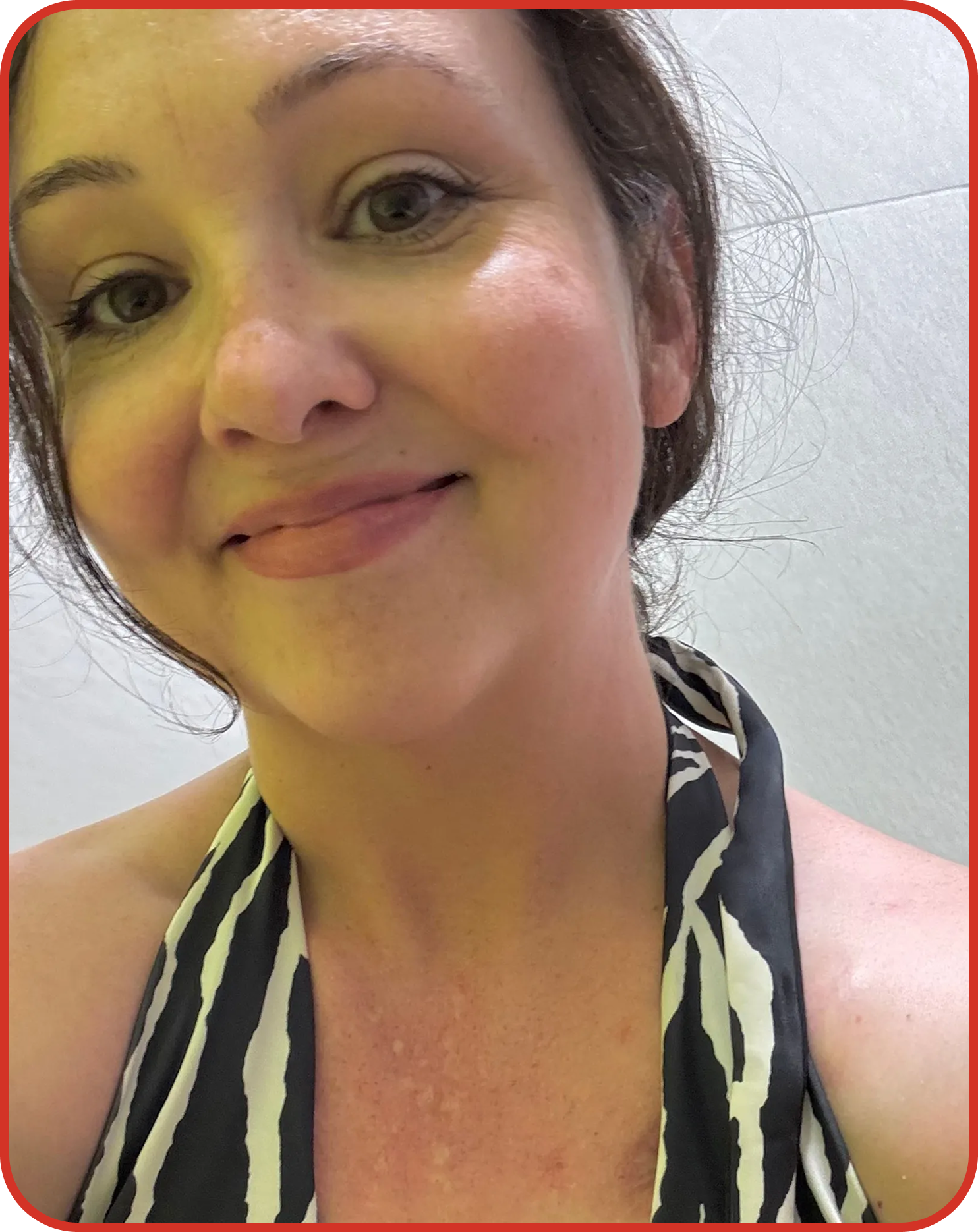
MARIANNE DAIGH lives in Howth, north of Dublin, where she works as a family carer and writes. She has a background in theology, and also practices photography. Her work has appeared in various publications including Channel Magazine, Ragaire, The Belfast Review, and Streetcake. She was shortlisted for the Allingham flash fiction prize in 2025. Find her at mdaigh.com.
Note on Artwork
We’ve paired this piece with Kay Sage’s Le Passage (1956).1 A woman sits at the edge of a plain cracked into pale shards, her bare back to us, facing a grey horizon. I remember first seeing this painting and thinking she’s sitting by a frozen ocean witnessing slow ice shelves. I suppose it could be either really. The uncertainty and melancholic calmness of this painting evokes for me the same mood rising from this beautiful essay.

Image: Le Passage © Kay Sage. Used for editorial commentary purposes only. All rights reserved.
Gorgeous essay! Having been to Antarctica three times, I can tell you it is vast beyond reproach yet not a lonely place. The glass squid was amazing. Thanks for including the info on where to view it. Interesting to call such a creature "glass" as opposed to "clear."
There was a melancholic nature in the tone of the prose, an ennui, even though you were discussing and informing us about the fantastic. Great in style and content. Fabulous in syntax. I won't quote here but I shared a couple of bangers on my wall.