



Hello fellow strange pilgrims, today’s essay is part-history, part-review, part-meditation, part-mythos, and all of it enthralling. It’s the kind of writing one can spend a whole day with and still feel there’s more to be read, somewhere in between the letters perhaps, and the white space. Enjoy!



The prisoners are led into a courtyard, where the sun beats down. Rivulets of sweat and anxious, darting eyes. The guards carry Mauser rifles—bolt-action, built in Germany—or perhaps FN Fals, a semi-automatic manufactured in Belgium. Even the Kalashnikov has found its way into 1970s Iran. No need for automatic weapons. The prisoners—nine in all—are lined up against the wall. Their crime: belonging to the National Spiritual Assembly, a democratically elected administrative body of the Bahá’í Faith. Now that the Shah has been overthrown, Islamic fundamentalists have altered the requisite legislation: Bahá’ís can be murdered with impunity. There are no clouds. The sun reigns in an empty sky.
No hollow cartridges to provide psychological relief, as in the case of some firing squads. This will not be a moment, as it was for Dostoyevsky, in which the soul is changed. If God is present here, in this place, he is silent. The rifles are loaded. One or more take aim at Atta’u’llah Mogharabi, a general in the army whose belief in a post-Muhammad prophet renders his high-ranking status moot. In this moment, is he thinking of God? Is he beseeching him to watch over his wife, daughter, granddaughters? One of the latter—you—just yesterday asked him to take you down to the market for a pair of shoes. He obliged—his last act as caretaker. The soldiers ready their rifles. Atta’u’llah closes his eyes, inhales his last breath. A clap of man-made thunder. Nine bodies on the ground. The bullet in my great-grandfather’s chest has shattered. Pieces flung outward, a fatal propagation.

Like most people, I saw Christopher Nolan’s Oppenheimer in the summer of 2023, at the height of the Barbenheimer phenomenon. Unlike most people, I did not see it in conjunction with Barbie, which I watched in a crummy Croatian theatre with foreign subtitles (long story). Instead, my father and I drove out to a theatre in Langley, BC, the only one for hundreds of miles that showed IMAX in authentic 70mm. Oppenheimer’s three-hour runtime, combined with its non-linear storytelling, made it difficult to appreciate as anything other than a massive, overpowering spectacle. It wasn’t until I revisited the film a year later that its meaning began to unfold for me.
Oppenheimer—like most of Nolan’s filmography—is not designed to be legible on first viewing. It’s too ambitious. As Tom van der Linden explains, Nolan wasn’t interested in telling a simple, moralistic story, one that could have been summarized as “Man creates bomb, man feels bad, man gets punished.”1 While this would probably have gratified our collective desire for scapegoating, such a film would not have asked the much more serious and terrifying questions Oppenheimer poses regarding the individual and their relationship to history.
A number of formal elements collude to this effect. For one, Nolan eschews the use of composite characters, a device typical of most biopics or historical dramas whereby real-life figures are lumped together in order to facilitate audience comprehension. He says he “did not feel comfortable”2 disregarding the historical significance of individual physicists on the Manhattan Project. The result is a sprawling cast that decenters Oppenheimer, contesting and negotiating his importance. Linden also comments on how the film’s structure—Memento-esque, with two timelines converging in the middle—creates a loop. “If time is a circle, then eternity is endless repetition.”3 The film ends as it began—an ouroboros, devouring itself. “Here, Nolan’s non-chronological approach allows us to experience the bomb and its fallout all at once,” writes David Ehrlich of IndieWire, “thus making discovery inextricable from devastation, creation inextricable from destruction, and the innocent joy of theory inextricable from the unfathomable horror of practice.”4 By revealing the future before the past, Nolan dislocates causality from agency. This is not to pardon any choices that were made. Rather—and more unsettlingly—it is to regard the individual as but one particle in the chain reaction of history. When German scientists split the atomic nucleus in 1938, every physicist around the world understood the implications: a nuclear chain reaction could be weaponized to devastating effect. Suddenly, every able-minded American scientist was recruited in a race against the Nazis. For Jewish scientists on the Manhattan project—including Oppenheimer—the race was an existential one.
Can we escape our antecedents? In Nolan’s words: “If a mistake is unavoidable, is it actually a mistake? Or if someone facilitates an inevitability, do they actually bear meaningful responsibility?”5 Is history an aggregate of individual choices, like a mosaic of distinct shards, or a tapestry in which a single fiber is lost, threaded into an oblivion of meaning? Are we subsumed by history, like tiny atoms in a chain reaction of fissionable nuclei? Nolan’s circular story structure suggests a harrowing determinism: no matter how many times Oppenheimer was given the same set of circumstances, he would commit the same sin. In other words, he could never escape his antecedents.
Hasty whispers as the TV flickers, showing crowds of men with their fists raised, bearded mullahs in white turbans discoursing into microphones.
“Pack only what you need,” your father says. “We’ll be back soon.”
The first of many lies.
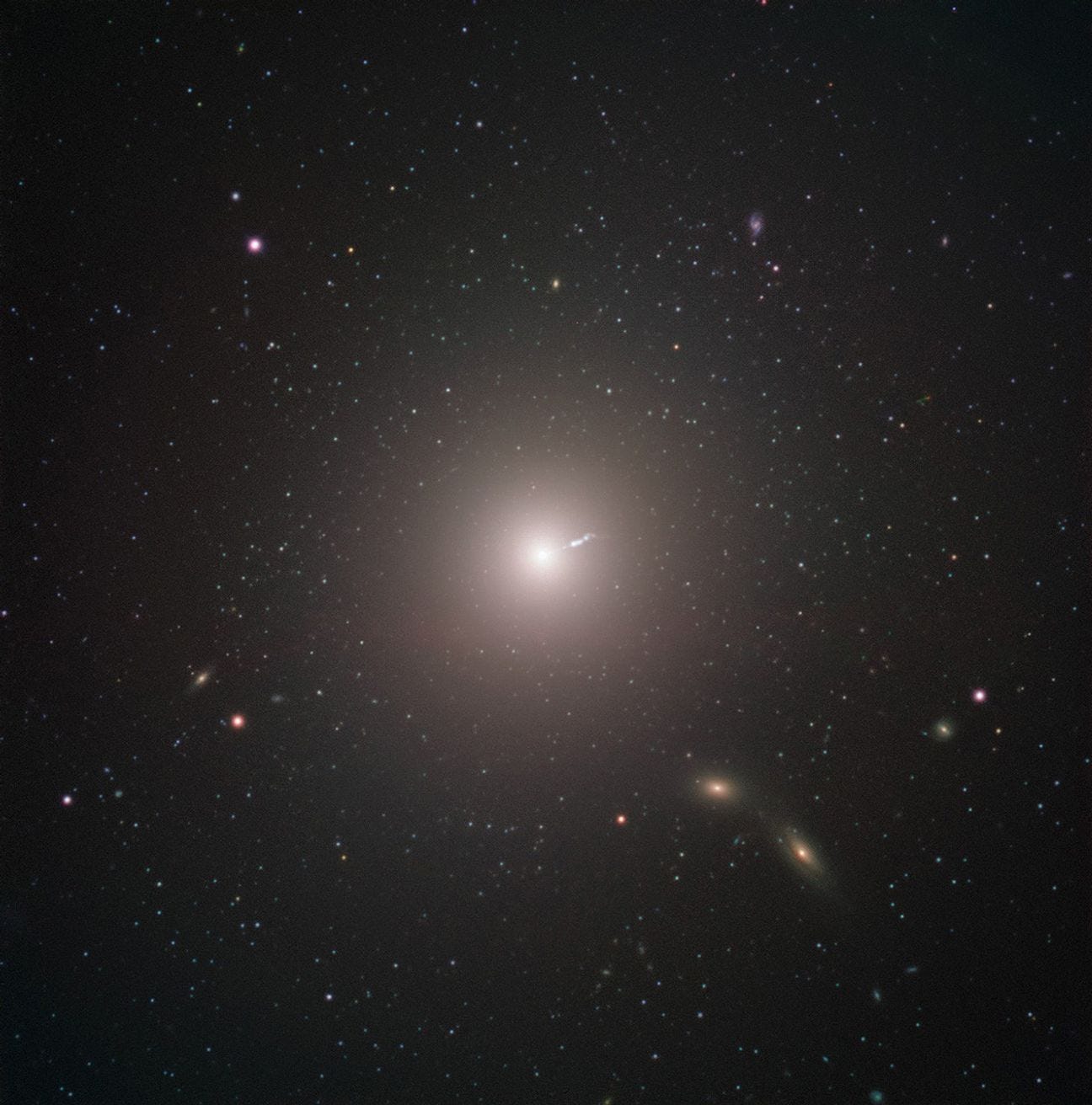
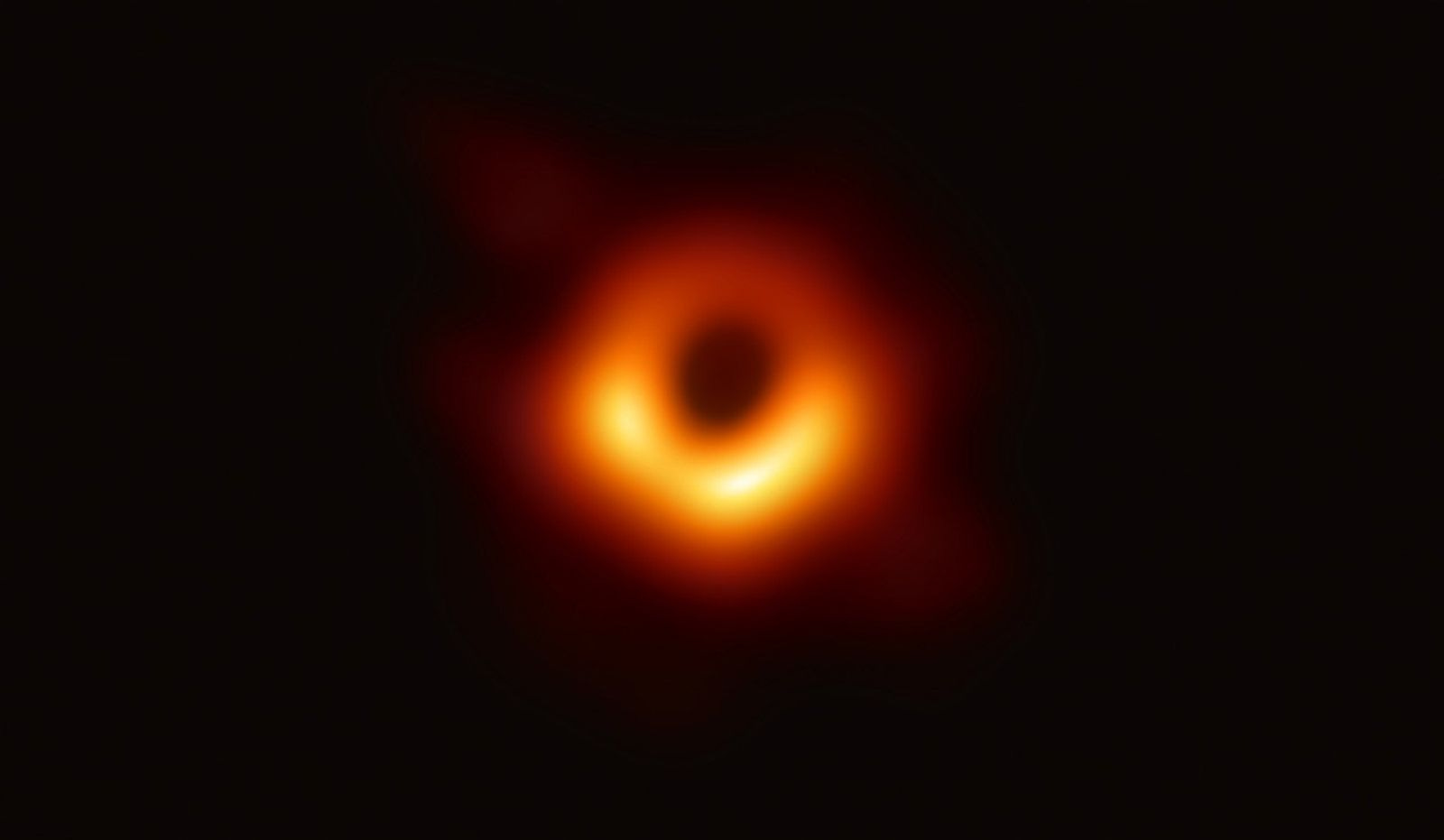
“Why?” you ask. There are no tears. You feel only a vast emptiness, like radio imaging of a black hole—a hungry maw of darkness chewing warmth and light inside of you.
“It’s not safe,” he says for the nth time. You and your sister scramble to pack suitcases. At 10 years old, you have no idea what to bring. You don’t understand what is happening. Your mother’s face is stony, a shoring up of grief with silence. Her father has just disappeared, along with the entire National Spiritual Assembly of the Bahá’ís of Iran. Nobody knows where they are.
The four of you leave the next morning, only to get stranded in Luxembourg, the necessary documents forgotten in a collapsing country. You apply as refugees for entry into anywhere. Canada is the only nation that will allow you to be human again.
There’s a scene early in Oppenheimer when the young Robert flings glasses at the corner of his apartment, watching intently as the shards fly out across the room. He closes his eyes and tries to picture the same thing happening to matter in space: a star explodes, dispersing itself. It’s a speculative cosmology, an imaginative feat of memory. The film’s script, written in the first-person, describes Robert’s thought process: “galaxies of particles disperse and reform, […] I smash a glass, and another, and another, watching the shards skid across the floor, catching and refracting light.”6 As glass after glass is hurled into the corner, Robert comes closer to visualizing an atom’s structure. Quivering belts of energy rotate, locking into place. These observations lead Robert to “write furiously at a desk, […] write furiously on a chalkboard.”7 Fragmentation as precursor to revelation. Discovery as inextricable from devastation. When a star goes supernova, it self-detonates, scattering tiny pieces of itself across the cosmos, pollinating the void. My right hand is comprised of atoms from a different deceased star than my left. We are composites of shattered stellar entities—celestial cadavers. Elegy for cosmic lightbulbs. Our violent stellar ancestry can be traced down to the subatomic realm, where matter is mostly empty space, unstable and crackling. The atom as synecdoche for star.
We are sitting in a garden you have made. Mugs of dark roast in our hands. Clay pots, dark soil spotted with perlite. Some are plants I brought here, to Surrey from Vancouver, having picked them up on the way. You found them on Facebook Marketplace ads, which you scroll idly during remote tutoring sessions as dyslexic children struggle with their sentences. Once, the woman who handed the potted plant to me said I was a good son, but all I could think was how the act was nothing—a wink of light against the vast darkness of your sacrifices. A breeze carries the scent of pine from a nearby playground. The lemon plant beside me releases its citrusy breath. The sun is shining down, so rare for this city, even in May.
I tell you about my therapy sessions. I broach the subject delicately, uneasy on this new terrain. I say that, growing up, your unreserved disgust toward displays of intimacy on film and television was hard for me. You and dad having separated when I was only two didn’t help. I had no positive examples of intimacy to supply me with a counterpoint to your revulsion. I grew up thinking all expressions of desire were grotesque. Inside me accreted the belief that love comes with terms and conditions.
Your eyes darken.
“I won’t apologize,” you say, “for trying to protect you from this cesspool of a society.”
I watch your lips form the words, a wingless bird in me.
The day grows a little darker, though there are no clouds.
Newton’s law of conservation of matter states that in a closed system, matter cannot be created or destroyed, only transformed via physical or chemical processes. Einstein’s famous equation E=mc² describes how matter can be converted into energy and vice versa, though this requires a tremendous degree of violence, as in nuclear fission—the tearing apart of the very fabric of reality. Except for the Big Bang, nothing in the universe was actually created; only a series of transformations have taken place, matter and energy continuously recycled, a chain of successions leading to the present moment. The past is always conserved, no matter how mutated or changed.
Although Newtonian mechanics are valid in a macro picture of the universe, at the subatomic level, chaos reigns. In Oppenheimer, a lecturing Heisenberg puts it succinctly: “One might be led to the presumption that behind the quantum world, there still lies a real world in which causality holds, but such speculations seem to us, to say it explicitly, fruitless.”8 According to one principle known as “superposition,” subatomic particles exist in multiple states simultaneously until observed, whereupon the wave function collapses and the system settles into a definite state—an irreconcilable paradox so radical that Einstein himself refused to acknowledge it, famously insisting that “God doesn’t play dice.” This phenomenon applies especially to light, which is both a particle and a wave until an observer conducts an experiment.
Every cause has an effect. Is it not meaningless to speak of Free Will—that is, of a will that is free—if one’s very desires are predetermined, traceable to an original antecedent? Schopenhauer’s formulation: “Man can do what he wills, but he cannot will what he wills.” Does quantum paradox provide an alternative to causality? Is it foolhardy to hope that, given our subatomic composition, there exists a way to circumvent the causal chain? Are we both free and unfree, made and unmade?
You open the door, my cousin’s pants around his ankles.
Light streaming in through the bathroom window. Silence in the house. Our bodies—strange, innocent.
Your eyes are wild with rage.
“What are you doing!?”
“Taking a shower,” he says, his voice pale and small.
“Don’t lie to me,” you snarl.
You grab me by the wrist, wrenching my body from the bathroom. You drag me into the hall.
Later, you and your sister converse in hushed whispers by the door, deciding our fate.
My cousin and I avoid each other’s eyes.
To this day, neither of us has spoken of it.
A star is a burning furnace in space—“fire pushing outwards against its own gravity.”9 When the star cools, it shrinks. Gravity and density increase. Usually, the imploding star goes supernova—star shrapnel. “The bigger the star, the more violent its demise.”10 If the star is massive enough, the implosion produces a singularity—a single point of infinite density where the laws of physics cease to exist.
In Oppenheimer’s time, black holes were purely theoretical entities, answers to problems presented by Einstein’s Theory of General Relativity. In 1971, the first ever black hole named Cygnus X-1 was discovered based on x-ray emissions and the behavior of a nearby star. In 2015, gravitational waves produced by colliding black holes were detected, and in 2019, the Event Horizon Telescope captured the first ever image of a black hole. Oppenheimer himself was one of the first to hypothesize the singularity. In the film, he describes it poetically: “Gravity gets so concentrated it swallows everything, even light.”11 Not even light, travelling at nearly 300 million meters per second, can escape the devouring appetite of a black hole. Because of this, nobody knows what lies on the other side of the event horizon. There is no light to tell us what is there.
Did you know what you were doing? On that afternoon when my cousin and I, curious, studied each other’s bodies. Did you know that your wrath was changing me, one atom at a time? That I was aching to be different—to be erased. A small step from disgust to mutilation, as in Anis Mojgani’s poem where “I wish I was dead” becomes finally “I want to kill myself.”12 What is the antonym for despair? All I can do is wonder if I was destined to become someone else—someone unafraid of their own body, who never learned the language of shame.
Light was all around us that day, but I wished it wasn’t. I wished that I could be extinguished—a lightbulb snuffed out by gravity, in a place beyond the reach of any eyes.
We’re playing backgammon and drinking tea—your mother’s signature blend of bergamot, earl grey and cardamom. You bite off a piece of sugar, holding it between your teeth as you sip the scalding beverage. I roll snake eyes and laugh. “Sorry,” I say, trampling your pieces without mercy. It’s mid-afternoon. Light fills the room from the balcony, stretching across the Persian carpet that is older than me. To our right, a cabinet filled with antique plates and glasses. In the living room, the television blaring. A life built up from nearly nothing, long before I was born. I came into this world, heedless of the lack that preceded me.
Your words, casual as you take the dice from my hand:
“Deep down, I wish I had never been born.”
I watch you say this.
Your mother in the kitchen, dicing cucumbers.
Your father in the living room, watching Wheel of Fortune.
Oppenheimer eludes us. Despite a script written in the 1st-person and oceans of screentime devoted to Cillian Murphy’s piercing blue eyes, somehow this man’s soul slips through our fingers. “The closer we got, the more obscure the picture became,” says Christopher Nolan of the historical figure, “like a newspaper photograph becoming incoherent under magnification.”13 Throughout the film, we witness Oppenheimer deploy various justifications for what he is doing. As Manohla Dargis reminds us, the Jewish physicists on the Manhattan project “saw their work in stark, existential terms.”14 Why is violence so easy to justify? Why do our eyes distort suffering into virtue, right up until the moment of detonation? It’s never clear to what extent Oppenheimer is deluding himself. As director of photography Hoyte van Hoytema says, “The face is like a landscape,”15 and the landscape of Oppenheimer’s countenance remains clouded in mystery. It becomes, in Dargis’ words, “both vista and mirror.”16
The closer I come to you, the farther you recede. Who are you? Where does the wrath-filled despot end and my mother begin? How do I separate the trauma from your resilience, the darkness from your light? It would be so easy to blame you. To say: You are the reason I feel disgust when someone tells me they love me. Because of you, I confuse closeness with terror. A partner runs their hand along my arm and I can feel only fear.
It would be so easy.
But what would it solve?
Scapegoating you accomplishes nothing. The momentary catharsis gives way to a vast emptiness. In renouncing you, I deny half of me. You, in all your broken humanity. Both particle and wave; my wound and my light.
After the divorce, dad moves to West Vancouver while you stay in Richmond with your parents. He insists I attend high school in the former, promising sports enrolments that never materialize. You get a job there just so you can drive me the 45 minutes back and forth each day. On days when you work longer hours, I take two buses and a sky-train home. All of my friends live near school, a 1.5-hour transit ride away.
One night, I’ve had enough. Enough of my loneliness. Enough of the poverty I’ve come to associate with our family. Enough of this tired routine.
I tell you all this, sparing no details, my words unending and harsh.
You who studied English literature instead of something more lucrative because my father insisted you’d never have to worry about money.
You whose parents shipped you off to an uncle in L.A. while they worked tirelessly, buying only what was on sale at the grocery store so they could afford to send you and your sister money.
You who felt unwanted in your uncle’s house, his young wife openly irritated by the presence of children not her own.
You who began hating herself in 1979, ever since the day your wanting—that pair of shoes—caused the world to end.
You who has struggled with PTSD and eating disorders ever since.
You who are standing in the doorway as my words bring you to your knees.
I tell you it’s not enough.
I say: I want a different life.
I watch you fall, clutching the doorframe, as if the weight of my words is too much.
You say: “It’s all I have.”
Composer Ludwig Göransson threaded the same melody throughout Oppenheimer—a leitmotif that changes, reflecting the protagonist’s inner transformation. “Can You Hear The Music” comes first, scoring the montage of Robert’s time at Gottingen. Here, notes swell in a flurry of exhilaration. The tempo increases, culminating in a crescendo as Robert visualizes the atom’s true form—“the innocent joy of theory.”
In “Theorists,” a once-flourishing optimism mutates, acquiring an ominous subtext, the notes sliding into an uncanny register. Oppenheimer and his team race against the clock to construct the first atomic bomb. A line has been crossed. The gorgeousness of the previous tracks is being weaponized, recruited into a system of power and annihilation. The same chords sound harried and anxious, as if fretting over their terrible purpose—“the unfathomable horror of practice.”
Finally, in “Destroyer of Worlds,” both timelines converge at the moment when Oppenheimer finally grasps the terrible process he has set in motion. He is standing by the pond, conversing with Einstein. The music transforms into an ominous portent of doom as he visualizes the stockpiling of atomic weapons, a literal cascade of neutron fractures that never cease, setting fire to the atmosphere. The score is foreboding, yet familiar; it’s the same notes as before—as if, lurking inside that beauty, such horrors lay in wait all along. Despite his best intentions, Oppenheimer can no longer deny having catalyzed an arms race that will change the course of history. And now, the same chords that once expressed euphoria are distorted beyond recognition—each note like an unstable isotope, forming a crackling, paranoid score. It surges, just like it did with “Can You Hear The Music,” but now the crescendo connotes something far more sinister: the chilling revelation of apocalypse.
It’s a coalition of opposites—beauty and terror, each held in abeyance. But I can’t help wondering: Does it go both ways? Can the process be reverse-engineered—the atom reconstructed, the particles fused back together? Can I make myself the antonym of your despair?
Somewhere in the past, a fire-breather battles the darkness with torches. Faces in the crowd appear carved, like ancient statues—Zoroaster, Persepolis. The flames leave thick orange smears across my vision that fade into purple streaks, vanishing like the sloughed skins of snakes in an underwater dream. You hold my hand. Dad stands behind me, kneading my shoulders. He kneels, pressing his mouth against the back of my shirt, exhaling slowly. Warmth spreads through my body, joining the warmth of the fire-show, of our togetherness. It’s the only memory I have where you still love me as my father’s son; where both pieces of me are still unified, as one. A pre-fission wholeness I have spent my whole life mourning.
A black hole is not a point in space, but an end in time. If one were to look back at the universe from the ledge of the event-horizon—the threshold of extinguishment—one would see all of time passing in a few seconds, as though the universe were playing out on fast-forward. Does this mean, somewhere in the void, everything has already happened? Is someone out there as we speak, watching the tape at maximum speed?
Your fists left me scrambling for witness—a hole in my self-knowing that only other eyes could fill. I know you did it in the name of a religion for which you lost everything—one that bade sexual symmetry blasphemous. The ultimate sunk cost fallacy: admit that God isn’t real, and you lost home for nothing. You did it to give meaning to what went missing. Such expensive significance, purchased at the cost of who I was supposed to become.
There are pieces of a bullet lodged in your grandfather’s chest. There are pieces of your grief lodged in me. All of us exist due to a primordial detonation, indebted to cosmic calamities. How do I disentangle myself from your despair? Where does your darkness end, my light begin? I come from your suffering. It’s folded into me, in the shape of broken wings.
Maybe I am trying to ask: Is there a future in which I love myself?
Christopher Nolan has long been interested in characters whose obsessions threaten to bring about their downfall. From Memento to Inception, his protagonists have been forced to make ontological gambles without epistemological certainty—to barter their souls without knowing what the outcome will be. They are, in Ehrlich’s words, “potentially self-destructive men who sift through the source code of space-time in a desperate bid to understand the meaning of their own actions.”17 Oppenheimer represents the quintessence of this internal struggle—an “uncannily perfect subject”18 for a Nolan movie. Ehrlich continues: “At first, I thought that if J. Robert Oppenheimer didn’t exist, Christopher Nolan would probably have been compelled to invent him. […] In fact, Oppenheimer is so perversely well-suited to the Nolan treatment that I soon began to realize I had things backwards: Christopher Nolan only exists because men like J. Robert Oppenheimer invented him first.”19 In other words, the future dictated—made possible—by the past.
Pearls of rain on the window. My small body curled into yours, The Chronicles of Narnia open before us, our eyes imbibing page after page as the seven-volume saga draws to a close. We will cry together when it’s over, as if grieving a living thing. As if grieving a world. The fire crackles beside us; dusk a blue pressure against the window. It will be years until I encounter Proust’s formulation that, when the weather is cold and harsh, a fire will “add to the comfort of reclusion the poetry of hibernation.”20 It will be years until I read Knausgaard writing of Proust’s work: “The novel was like a place, and every morning I longed to be back in it.”21 Both of these authors will save me, and I will find them only because of a love for literature I learned through you. Narnia, Harry Potter, Charlie and the Chocolate Factory—to say nothing of earlier works you whispered to me as the night fell. The Giving Tree stands out, a controversial celebration of sacrifice which, after everything, I now read you inside. You have always been a lover of stories, and you passed this love down to me. It was chemical, nocturnal. I have you to thank for becoming a writer. Every word on this page, indebted to your heart.
I only exist because you invented me first.
In cosmology, most celestial entities are so staggeringly far away that, by the time their light reaches us, many stars are presumed dead. The night sky is a stellar graveyard, a ghost impression. If anything, it demonstrates the persistent intangibility of light—something that can be witnessed but never captured, known but never held. An object of mournfulness.
Astronomers have determined that the universe is expanding because of a phenomenon known as red-shifting. The oldest regions of the universe—her most ancient light—shift red in the color spectrum because the light rays are being stretched away from us. Accordingly, the nearer the star, the bluer it appears.
In this way, the past escapes, fleeing our fingers.
Time too old to touch as light.
I have a picture of you on my wall. You’re four or five, sporting a comical bowl-cut. Your smile is broad, untarnished. The future exerts its pressure on this moment, like a hand blocking the sun. In half a decade, the Revolution will happen—splitting you in half. I look at your joy—pure, untrammeled—and I wish for other outcomes, alternative eventualities. Could it have been different? The photograph is smears of your light, stranded on this page. Here you are, red-shifted into a limitless nowhere, a borderless place beyond death and dreams, where you and I never wanted to be anyone else. I am pieces of you, flung into the void.
Mother, I am your star shrapnel.

1.
Tell us your origin story as a writer. When did you begin? What first drew you to writing as an instrument for asking questions that can’t be explored any other way?
ATA ZARGAROF: Not counting the Star Wars FanFic I wrote as a child about a Jedi named Marcus Jale (lol), it wasn’t until my first heartbreak in high school that writing became the emotional ventilation system it is for me today. Writing draws on the most unassuming of materials--language--to connect us with one another. This, combined with the form's intimacy, is what makes it truly unique for me.

2.
What does your writing routine look like? Do you thrive in structure or wildness? And when you begin a piece of writing, what tends to announce itself first: a voice, an image, an unease, a philosophical conundrum?
AZ: I try to write first thing every morning, when the dreamworld's associative powers are still in reign. Writing by hand slows me down. That + a little bit of coffee and my writing playlist = chef's kiss. I know a piece is really taking off when it latches to a single song. In the case of this essay, I had "I Wanna Know" by Phantogram on loop like an insane person. I'm talking hours and hours. I can no longer casually listen to that song as it's become fused with Star Shrapnel for me.
3.
Most artists are preoccupied by certain obsessions: lust, longing, death, the self. What persistent preoccupation—emotional, intellectual, or spiritual—threads through your work? Are there motifs, themes, or impulses you’ve tried to abandon but that keep returning, insisting on their relevance?
AZ: Memory is my Roman Empire. How do we remember the dead? What do we get wrong when we write about them? Does writing about the past justify the violence of representation? Particularly as the child of immigrants, these and other adjacent questions have haunted me for years.
4.
If not a writer, who would you be?
AZ: A chef, probably. I'm a bartender, which already feels like a fusion of the culinary and the creative. I love drawing on the longstanding history of various spirits and liqueurs when remixing cocktail recipes (Chartreuse monks, anyone?). Still, nothing compares with the aura of a chef. Or maybe I'm just The Bear-pilled.
5.
What’s the best piece of writing advice you’ve ever received? Alternatively/additionally, what’s something you’d like to offer as advice to emerging writers trying to make a mark?
AZ: When Elissa Washuta came to speak at my university, someone asked how she managed to finish a project as long and researched as White Magic. Her advice was to "touch the project every day," even for only a few minutes. Doing so helps maintain momentum while also lowering expectations. Sometimes a few minutes is all we have, and that's enough.
6.
What are you working on now and how is it trying to ruin your life (in a good, necessary way, of course)?
AZ: I'm currently working on a meta-fictional novel about a philosophy student who discovers a translation of an ancient text written by one of his ancestors. It's also a braided narrative that jumps back and forth in time, because apparently I'm a masochist.
7.
Who are the artists—writers, filmmakers, thinkers, internet oddities—that have shaped your sense of narrative? How have they rearranged the way you see the world on the page?
AZ: Speaking of memory, I'm forever indebted to Marcel Proust and Karl Ove Knausgaard for the way their sprawling bildungsromans have shaped my understanding of the self, how time creates and distorts us. Also, shoutout to Maggie Nelson's memoir Bluets and Heather Day's paintings, both of which made me a student of fragmentation.
8.
Please recommend a piece of art (a painting, a film, an album, anything that’s not a piece of creative writing, really) that you love and would like everyone to experience.
AZ: The music video for Weval's song "Someday," directed and edited by Páraic McGloughlin, is probably the most exquisite audiovisual mindfuck I've ever experienced. You won't be disappointed.
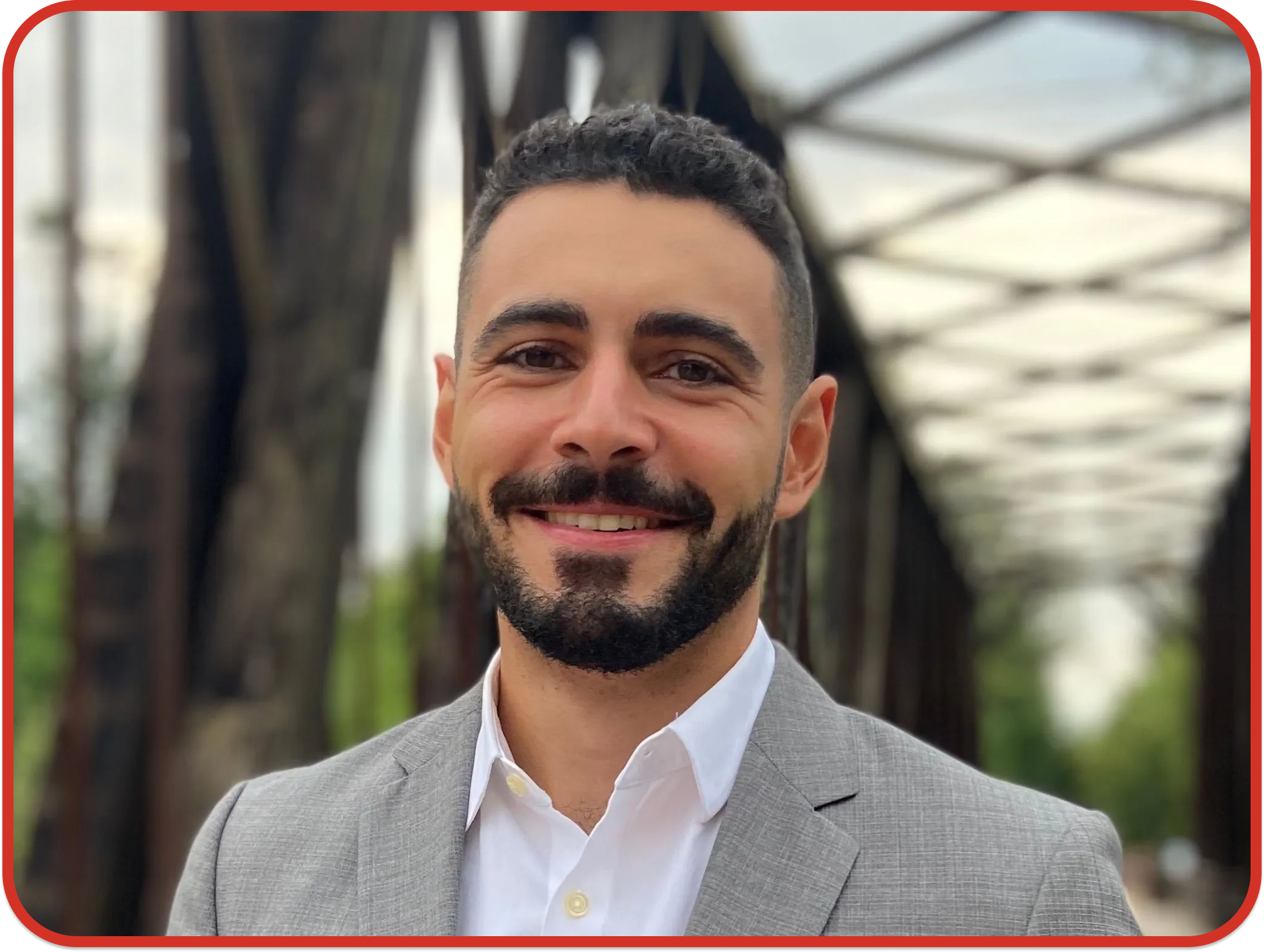
ATA ZARGAROF is an Iranian writer from Vancouver, Canada. His work has appeared in CV2, Glint Literary Journal, Apocalypse Confidential, Braided Way and others. He is the recipient of a 2026 Academy of American Poets prize and the 2026 Biography Prize from the Center for Biographical Research. He is currently working on his first novel.
Notes on Art
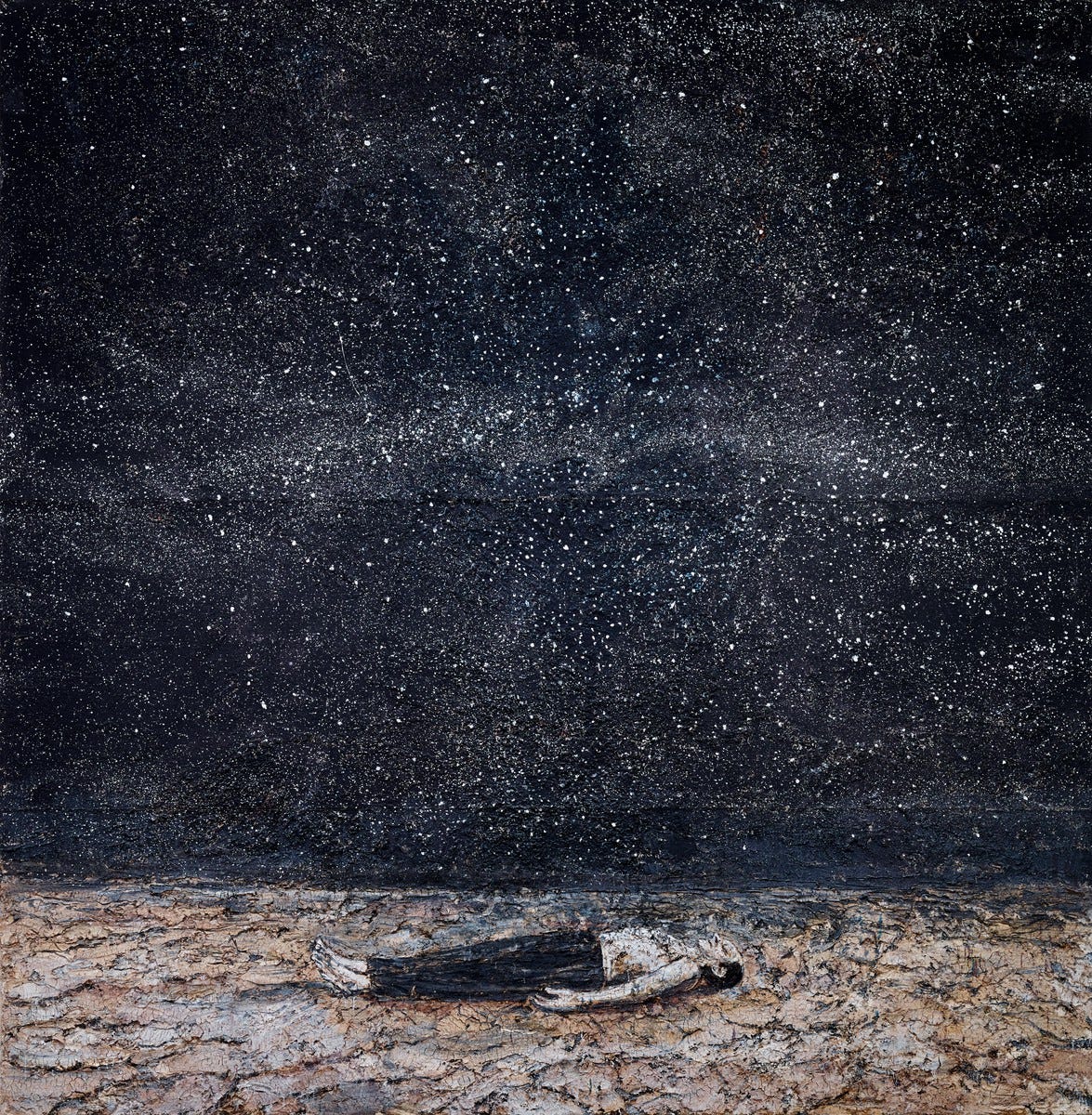
We’ve paired this piece with Anselm Kiefer’s Sternenfall (Falling Stars) (1998)22. The canvas is dark and thickly built up, closer to scorched ground than open sky. White points are scattered across it, each marked with a number, some strung into constellations by thin drawn lines. At the foot of the canvas, broken glass lies on the floor—stars that fell out of the picture and shattered. This essay moves on a similar plane I feel, but full of more characters than the lone figure…many star-like iterations of that one elusive unit, family. So much happens, fades, erupts and yet the stars stay where they fell, beautiful and iridescent, and something entirely other yet ours.

Tom van der Linden, “Why So Many People Didn’t ‘Get’ Oppenheimer,” Like Stories of Old, August 2, 2024, youtu.be/VG6A7KsWy28.
Christopher Nolan, “Christopher Nolan talks OPPENHEIMER, James Bond, Cillian Murphy, Robert Downey Jr.,” Josh Horowitz, July 20, 2023, youtu.be/eWBJ-60L8Lg.
Linden, ibid.
David Ehrlich, “‘Oppenheimer’ Review: Christopher Nolan’s Historical Epic Is as Brilliant and Short-Sighted as Its Subject,” IndieWire, July 19, 2023, www.indiewire.com/criticism/movies/oppenheimer-review-christopher-nolan-1234885847/.
Christopher Nolan, quoted in Jada Yuan, Unleashing Oppenheimer: Inside Christopher Nolan’s Explosive Atomic-Age Thriller (Simon and Schuster, 2023).
Christopher Nolan, Oppenheimer (Faber & Faber Limited, 2023).
Ibid.
Oppenheimer, directed by Christopher Nolan (Universal Studios, 2023).
Ibid.
Ibid.
Ibid.
Anis Mojgani, In the Pockets of Small Gods (SCB Distributors, 2018).
Nolan, quoted in Yuan, ibid.
Manohla Dargis, “‘Oppenheimer’ Review: A Man for Our Time,” The New York Times, July 19, 2023, nytimes.com/2023/07/19/movies/oppenheimer-review-christopher-nolan.html.
Hoyte van Hoytema, Oppenheimer: The Story of Our Time (Universal Pictures, 2023), special feature, Apple TV.
Dargis, ibid.
Ibid
Ehrlich, ibid.
Ibid.
Marcel Proust, Swann’s Way, translated by Lydia Davis (New York: Viking, 2003).
Karl Ove Knausgaard, Inadvertent, translated by Don Bartlett (New York: Archipelago Books, 2019).
Image: Sternenfall © Anselm Kiefer (1998). Used for editorial commentary purposes only. All rights reserved.
A stunning read
Amazing!