



Hello fellow strange pilgrims, I remember first encountering Hugh Behm-Steinberg’s work when I read his award-winning short story “Taylor Swift” as a class assignment. I’ve probably never had as much fun analyzing fiction as I did with this one. So, getting to publish him now is a dream come true!



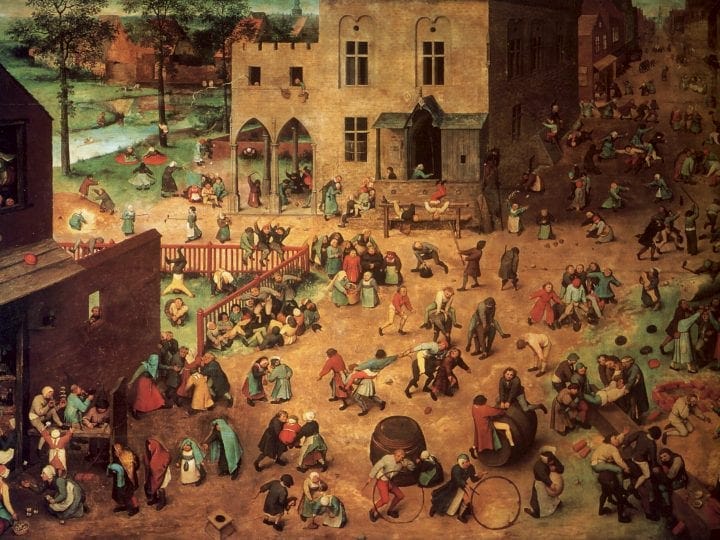
Frank invents a shrink ray. So the first thing Frank does is go visit the bank, handing the teller a note. “Give me all your money I got a shrink ray.”
The teller says, “Really?”
“Yes,” Frank says. To prove his point he shoots the Xmas tree in the lobby down to the size of a bonsai.
It’s a slow day at the bank; nobody gets too upset.
“Hmm,” the teller says, making sure Frank sees she’s not making any sudden movements. “That’s ok, but the last person who came in here with a shrink ray, instead of trying to rob us, he waited for someone else who was trying to rob us, and he did you know what to several you know who’s. Big reward money by the way, clean rap sheet as well, making it easier to get into the college of your choice if you know what I mean. Think about it.”
Frank thinks about it, trying hard not to stare at the teller like a weirdo. “Any idea on how long a guy has to stand there waiting for someone to come by and try to rob you?”
“Not long,” the teller shrugs. “You’d be surprised how often people try to rob us. There might be someone right behind you planning to do just that.”
Frank looks at the people behind him to see if any of them look sketchy. They all look sketchy.
“Ok,” Frank finally says. “Where should I wait?”
“Go stand over there by Carl.” The teller points to a guy who looks like he could be a plain clothes police officer if he wasn’t so obvious.
So Frank walks over and stands next to Carl. Carl says, “I like what you did to the Christmas tree. That’s an impressive shrink ray you got.”
Carl carefully pulls out a mayo jar with holes drilled through the lid, with a couple tiny bank robbers inside. “I’m starting a collection,” he says. “But since Lucy sent you over here you’re probably not really a robber, you just haven’t figured out what you ought to do with your life. So I won’t shoot you.”
“Just you wait, Carl,” one of the men in the jar peeps. “Once we figure out how to make a grow ray, you’re going to get what’s coming to you!”
“Or I could shake this jar a bunch if you two won’t settle down,” Carl tells them. “I think there’s one of those agitators at the paint store next door. I can use that while Frank here guards the bank.”
Frank nods, a little embarrassed. The other guy in the jar is about to shoot himself with his brother’s shrink ray, maybe out of despair, maybe just to get himself down to the size of something so small no jar could hold him, even if it means almost certain death from all the viruses and bacteria and who knows what tiny monsters that exist in the microscopic world. His brother tries to wrestle the gun away; when they fight Carl rattles the jar to break it up.
Carl grins, like he’s twelve, it’s finally Christmas, and he’s definitely going to get that bike he’s always wanted. “This is exciting! Just think of the odds of all these people with shrink rays trying to rob the same bank! Maybe it’s a side effect, that once you build your first shrink ray, you get pulled irresistibly towards the nearest financial institution, thinking wealth is finally going to be yours. The next thing you know, you have a job as a security guard, normally a safe, secure and boring career if it weren’t for all the people with shrink ray guns showing up.”
The door to the bank slides open and another sketchy looking dude walks in, hands in bulging pockets.
“Maybe I should just try to rob the bank after all,” Frank says.
“But you won’t,” Carl says. “Because you also want to be seen as a good person by Lucy over there behind the window, because you have feelings for her.”
Frank blushes, realizing once again Carl knows more about him than he does himself. “Wait,” he says. “Are you attracted to Lucy too?”
“We all are! Lucy’s the best,” Carl says, grinning because he finally has a best friend to tell everything to. “Where do you think all those ideas about shrink ray guns have been coming from?”
Our Frank turns around and waits in line again to see Lucy. It takes awhile, as even more men with shrink ray guns have to be convinced to go stand next to Carl, or get shrunk cricket sized for the jar. Frank isn’t angry, mostly just puzzled, and he’s not sure how he wants to phrase the questions branching across his mind.
“Back so soon?” Lucy says, snapping her gum, looking like this too has been happening over and over.
“What did you shoot with your shrink ray gun?” Frank says.
“The odds,” Lucy shrugs, then she leans over. “Somewhere nearby there’s a really tiny house with really tiny people living inside it, laughing and laughing, because someone was dumb enough to ask them how to make a shrink ray. ‘Wouldn’t you prefer to get better at crochet or taxidermy?’ they told me. ‘Nope,’ I said. ‘I’ve dreamed of shrink rays ever since I was a little girl, but instead of becoming an engineer I sought true knowledge and that’s how I found all you little people in your hidden tiny little house, and I have three letters of recommendation attesting to my goodness so could you please just give it to me or let me intern with you or whatever.’”
“And they just gave you the gun?” Frank asks.
“They gave me ideas,” Lucy says. “Much more useful, and fun, don’t you think?”

1.
Tell us your origin story as a writer. When did you begin? What first drew you to writing as an instrument for asking questions that can’t be explored any other way?
HUGH BEHM-STEINBERG: As a kid I was terrible at music (I hated practicing) and I never had that sketching/drawing itch, but I read all the freaking time, and it wasn’t that much of a jump from there to trying to be a writer. The funny thing is that writing led me into art and music making too: it’s sort of like if you choose a creative life, any door can lead you to any other door, so long as you’re willing to just go through.

2.
What does your writing routine look like? Do you thrive in structure or wildness? And when you begin a piece of writing, what tends to announce itself first: a voice, an image, an unease, a philosophical conundrum?
HBS: I’m part of a writing group that every November tries to generate a new short story every day of that month. That’s where most of my raw material comes from. Coming from poetry, both wildness and structure matter to me. A good working process tries to honor both of these things.
I tend to start my stories with problems or situations/opportunities, and then try to explore how things might unravel as the characters try to make the best of things.
3.
Most artists are preoccupied by certain obsessions: lust, longing, death, the self. What persistent preoccupation—emotional, intellectual, or spiritual—threads through your work? Are there motifs, themes, or impulses you’ve tried to abandon but that keep returning, insisting on their relevance?
HBS: Nothing so heavy. But I love talking animals, doubles and multiples, imaginary stores and acts of buying things, made up magazine titles, fantasy/science fictional tropes like time travel and aliens, witches, potions, magic, etc. I also like to leave things out: I seldom describe what my characters look like, or go too deeply into what anyone is thinking. I think I’m an anti-weird writer, in that I often put my characters into weird situations that they then go on to treat as being completely normal. I try to be kind to my characters.
4.
If not a writer, who would you be?
HBS: I think I’d make a good tour guide.
5.
What’s the best piece of writing advice you’ve ever received? Alternatively/additionally, what’s something you’d like to offer as advice to emerging writers trying to make a mark?
HBS: My teacher Jane Miller told me that most writers are better at their work than at their own lives, because when you’re starting out you can get away with it. But if you’re serious, then you have to start paying attention to your life, and working on all the things that will make you a better human being. You’ll write better when you have your act together, and you’ll be happier in the process.
6.
What are you working on now and how is it trying to ruin your life (in a good, necessary way, of course)?
HBS: The big thing I’m working on is learning Spanish; my reception is still way ahead of my production, but lately it’s started to seep into my dreams. I’m also working on putting a manuscript of stories together and sending it out to publishers.
7.
Who are the artists—writers, filmmakers, thinkers, internet oddities—that have shaped your sense of narrative? How have they rearranged the way you see the world on the page?
HBS: I tend to imagine prose as an open space, given shape by culture, but where pretty much anything can happen. So I’ve never been much interested in realism/naturalism. Along with the tons and tons of SF and Fantasy I read as a teenager, and all the poetry I read and wrote, I’d say Italo Calvino has been really helpful at crystalizing my values as a fiction writer, especially Six Memos for the Next Millennium. Quickness and lightness are very important to me. I’d also include Grace Paley for how she uses dialogue. I love how her characters just say things. There’s a Bay Area writer, Peter Thomas Bullen, who operates in a similar way and sometimes I hear his voice in my ear when my characters argue with one another.
8.
Please recommend a piece of art (a painting, a film, an album, anything that's not a piece of creative writing, really) that you love and would like everyone to experience.
HBS: Lately I’ve been totally smitten with Juana Molina’s music. It’s gorgeous, head music; like when you’re listening you’re in a forest you’ve never been in before, and there’s children and witches and birds and insects and spirits and small animals and so much else you’ll never understand, but that’s fine. It’s enchanting. All you have to do is listen. Segundo is a good place to start.


HUGH BEHM-STEINBERG’s fiction can be found in X-Ray, Roi Fainéant, ergot, Heavy Feather Review and Denver Quarterly. His short story “Taylor Swift” won the Barthelme Prize from Gulf Coast, and his story “Goodwill” was picked as one of Wigleaf’s Top Fifty Very Short Fictions. A collection of prose poems and microfiction, Animal Children, was published by Nomadic/Black Lawrence Press. He lives in Barcelona, where he’s the fiction editor of Mercurius.
Notes on Art
We paired this story with Pieter Bruegel the Elder’s Children’s Games1 depicting a town square crammed with over two hundred figures, every one of them absorbed in some game the others, it appears, couldn’t care less about. None of them relalize knows how all this scene looks from above. I love Bruegel for this — how seriously he takes play, how the composition just keeps accumulating bodies and you keep finding new ones doing new inexplicable things in the corners. Behm-Steinberg’s story has that same energy, the cascade of people with shrink rays all ending up at the same bank for reasons none of them fully understand, a mayo jar filling up with tiny failed robbers, and Frank — poor Frank — who built something extraordinary and could only think to rob a bank with it.

Image: Children’s Games © Pieter Bruegel. Used for editorial commentary purposes only. All rights reserved.
This was such a pleasure to read, I think I'm going to do it again and again.
Very Donald Barthelme- like.