



Hello fellow strange pilgrims, you’ll notice below that today we haven’t paired an older painting with the piece but rather have some glorious new original artwork by our in-house artist and very good friend Mariam Chagelishvili! If you’ve visited our website/Substack, you’ll know how much we value beautiful, unique, cohesive design. Art and design was on the top of our minds when we started our poetry magazine back in 2023, and it was also the first thing we thought about trying to figure out when we started getting the seeds for Strange Pilgrims almost a year ago (holy shit).
I’m so happy that we have Mariam’s mind and talent and heart. We are now going to try and have original artwork for every long-form piece to start. I’d like to extend this for every flash (fiction and cnf both) published work as well as our monthly micro writing challenge winners.
Of course, since human creativity takes time and thought and isn’t just a click into the abyss (ahem, y’all know what I’m talking about, right), there’s greater cost involved. But this is money the way it should be spent — on art and artists and life-giving creativity and community. I’m so damn grateful to our paid subscribers for helping us keep indie lit alive & human & full of art & literature as ever. I’m also equally grateful to every single person who reads our newsletters, reads what we publish, replies to our work, shares a story with a friend, thinks about our raven at night while drifting off to sleep…
If you’ve been on the fence about a paid subscription till now, I’d be all the more grateful if you decided to upgrade today. Your paid subscriptions will directly help us pay for gorgeous, original art for Strange Pilgrims. Thank you, dear ones.


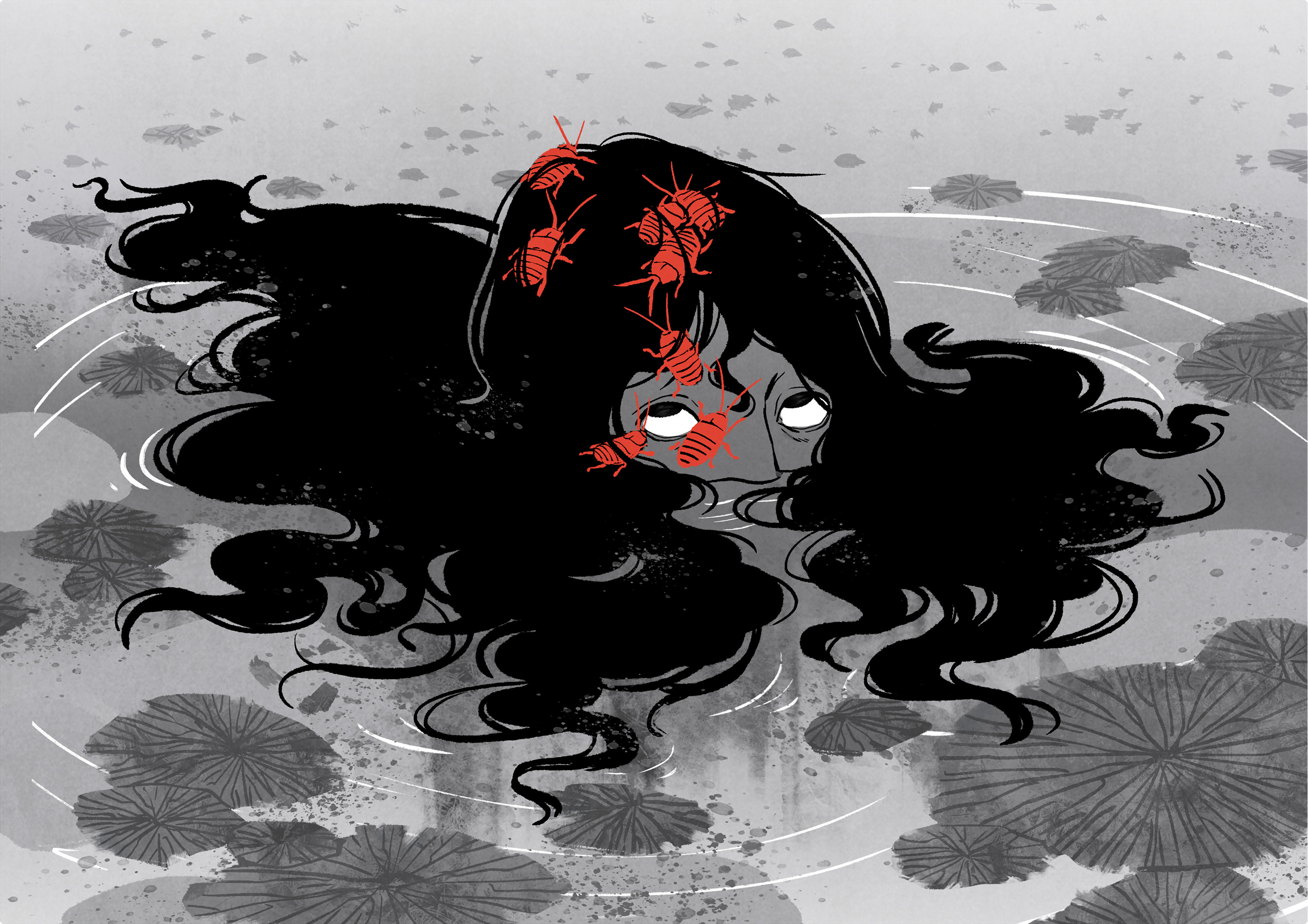
“Vermin’s very closeness—biting us, inhabiting us, eluding our control—makes them the animals holding up the sharpest mirror to ourselves and the universe we share with them—whether we want to or not.”
—Getting Under Our Skin, Lisa T. Sarasohn.
Sometimes, I sit in my room and I want to die, and I want so badly for someone to knock, and I want so badly that no one knocks. Because a knock could be anything. What defines the invasiveness of a knock is the nature of my relationship with the one who is knocking. The security-man, a man who always tries to act more familiar than he is, is received, my body wedged between the small opening. Followed by: Is everything okay? You knocked on my door. No, I still haven’t bought a new bag of water. I am sorry. No, I do not have garri or food to give. Look, I am a broke student. I haven’t even eaten all day.
The boy is received with the door wide open. A smile. Q, a question on whether a text was sent prior to the visit.
My room’s door does not fit or close. In the bathroom, there are two holes for ventilation—entry points for vermin and blood-thirsty mosquitoes and the Daddy Longlegs and tiny scorpions. The rats, however, avoid the rooms. They skid over the stairwell onto the tiled floor and rummage through the bins in the kitchen for food. Once, the caretakers came over and pretended to care. They started at the door as though they were seeing it for the first time.
“We’ll do something about it,” they said. Nothing was done.
Apart from the other vermin, perhaps the most personable and daring ones are the cockroaches. The American Cockroach (Periplaneta americana). They got to their current state millions of years ago, a JSTOR article reads. They are much older than us and will probably outlive us, too. What this paper did was invoke an image of apocalyptic ruin, and the cockroaches, unscratched, scrambling around. What its soft body withstands is equally commendable, but this is not a panegyric for the vermin, but a panegyric for the misfits and the not-quites.
My friend says cockroaches are part of the ecosystem of universities. In the shared kitchen, they drown in soup, and die on clean dishes. Once, I got a bottle of insect powder and poured it all over the surface of my cabinets. A few of them died—brown-bodied, belly-up, floating on their own body juice. Compared to the kitchen, my room is a metropolis.
“The room appears to be birthing these things,” I tell my old roommate.
“I can swear on it,” she says in response. “They come out in their numbers after I spray the room with insecticide. Where do they even come from?”
“And I saw a scorpion,” I say.
“No way! The mother must be lurking somewhere.”
I was on my bed for the most of the day, terrified, and mistaking every black item for an angry scorpion mother. When I needed to come down to relieve myself, I wore my ugly bathroom flipflops, and curled back into bed.
While scouring the cyber-libraries, I found out more about the older occupants of my room. Their democracy. Their personalities: shy cockroaches, extroverted ones, and the mad, flying militant ones. Another article mentions that they can be trained. Before my research, as a bee propagandist, I daydreamed about the queen, the mother of the cockroaches, secreting cockroach milk, feeding the nymphs, surrounded by ootheca.
I became more interested in Entomology about a month ago. I had found a dead moth on the floor in my faculty. I tried holding it to my pinafore, as a brooch. But it was dead and I could not pin it to my dress. When I picked up the corpse, the brown, earthy scales peeled off on my fingers. After failing to secure the dead moth on my pinafore as a brooch a few times, I let the corpse fall my fingers down the height of my faculty building.
I did not have what was needed for insect taxidermy, but I started learning anyway. The first victim was a moth I found on the porch of my dormitory, beating its soft wings against the light bulb. It died the next day, on its back, the soft orange underbelly reminding me of my failure. I had wanted to keep it alive before deciding what to do with it. My friend, during one of his visits, spotted the corpse on my tiled floor, and attempted to remove it. It is there for a reason, I told him. Please, leave it. Amused, he asked if I’ll ever find a husband.
It took more than six thousand five hundred and thirty four more days to become an adult human. In a few more months, I will be twenty-one and old enough to get alcohol anywhere. While the American cockroach has been observed to enjoy alcohol and beers, I do not quite like the taste of it. I have no wings. I have two legs. Two eyes. No antennae. My only physical human advantage is my ability to lay on my back without dying. But what this advanced adulthood means for the cockroach is that it can survive quite early on its own. Even in places that it does not belong in. I do not know if I belong here or if I am well-equipped for this adult thing. The word “nymph,” for example, is used to describe both insects and humans. One thing, we regard with disgust, the other, with wonder—a young attractive, “wingless” girl, a myth, a young, wingless cockroach.
A nymph and a nymph in a room, both, molting.
As a young child, I thought my parents were lying to me about having to grow up, so I cried, alone in a dark home in my grandfather’s house, bemoaning their betrayal. Many years have passed since then, and I still haven’t gotten the hang of it. I know now that they were not born grown, but the betrayal is there—a small, pulsing thing. A silent why.
I am no nymph (not to be confused with a young female), but if I were one, I’d be an adult in thirty-six days. In a little over a month, I would be well rid of my parents. Not needing them to fend for me or teach me how to use a gestid for your stomach ulcer, go to the school clinic, give the phone to your gateman, your curfew is 9pm, I know I work here as security, but I see you as my daughter, please, be careful and use protection, tell your boy to buy me something when he comes over.
I was 19 in my first year. Old enough, but sheltered throughout my life. We did not go anywhere other than my mother’s church and the market. Once, my father came to my secondary school to pick me up after tutorials because he was worried I would have to make my way back home by myself instead of on the school bus. I was fifteen. I waited for him, shaking in anxiety, misremembering his phone number when I was asked even though I had learned it since I was five.
When I resumed in Ife, my mother travelled with me, my bags pressed between her feet in the vehicle, haggling, buying roadside snacks and beverages, asking if I wanted àkàrà and bread. She left Ife a few days later.
Months after resumption, I was still trying to settle in. My terrible sense of direction did not help. I would walk around, looking for a familiar building. The first thing I do whenever I go somewhere new is this: look for what stands out. I miss my way even in places I have been to a dozen times. This period of settling in is similar to attempting to walk as a newborn. I knew nobody. I didn’t want to know anybody. I sat at the back in classes, trying to be as invisible as possible. For an application for chambers’ membership, I had written in the gap “a feeling of belonging.”
But there was no “belonging” within the walls of LLT2, in our white and black uniforms, or in the meetings where students played pretend professionalism. What happened was a kind of drowning. I felt then, as one born premature into a throng of people, without a mother, expected to avoid being trodden upon instinctively. Still covered in her blood, still dangling from her pelvis, still feasting on her. A parasite. A premature adult.
I called her to hear her ask me how I was. My mother rarely picks up her phone except when she calls first. Because then you knew it was urgent. Because what else could be urgent about a student’s phone call but money and tuition and textbooks? The line would drop dead before I could tell her how I was really doing. How the semesters piled over my drowning, how the classrooms morphed into dance floors, and how the floor was unstable. I forgot everything that led me to Ife, except the thread dangling from my navel, stretching all the way to my house in Ondo. On days like this, I reach out to my room, arms stretched, examining the length of my body with renewed interest. It was in this room that I saw a scorpion for the first time.
At what point does entomology bleed into anthropology? Infestation? Where does the room fit in in all of this? Marc Auge in Non-Places: Introduction to an Anthropology of Supermodernity describes a nonplace as spaces of transience where human beings remain anonymous and are mere users. These include airports, malls, banks and the like. I think of this theory and its effect on supermodernity, but as an extension to the almost cosmic homelessness I feel in my body and my presence in my dorm room. The anonymity Auge assigns to these spaces is akin to that of a student in a dormitory. It extends the theory even further into the personal. The space, although private, is still transient. A non-room. In response to Virginia Woolf’s prescription, how does one own a non-place or a non-room?
I have two years left until graduation. This room is both mine and was never mine to begin with. These dirty yellow walls have seen more pain and known more love stories than I have.
When someone knocks on my door, my initial panic is akin to that of a homeless person who has been caught trespassing. A squatter. I do not know if this homelessness is universal, or if it can be attributed to supermodernity, but I do not know of a better way to explain this feeling, of sitting in a corner of one’s room, afraid that someone would knock than the theory of the nonplace. I feel disoriented, like an isopod scurrying for cover after its home has been kicked away by unsuspecting kids.
The room, I once told my partner, is where one is divested of the need to be. This is an extension of the anonymity of the non-room. One is divested of the need to perform. To be feminine. To be masculine. However there are times I find myself trying to be, strutting in front of a mirror, puckering my lips, and measuring the slimness of my waist, the privacy allows me the opposite sometimes. I sit down on my half-made bed, in old clothes, hair shrunken, and compressed into a thick black cloud.
The room watches the processes: the molting and the transformation. I play songs in my room, phone speakers pressed against the hollow of its echoing corners, scaring the boys and the nymphs away. I blast Afropop and Soul and Blues and Sade and the Narcissistic Cookbook and Eartha Kitt and Pomme and Obongjayar and Asa and Burna Boy until the room develops a pulse. I do not think I have gotten used to owning my own room. Virgina Woolf prescribes this to the female writer: a room of one’s own. I have failed the first step of Woolf’s prescription.
I feel no attachment to my place. The caretakers have spare keys, as though to remind us that we do not really own our rooms. They enter our room in our absence, to turn off faucets we left running or to check for contrabands (electric cookers and hot plates). The last time I left the faucet open because we had not had light in days and there was no water, the faucet was turned off by the time I came back. I had left the room untidy.
In my dormitory, no boys are allowed to sleep over and the gate closes by ten. This happened once (a boy slept over), and I was asked to sign the agreement form all over again. Also, I always end up on the other side of the locked gate despite the warnings.
The kitchen is shared. Here, my depression and rock-bottom is public; dirty plates on shared sinks, soaked pots with burnt instant noodles, and empty takeout boxes.
“Hello, ma/sir. It’s me, Sunmi.”
“Why are you so late? The gate closes by ten. This is thirty minutes after 11.”
“I am so sorry. Goodnight, ma/sir.
I share a room with my sisters at home, so this luxury of owning my own room is unfamiliar. Our beds are placed side by side, with our luggage crammed in the small space left between a couch and a bookshelf filled with old books. I craved my own space, but the house has only two bedrooms. At first, my parents were certain I was going to live in one of the school’s halls of residence because they didn’t think I could live alone. My mother was scared I would burn myself in a house fire, cause a house fire, and be unreachable by phone. They ended up forgetting about it, and the registration closed. I have met people who were shocked that I had never lived on campus. You’ve really never lived on campus? Not even your first year? Big girl!
My room is infested. This is to the end that the room is the extension of my body. The cockroaches, like the boys, when they overflow their nests, might be driven to explore the openings of my body. I lay awake, thinking of this, spraying insecticide they have grown resistant to, watching the slight freeze before the scurry as the light comes on. I like to watch them on their backs, stabbing at the air, helpless.
What is more complicit in this madness is the room herself. She watches, with the stern muteness of a mother warning her ward in public. Vermin crawl into her walls, and I recline against her, hitting away at my faulty phone, crushing the soft-bodied insects against the ugly, yellow walls, leaving the white blood, brown stain and the odor of death.
I have assigned my room the position of the deus absconditus to symbolize the material absence. I have assigned both godhood and motherhood to an unfeeling thing. The placenta is left unsevered, and I stare at the room with new eyes. Infantile, genderless, small, curled up in a fetal position. I am a daughter behind the half-closed door, calling my mother who rarely answers. The room contracts and I see myself in Ondo, trudging after my mother, in quick, short steps, unable to hold her hands. I am now too old to hold my mother’s hand. I was never young enough to hold her hand.
I am relearning how to be born in this non-place. How to be an adult. To strut, to become a nymph, to love and be loved, to become, and to become. The placenta stretches out from my body, bloody, twisted, through my pierced navel, through the solid-emptiness of the air, to the light fixture, bright, dangling—a slice of the moon, bulbous navel. One must not forget how in The Metamorphosis, the transformation took place in the room. This extension of the body that one must molt in a cybernetic, post-human birth, must happen somewhere, so it takes place in a room because it is as private as the coffin. But what happens in a non-place? What birth happens within unfamiliar walls? What displacement? The uterine walls do not contract, and the fetus, unmoored, bumps against them, and floats in the womb. There is nothing to herald here. The fetus died before it learned to live.
The room contracts, a boy knocks, and my body is forced out, as though through the room’s uterus to the boy.
The boy comes in, a wide smile, through a widely open door, and I wrap my hands, two feelers—the antennae, around his waist. A nymph crawls out from a crack in the wall. She stays in a spot for a while, beside the boy’s slides, antennae, twisting, as though surveying the room. When the boy lifts his legs, she scurries back into the safety of her home.
“It’s fine. I have cockroaches in my room, too,” he says, laughing.
“It probably came out to say hi,” I say.
“Well, hi then,” he says to the walls.
Beside him, a nymph molts quietly on the floral sheets, soft-bodied, alone in her metamorphosis.


1.
Tell us your origin story as a writer. When did you begin? What first drew you to writing as an instrument for asking questions that can’t be explored any other way?
SUNMISOLA ODUSOLA: I started writing at the age of seven. I had read a work by a nine-year-old, and I believed I could do a lot better. My first story was my own of version of their story. I remember handing it over to my siblings and my father to help me proofread and publish it. My father left it on the dashboard for days. That was the last time I saw my first manuscript.
About using writing as an exploration of questions, I began writing because I was an obnoxious little thing. Of course, the exploration of question came later. I wrote about everything from death to religion because no one could answer the questions I had in a way that erased them. As a child, I was always by myself, thinking up stories, and reading whatever I could find. I had a hard time fitting in as a child, so in a way, I built the world I could steal into.

2.
What does your writing routine look like? Do you thrive in structure or wildness? And when you begin a piece of writing, what tends to announce itself first: a voice, an image, an unease, a philosophical conundrum?
SO: Wildness!
I thrive in wildness. Sometimes, I wake up with a string of words in my head. Other times, I find a word or a statement interesting, and the story begins from there.
The voices announce themselves. I have been told my characters talk a lot, but it is hardly my fault that they would not stop talking.
3.
Most artists are preoccupied by certain obsessions: lust, longing, death, the self. What persistent preoccupation—emotional, intellectual, or spiritual—threads through your work? Are there motifs, themes, or impulses you’ve tried to abandon but that keep returning, insisting on their relevance?
SO: I find myself returning to the self and embodiment. I have tried to work on something different, but maybe it is insisting because I have not really exhausted the relevance of it. It is hard to ignore the body and the self. They sit there, at the centre of human existence. To ignore them would amount to a level of falsehood.
4.
If not a writer, who would you be?
SO: Probably a painter? Some of my works have been influenced by art and artworks.
5.
What’s the best piece of writing advice you’ve ever received? Alternatively/additionally, what’s something you’d like to offer as advice to emerging writers trying to make a mark?
SO: The best piece of advice I have ever received is to edit my works like a crazy person. As a writer, it is easy to be convinced that every line you write is the gospel, but some lines, even when they appear to be relevant may not be that relevant. My advice to emerging writing trying to make a mark is to:
1. Read like crazy.
2. Edit like crazy.
3. Sit with your works. Don’t rush to publish them. Sitting with them for a couple of hours might go a long way in helping you finetune your writing.
6.
What are you working on now and how is it trying to ruin your life (in a good, necessary way, of course)?
SO: Right now, I am working on a non-fiction piece about my family’s old house. I have been working on it for years now, but it has never felt finished. Is it trying to ruin my life? Not necessarily. But it is driving me crazy.
7.
Who are the artists—writers, filmmakers, thinkers, internet oddities—that have shaped your sense of narrative? How have they rearranged the way you see the world on the page?
SO: Andrei Tarkovsky is one of the filmmakers that has shaped my sense of narrative. I have always been obsessed with non-linearity and fluidity, so when I came acros his film, Mirror, I fell in love. I enjoy reading Clarice Lispector, too. And Anaïs Nin for the poeticism and the language (again, for the poeticism and the language). I also love reading Milan Kundera!
8.
Please recommend a piece of art (a painting, a film, an album, anything that’s not a piece of creative writing, really) that you love and would like everyone to experience.
SO: Everyone should see Andrei Tarkovsky’s Mirror.
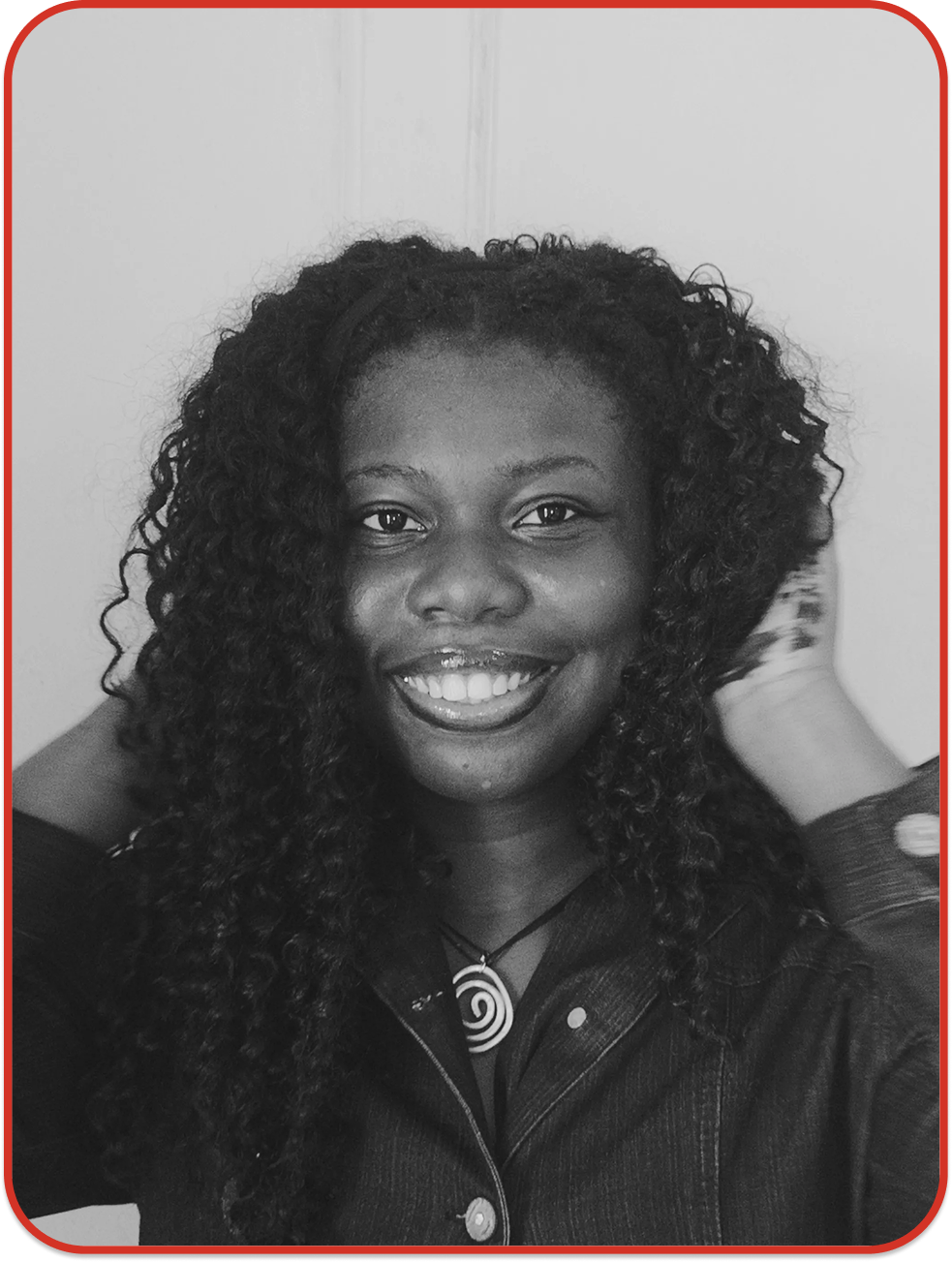
SUNMISOLA ODUSOLA writes on existence, love, and death, and daydreams about making surrealist art someday. They were shortlisted for DKA Poetry Prize (2024), and have had their works published in Backwards Trajectory, Brittle Paper, Fiery Scribe Review, Lolwe, Witcraft and elsewhere. They enjoy playing Mahjongg, Scrabble, talking about Anais Nin, Jenny Hval and Salvador Dali, and learning new things to fill the void. For fun, they create playlists, save Tumblr posts, scroll through Pinterest, and watch sitcoms.
Thank you for spending time with Strange Pilgrims.
Yours,
What a stunning piece of work, the parallels drawn between metamorphosis, nymphs and infestation, and strangeness. Beautiful 😍
I loved this piece so much! It brought back memories of the days back in my university. I already know I'll be thinking about this text whenever I find myself alone in 'my' room. Thank you from a fellow nymph.