



Hello fellow strange pilgrims, for today’s piece we cheated a little, but come on…we’re writers and readers, and sometimes I feel we are allowed our innocent indulgences. Namely, this time, instead of publishing just one of Jefferson’s flash pieces, we…couldn’t help ourselves, and had to publish the whole series. And once you read these, you’ll see why. It won’t take you long, you can also listen to his recording which comes in at under 10 minutes. But actually, it will probably take you many days, or weeks, because that’s how long it lived in our heads and hearts…to be honest…it’s still there. So, proceed with caution but also with wild literary abandon!
Pssst: Some fun stuff coming this weekend from the editors. 🫶🏽



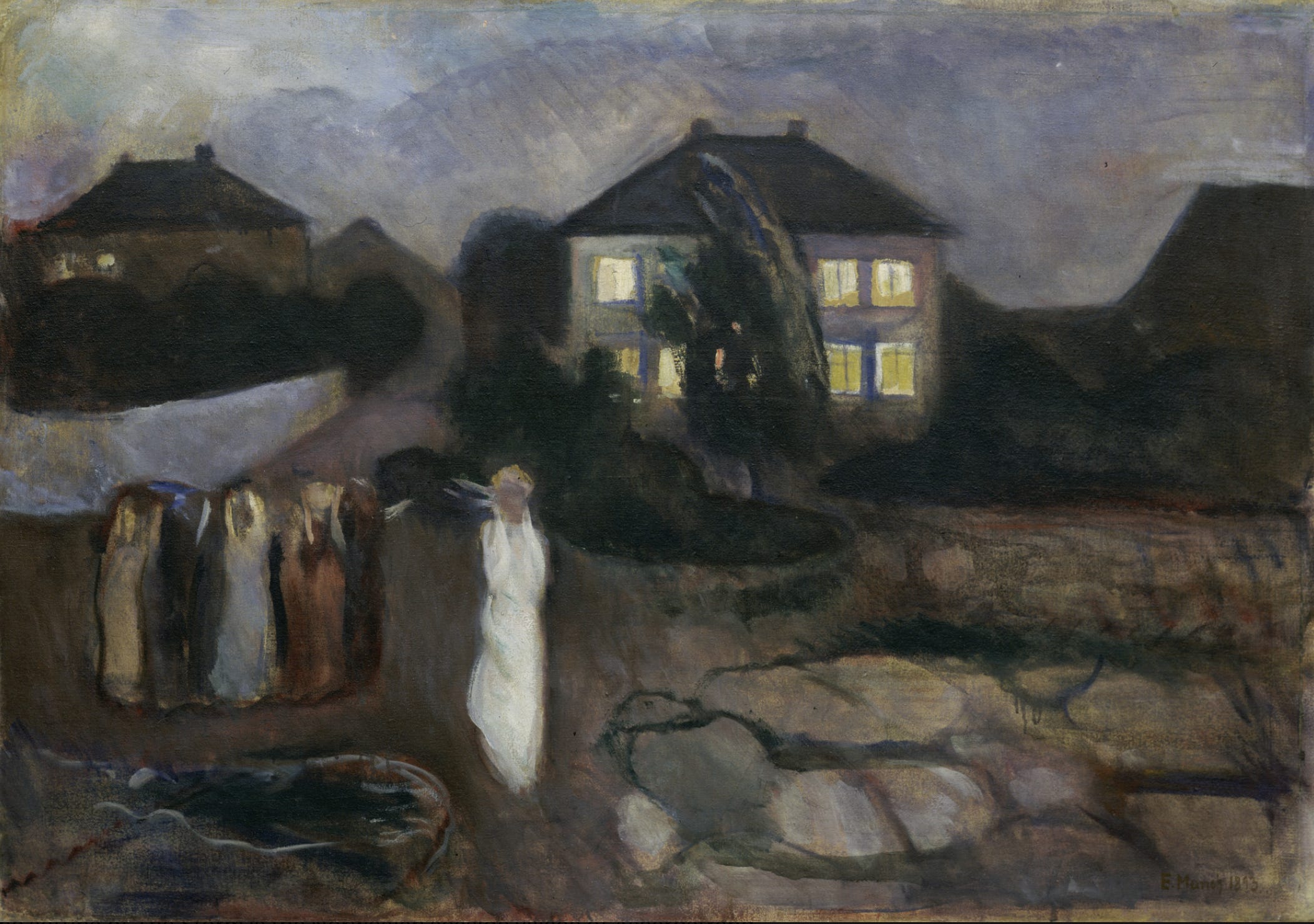
House of Reunification
Back before the house was ours, there was a carriage house south of the barn, back from the time when horses lived in the field and their related tack lived on hooks and pegs in the carriage house, and dairy cows lined up in their stanchions for their morning work. And on the second story, two rows of checkered windows looking out onto the drive way. But now the carriage house is gone, and only imagination can place its foundation anywhere on the south side of the property. In the 1980’s when the couple who’d been living here and renovating the old farmhouse split up, he got the carriage house. And he had it moved two miles away to live out the rest of its life as a small house. The carriage house must’ve felt so lonely so far away, yet so close over on Back Meadow Road just beyond the Baptist Church. A carriage house is only a house in its detached yet integrated relation to a main house. And what of the grief of the main house? Like a tree, the sadness of a house is long and low and often at a frequency unable to be detected by humans, but no less real than the shock we’d feel at losing a child who was now living only a few miles away and whose presence we could still sense but we did not understand how the forces of the universe could allow this separation. To a house, such fallout from human divorce illustrates a centuries long history of misdeeds and lack of foresight at the expense of houses, to whom it is achingly obvious that humans so easily find new mates and strike up new lives, but houses simply wish to remain intact, maintained, and cared for.
There are mornings, especially in fall when the landscape’s plangency strikes its most minor chords and wood smoke mixes with the scent of fallen leaves, that I can feel the house’s sense of loss and desire for unification. At such moments, I tell the house that to live with loss is simply to live, and that we love its old bones and will take care of them as best we can. And when I drive by the carriage house on Back Meadow Road, I say the same thing, but I say it as if to a child.1
House of Breath
The house was undeniably lonely in the way of the second house left closed up, curtains drawn, on top of a hill. And to think, when the owner, who’d inherited the house from his mother, talked about the house, he often mentioned the moment he’d removed some ugly siding to discover the scalloped trim “like a petticoat.” And it seemed like he would work to maintain and restore the house, but no, he mostly stayed in Massachusetts. Said, the house is fine. Said, work. Said, money. Said, next summer.
Against its better judgement, the house began to welcome mice. Welcomed in the wind. To keep warm. It wanted human inhabitants, but this was better than nothing. And the wind, when it died down, became the breath of mice.
The owner had grown up in the house and possessed very few fond memories of his childhood. He remembered bats in the gloaming as he stared out into the night of his second floor window. He remembered walking the train tracks to the lake, and he remembered the sound of the train whistle down the hill, which the house now came to feel was its own mournful call to the owner – come back, come home. But the owner so rarely did.
The house, in order to feel useful, began evening conversations with the two neighborhood owls during which it encouraged the owls to perch on the roof line to hunt. The owls, nervous at first, came to love the view afforded from the southern peak. When the house closed its eyes, the owl calls sounded like the train whistle.
House of Teeth
Purcell Montague kept a box. He lived alone in his family home along the Androscoggin with a long sweeping field down to their spot of river, which he sometimes imagined a sea. No one ever saw him open his box. It sat upon his mantle, sometimes, other times he carried it with him like an eternal baby cradled in the crook of his arm. Rumors: a fanciful machine that wove money; his mother’s ashes he couldn’t bear to dispose of; the antler of a buck who’d shed its rack for Purcell as a gift one night on the shores of the river.
Purcell was trying to learn about Time. Money, he told himself, he’d mastered. Love, unfortunately but with relief, he’d given up on. Only Time remained, and he gave himself his final years to master it. Eight to ten years, he estimated, and if he could rally his faculties and really apply himself, two out of three of life’s big mysteries would be his. And that, he thought, wasn’t bad at all.
Inside the box were two milk teeth. They were his key to understanding Time. At various moments of the day, he placed the milk teeth in his mouth and tried to comprehend Time. How was it Time lasted for so long, but felt so fleeting? How could Time move so slowly, but also so fast? And other stuff like that. Purcell didn’t even know if the teeth were his, maybe another relative’s? He found them in a chest in what once was his grandmother’s room, so who really knows, but when he held the two tiny teeth tucked along his cheek, he could feel Time slip backwards and slip forwards as if Time were a loose tooth, and he was determined to pry it free. But it had taken him years to come to even this understanding. He hadn’t wanted to put the teeth in his mouth, but when he finally overcame his squeamishness (he’d disinfected the teeth for a week in vinegar), he wondered why it took him so long.
Now he was truly old and he kept the teeth almost constantly rattling around in his mouth in hopes of a final understanding of Time. Sometimes he swished them, sometimes clicked them, rubbed them, or shook them like dice in the palm of his mouth. He’d long since fired all his staff and only talked with the river and the house these days. It was the house that told him to go down to the river one night with the teeth in his mouth. Once down there, Purcell found the moon had frosted the river like a cupcake, and it was so quiet with a light breeze that Purcell couldn’t help but smile, something he seldom did, a broad smile that made the river happy, a smile so open that the two milk teeth fell from Purcell’s mouth. Before he could catch them, the river greedily swallowed the teeth, and thanked Purcell by splashing him in the face, waking him up to an understanding of something, but what he never did find out.
Years later, when he heard this story, Purcell’s great-nephew decided to name is prog-rock band Two Teeth in the River. The band developed a small, but fervent following, and were often praised for their innovative, masterful uses of time signatures.2
Imagine a Road
“To imagine even part of the road makes one tired, and more than part, one just cannot imagine.”
— Franz Kafka
This road is forever moving. A long stretch of field placed next to field, hawk placed upon wire, farmhouse planted just barely in sight of farmhouse. To walk this road is to know a ditch life of lilies and vetch; in winter, dirty snow sprayed and mounded from the careless mouth of the plow. The stretch of road leads not to a town, but to an ocean of forest. No one has yet conquered that portion of the map. Our stretch of road has greenery from ancient days and the tracks of animals abandoned by time. We believe the tracks of these animals, which no one has ever seen with their eyes because the animals are invisible, to be embedded communication, a language of migration. A dwindling number of elders translate this language into words. When the raven sits in trees along the road and makes the sound of water dropping, dripping, drop by drop into the dark night, we know it is time to move the road, and so we all band together to harness the strength of all-together now, and we use all our strength to lift, and when we finally let go, the road can be a road again, born again though we’ve heard that it dreams of being a ribbon.

1.
Tell us your origin story as a writer. When did you begin? What first drew you to writing as an instrument for asking questions that can’t be explored any other way?
JEFFERSON NAVICKY: I wrote my first poem in high school. The yearbook advertised that it accepted poems, so I got it into my head that I would write a poem for the yearbook, even though I'd never written a poem before and barely knew what a poem was. But I DID know about playing basketball, because that's how I spent most of my time, so it only seemed natural to write a basketball poem. I think I waited until the last minute, then I wrote a clunkily-rhymed poem about a basketball player complaining to a ref about a bad call -- the big turn at the end was that the referee called the foul on another guy and the speaker of the poem was absolved! It was a terrible poem, but I do remember my mother coming upstairs into my room to help my write it, which I thought was awfully nice of her. And I remember staring at my stereo (that used to be my grandfather's stereo), listening to the radio, and trying to think up rhymes. That last part -- staring at that old wood-paneled antique machine and trying to think up rhymes -- is a very nice memory. And the poem was published in the yearbook, but no one believed I actually wrote it, because, you know, I was a basketball player.

2.
What does your writing routine look like? Do you thrive in structure or wildness? And when you begin a piece of writing, what tends to announce itself first: a voice, an image, an unease, a philosophical conundrum?
JN: Structure. I approach writing like a cobbler does his work -- make the shoe, fix the shoe. I love routine, and particularly fine-tuning routine (i.e. various types of tea, lighting, pen, etc). But once I sit down to work, who knows what will come out. Pieces of writing announce themselves in myriad ways, and I consider it my job to listen to what they want.
3.
Most artists are preoccupied by certain obsessions: lust, longing, death, the self. What persistent preoccupation—emotional, intellectual, or spiritual—threads through your work? Are there motifs, themes, or impulses you’ve tried to abandon but that keep returning, insisting on their relevance?
JN: Houses, obviously. But also archives, books, libraries, dust, chickens, cats, language, failure, and the failure of language.
4.
If not a writer, who would you be?
JN: I’ve been lots of things in my life: gym teacher, hall counselor, job coach, editor, garbage man, receptionist, archivist, teacher. All those have supported me as a writer. If not a writer, then...I admire therapists and how important their work is. So, maybe a therapist. Also maybe a baker. I admire (and eat) their work a lot.
5.
What’s the best piece of writing advice you’ve ever received? Alternatively/additionally, what’s something you’d like to offer as advice to emerging writers trying to make a mark?
JN: The best piece of advice was from poet Gerald Stern in 1999, who said wait as long as possible to publish something. Once you think about publishing something, for the first time or for the five hundredth, things change. Stay in that state of discovery for as long as possible -- it makes the work better.
6.
What are you working on now and how is it trying to ruin your life (in a good, necessary way, of course)?
JN: Prose poems about history, houses, archaeology, objects of the 19th century. I’m taking a class this fall called Material Culture of Early America, and I’ve heard its reading list will ruin my life, in a good way, of course.
7.
Who are the artists—writers, filmmakers, thinkers, internet oddities—that have shaped your sense of narrative? How have they rearranged the way you see the world on the page?
JN: Shaped my sense of narrative, hmmm...good question. I’m thinking of the 2001 film “Memento,” which was a mind-bending fractured story of disjointed memory that I really enjoyed as a young person (who knows how it has aged). I have always also loved Jorge Luis Borges and his labyrinths and mirrors. I just finished a deeply satisfying new book by the inimitable Lisa Robertson called Riverwork -- dust, archives, rivers, Chateaubriand!
8.
Please recommend a piece of art (a painting, a film, an album, anything that’s not a piece of creative writing, really) that you love and would like everyone to experience.
JN: I’m going to take this opportunity to highlight some of my favorite Maine artists: I love the expansive art of multi-genre artist Alex Rheault, whose elegant typewriter drawing graces the back cover of my most recent book. I love artist Carrie Scanga’s ferry boats. Since it’s September, I always listen to my favorite fall album by Eric Schwan’s musical project The Orchards, “Sing Birds, In Your Shrinking Woods.” I love Rebecca Goodale’s paintings of tents. I love Peter Neill’s podcast “Conversations from the Pointed Firs.” I love Hilary Irons’s exacting and whimsical paintings.
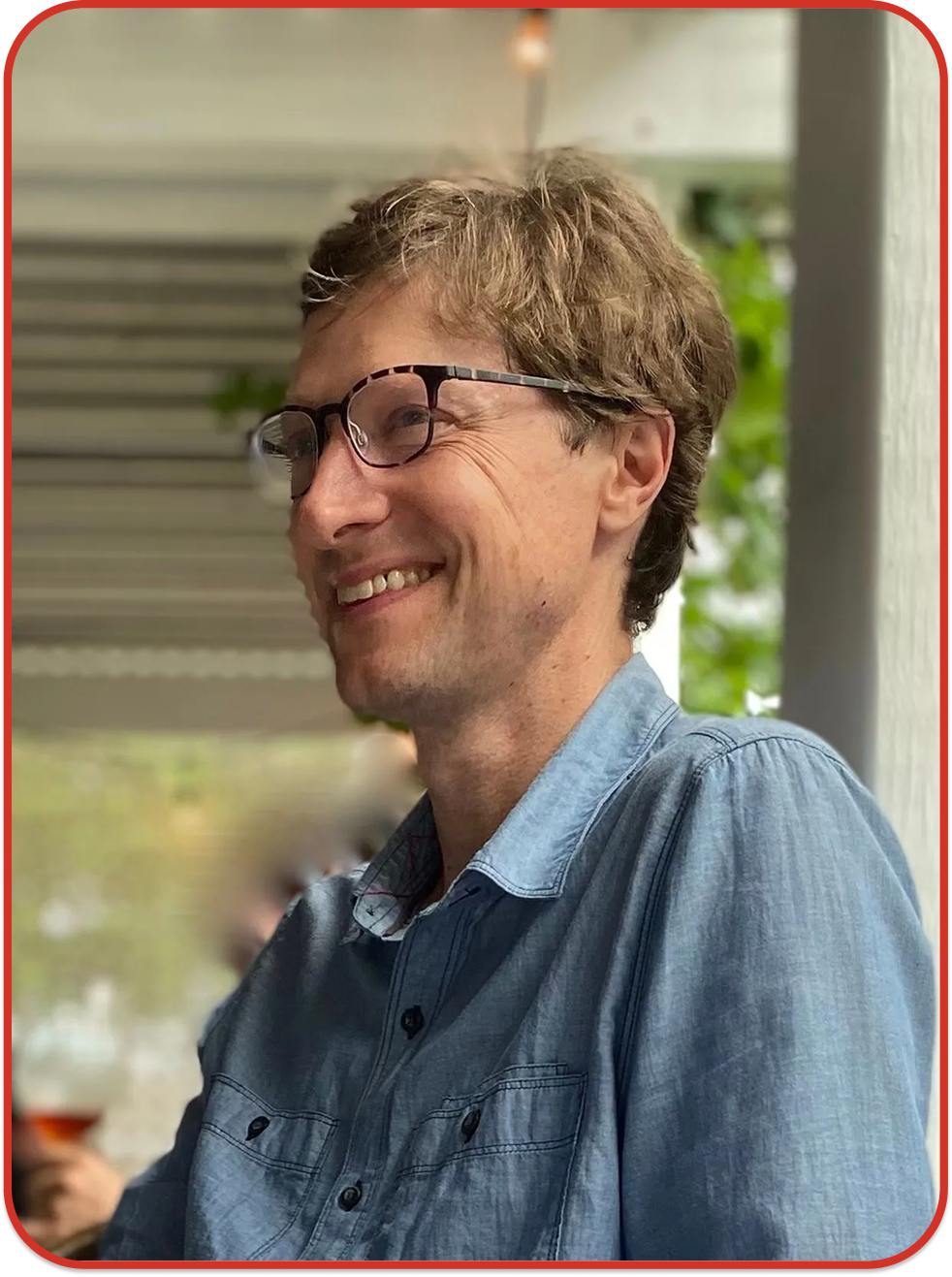
JEFFERSON NAVICKY is a poet and public historian. He is the author of four books, most recently, Head of Island Beautification for the Rural Outlands, a Finalist for the Big Other Book Award in Fiction, as well as Antique Densities: Modern Parables & Other Experiments in Short Prose, winner of the Maine Literary Award for Poetry. He lives in midcoast Maine.
Originally published in York Literary Review.
This is a work of fiction.
