



Hello fellow strange pilgrims, I’m excited to share that we’re going to do our first Substack live next week on Tuesday, August 25th at 12 PM ET. Shannan will be speaking to literary agent Lily Kovacs who helped set up our partnership with one of the best literary agencies in the world, Curtis Brown!!
It’s totally free to attend live and we’ll be discussing what literary agents are looking for, the publishing world today as it relates to and affects folks trying to enter that space professionally, as well as how literary magazines like ours fit into this space. And a lot more, I imagine!

If you’d like to be reminded about the event, then please add it to your calendar. This will be free for all our subscribers to tune into live, but the recording will be paywalled and shared with paid subscribers later in the week.

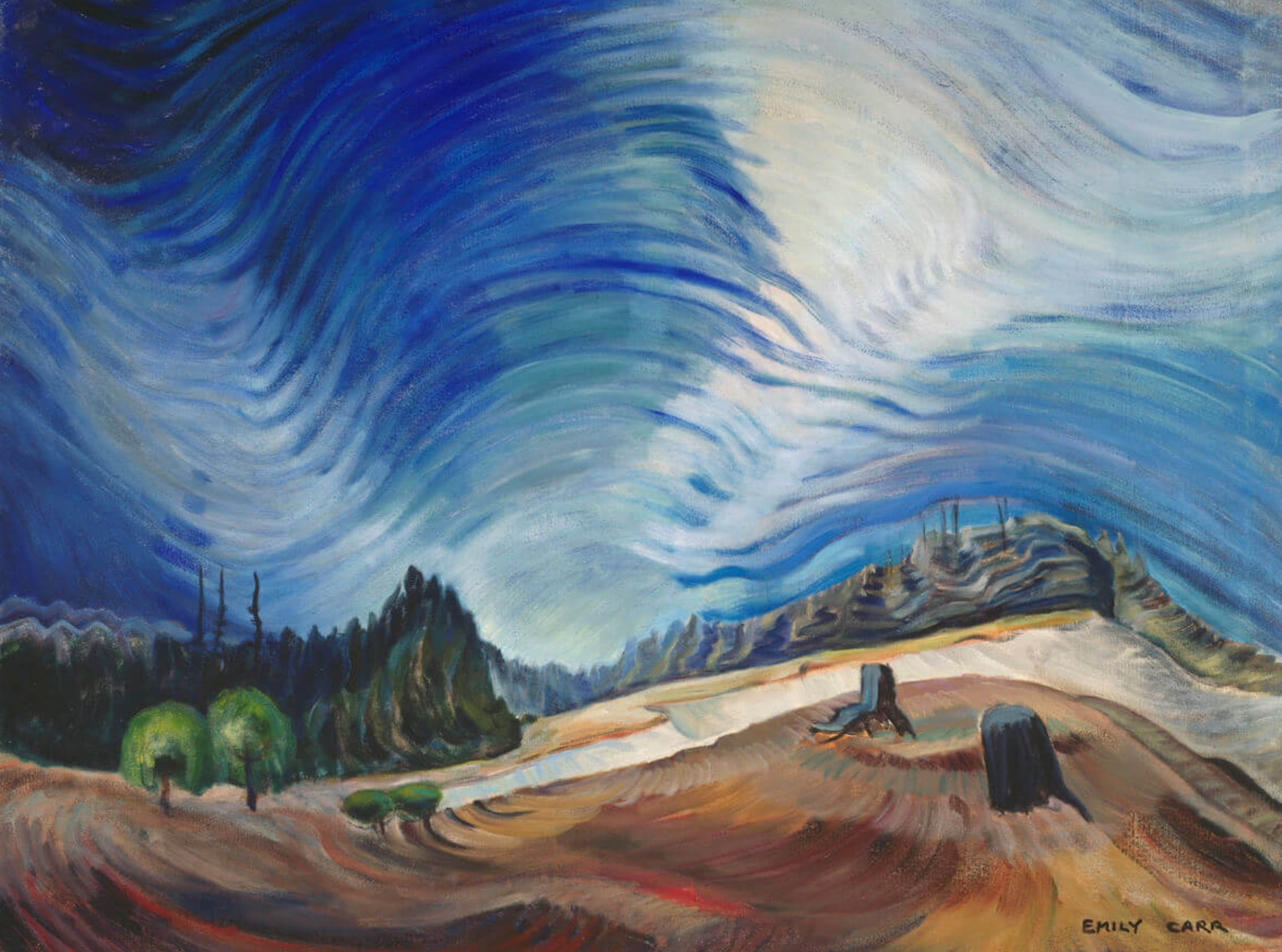

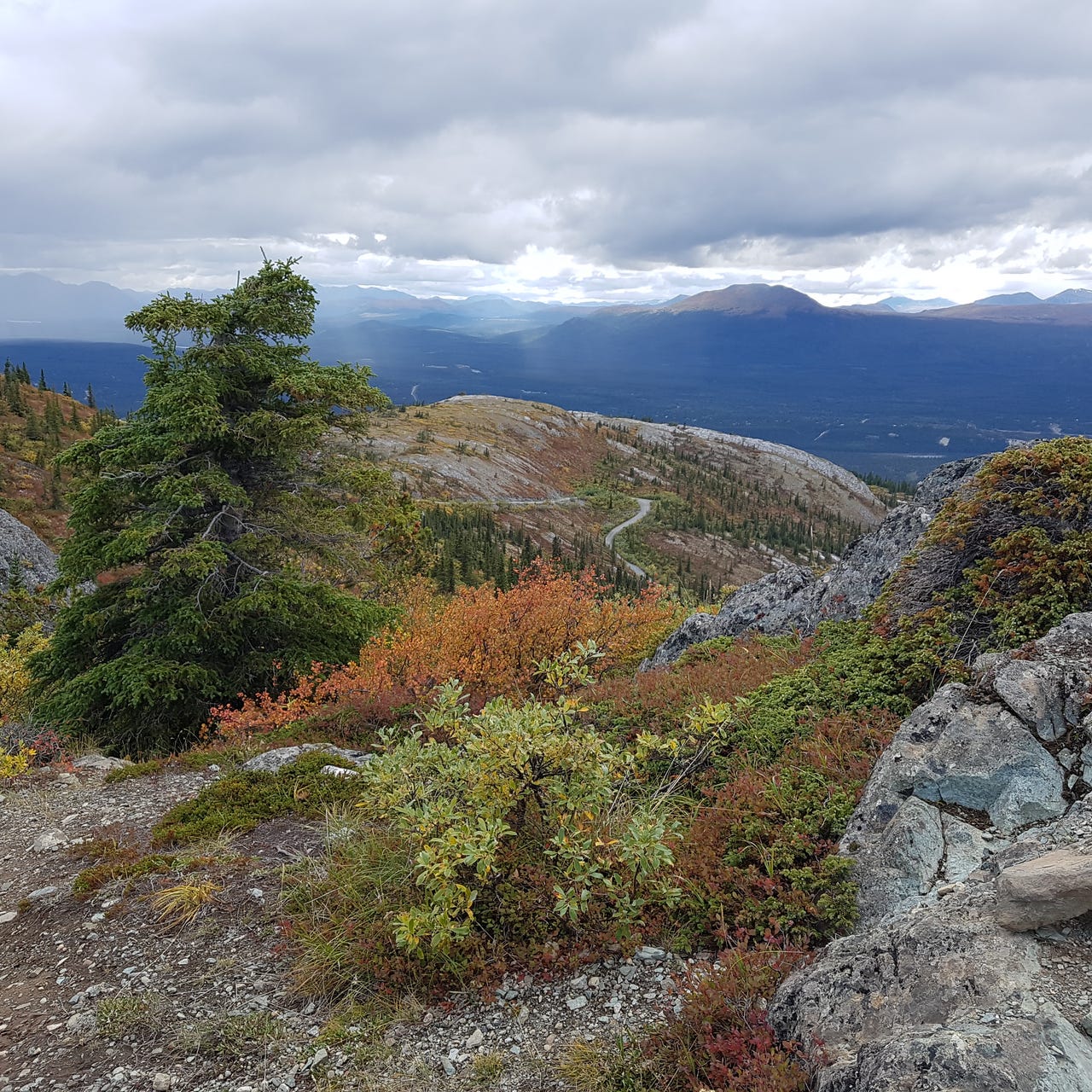
The summer of 2023 when smoke from the wildfires started blowing into the big cities down South is when I found out that woodsmoke is bad for you. Every year the northern Boreal lights on fire. It’s part of the regenerative cycle of the forest, and absolutely natural.
When I was growing up we had two woodstoves in the cabin, one for cooking that dated from around 1900, and for heat a pot-bellied stove that went back to the 1950s. In the summers we’d barbecue outside on a wood fire set in a sectioned forty-five-gallon drum left over from some mining operation. We thought woodsmoke was good for you, because it’s natural.
We thought the lead in the water was natural because lead is on the periodic table of the elements. Asbestos is natural, and radon. A little bit just toughens you up. At school they took away our white glue because it was unnatural, although I’d heard that glue is made from horses, but sniffing it was unnatural. Of course every kid that learned about the glue sniffing epidemic tried sniffing glue first chance they got, so that seems pretty natural as a behaviour. We were given mucilage for all our adhesive requirements, The rubber nipple was suggestive, and our paper cutouts, too thickly slimed, curled upwards away from the cardstock underlay. Exceptionally good work got a gold star or a Scratch-and-Sniff from the teacher. There was a grape Scratch-and-Sniff with a purple grape cluster pictured in its white circular frame, and a gasoline-flavoured Scratch-and-Sniff showing a gas pump with the nozzle lifted out of the cradle. Gasoline is made from dinosaurs and ferns, but not flowering plants or mammals because those are too new. Some of us had mammals confused with vertebrates and lizards confused with snakes. We made dioramas to illustrate the Cretaceous period, but they fell apart on account of the inadequacies of mucilage. It was the 1980s. We were warned about eating baloney because of the nitrates. We spelled it “baloney” which is the natural way, and not “bologna” which is weird.
We played in the woods after class and ate blueberries we found growing at the old minesite, which were way better than the ones from the store. “More concentrated,” we repeated, “and no pesticides.” We ate grayling from the lake by the quarry. We learned what to do if anyone swallowed a fishbone, or fell out of the canoe, or went swimming within thirty minutes of eating and got a cramp. We had excellent physical fitness. We rode our bicycles home along the shoulder of the highway, swerving in the gusts from the passing ore trucks. “Those kids sure are healthy,” said the teachers and parents and ore truck drivers. We got multiple sclerosis and colitis and head-and-neck cancers. We got tuberculosis and intestinal parasites. Whenever we went into remission we’d get right back out there, skiing, hiking up mountains, backcountry camping, living off the land. “Sure tastes better than store bought,” we said, and, gnawing dandelion roots with dirt still on, “a bit of minerals in your diet is good for you. It’s natural.”
Any big birthday was marked with a bonfire, and any memorial service just the same. Woodsmoke is good for you, its fragrance, its resin, its very nature.

1.
Tell us your origin story as a writer. When did you begin? What first drew you to writing as an instrument for asking questions that can’t be explored any other way?
DAWN MACDONALD: I started young but took my sweet time. The librarian at my elementary school very kindly photocopied some stories I had written (and illustrated), bound them in cerlox, and placed them on the shelves. However, I did not start to publish seriously until my forties. There was a long diversion in which I was “living life” and getting heavily conscripted into providing administrative support to other people’s artistic and entrepreneurial endeavours, mainly my boyfriends, so I have a cautionary tale in that regard. Your own art matters! Don’t forget to do your own stuff!

2.
What does your writing routine look like? Do you thrive in structure or wildness? And when you begin a piece of writing, what tends to announce itself first: a voice, an image, an unease, a philosophical conundrum?
DM: Yeah, there is no routine. I carry a paper notebook and pen with me at all times, to catch stuff on the wing. I’m mostly a poet, so it’s sometimes possible to catch the whole thing in one go (with minimal subsequent revisions). My attention span is really short, but also really sticky -- like I will keep returning to the same thought in 15-minute increments until it’s eventually gotten somewhere -- and short forms work well for that style. As a mostly-poet, it’s often turns of phrase that kick something off for me. But there are persistent themes that come back in new guises, which leads to the next question below...
3.
Most artists are preoccupied by certain obsessions: lust, longing, death, the self. What persistent preoccupation—emotional, intellectual, or spiritual—threads through your work? Are there motifs, themes, or impulses you’ve tried to abandon but that keep returning, insisting on their relevance?
DM: Insider-outsider stuff: who gets to tell a story? Who gets to say how a story should be told? I really did not want to write about the Yukon, where I am from. I was bored by all that “northerny” stuff. Then I titled my first book “Northerny.” I was bored by the usual portrayals of the North because they were not for me; they’ve tended to highlight those aspects of the North that strike the attention of someone coming up from southern Canada or the US. These aspects (sled dogs, northern lights, minus forty) are not remarkable to me. I’ve wound up writing a lot about that stance. Whose experience of the North is reflected in culture? I’m in an awkward set of positions myself, as a White settler descendent whose family arrived in the last generation, and we’ve still not heard enough of the other stories of the North, the stories of Indigenous citizens of modern self-governing First Nations, of International students and temporary foreign workers who’ve come here for reasons unrelated to old myths of the Klondike. Do those stories have to position themselves in relation to the established ways of telling, or can they be understood on their own grounds?
4.
If not a writer, who would you be?
DM: There have been lengthy periods where I was not a writer, but I always had creative pursuits. For a while I think I tried to express my creativity through expansive forms of living, and went a little hard. A creative practice can channel that perhaps more safely.
5.
What’s the best piece of writing advice you’ve ever received? Alternatively/additionally, what’s something you’d like to offer as advice to emerging writers trying to make a mark?
DM: Whatever is the thing you do in your writing that people keep telling you they hate, you should do that more, because it’s your one chance of originality. But as an additional piece of advice, I would say that you should quit drinking (if you ever started and haven’t already stopped). Either you don’t need to be drinking, in which case you might as well quit, or you do need to be drinking, in which case you really ought to quit. In any case, it isn’t helping your writing.
6.
What are you working on now and how is it trying to ruin your life (in a good, necessary way, of course)?
DM: I don’t know if I see myself as working on things. I’m tinkering and jotting and seeing what comes of that. Lately I’ve been messing with forms that mix my words with found text. I’ve done a set of “fake translations” and a few centos and a series of 14-line poems in which the first word of each line comes from the title of a scientific article in the journal “Nature.” These pieces have tended to veer back around toward themes of organic life, and the messiness of the body. I’m edging my way around how to talk about things I can’t say directly: secrets, undefined qualities, places where my story impinges on others’ stories that I don’t have the right to simply tell. This is an acutely uncomfortable space to be in, so you could say it’s ruining my life in that way, but I’d say it’s more--how to speak from the position of a ruined life?
7.
Who are the artists—writers, filmmakers, thinkers, internet oddities—that have shaped your sense of narrative? How have they rearranged the way you see the world on the page?
DM: My husband has pointed out that I’m a bit of a “bro” in my reading habits. I have a vast affection for a panoply of real “bro” writers: Charles Bukowski, Charles Portis, Ernest Hemingway in my youth, even the currently-unfashionable David Foster Wallace. I’m coming from a place that values macho presentation across genders, but also I’m obsessed by the ways in which people express themselves when their manner of expression is constrained. The cultural scripts of masculinity are one such form of constraint. Then for me, as being a woman with a heavy admixture of supposedly masculine qualities, what would be my “natural” form of expression, and what would be sayable or unsayable within that?
8.
Please recommend a piece of art (a painting, a film, an album, anything that’s not a piece of creative writing, really) that you love and would like everyone to experience.
DM: Chantal Akerman’s 1975 film “Jeanne Dielman, 23 quai du Commerce, 1080 Bruxelles” is an experience I recommend having exactly once. I’ll probably never watch it again, but I’ll never stop thinking about the one time that I did. It’s boring in a way that makes you question what boredom is, how repetition structures a life, and what happens if that is punctured. I was somehow riveted the entire three hours and twenty minutes, shot mostly with fixed cameras in a handful of positions, often showing the character from the back while she does household chores. I don’t know how to explain this. When I’ve tried to explain it to someone else the usual response is “that sounds terrible” but it is a feminist classic, and entirely worth your time.
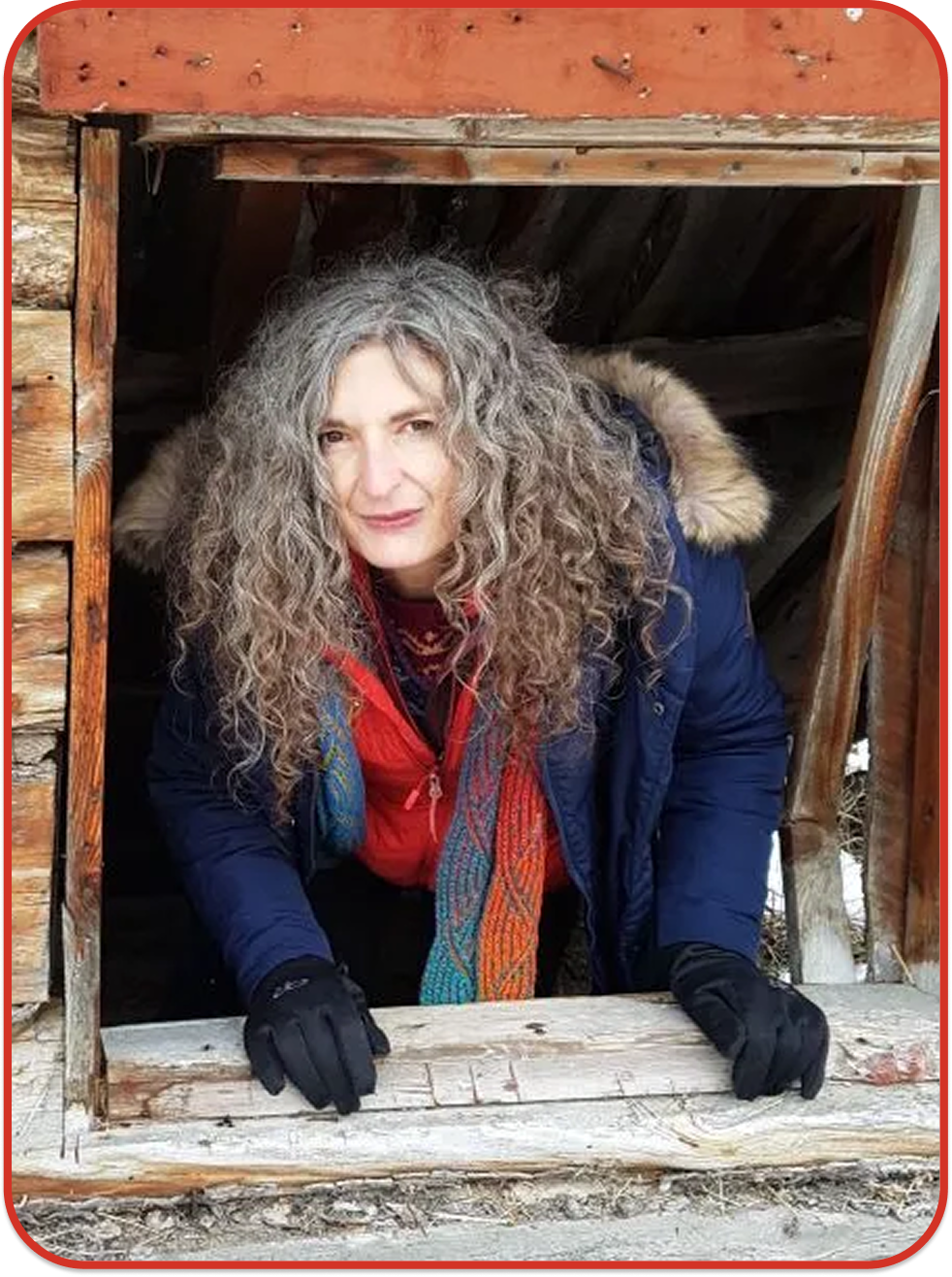
DAWN MACDONALD lives in Whitehorse, Yukon where she grew up without electricity or running water. Her poetry collection Northerny (University of Alberta Press) won the 2025 Canadian First Book Prize and was longlisted for the Nelson Ball Prize. Her latest publication is the chapbook Weeds of Canada (above/ground press).
This was just fantastic, and so was the Q&A!! Thanks for sharing, congratulations to Dawn MacDonald, I'll be checking out more work.
This was so poetically written. I felt like I was listening to a parent talk.