



Hello fellow strange pilgrims, this interview sprung from some great conversations I’ve had with Lily Kovacs (literary agent over at our prize partner Curtis Brown) about the literary world today, indie publishing, how writers find agents, how agents find writers, the AI problem everywhere, and so much more. I’m excited for you to read it. Lily is a wonderful human and an honest, very un-gatekeep-y literary professional.
Part of our goal with creating and running Strange Pilgrims is to make the literary world feel less like a void and more like a home you can walk into and feel comfortable in, you know, open up the fridge, grab a snack, hang out on the couch, that sort of thing? This interview is one more step in that direction. And on Tuesday, August 25th at 12pm EDT, we’re going to do our first Substack Live with even more in depth conversations about publishing and agents and a lot more. You can make sure you remember to tune in here:

★ Reminder ★
You can still send us stories and essays for the $3000 Strange Pilgrims Prize for Story of the Year! Everyone who submits is:
comped a paid subscription to our magazine
considered for general publication
considered for literary representations
and of course the winners and finalists will receive lots more cool stuff (besides the cash award).
Full Submission Guidelines + More Details ↓


If you’ve received anything good and worthwhile from us, please do consider upgrading to a paid subscription. But if you’re not able to or just don’t want to, it’s not a problem at all. We appreciate all our readers, and your support can come in many ways, beyond just monetary. Please heartily continue to share, love, obsess over, comment on, and in general read and go on engaging with Strange Pilgrims in whatever capacity you can. Thank you for making us possible!
Is there a book in recent times you wish you could have agented. If so, why?
LILY KOVACS: YESTERYEAR by Caro Claire Burke. It was actually agented by one of my brilliant colleagues Emma Finn here in the UK, so I got to see some of the behind-the-scenes on that. But I just think it’s a perfect example of a book that is deeply topical, and yet still has that timelessly immersive quality I’m always on the hunt for.

Day in the life of a literary agent:
LK: Usually a precarious balancing act of admin, editorial and entertainment! As agents, we are responsible for negotiating and drafting contracts, handling rights queries, invoicing advances, processing permissions, and being a general point of contact for our clients, so all of that has to be done before we can pursue some of the more creative tasks. Then we are actively reading submissions and anthologies, editing manuscripts, and of course pitching to editors, scouts, producers. Publishing is also a very social industry where relationships are everything, so there’s lots of lunches and drinks to go around too.
What’s the part of this job that writers/people most consistently misunderstand?
LK: I would say probably just how busy we are. Agents — and really anyone who works in publishing — are almost always overworked, and there is never enough time or resources for anything. We read submissions and edit manuscripts mostly in the evenings or on the weekends, because our standard hours are usually filled with meetings and admin. So I would say to writers that it’s unfortunately completely normal not to hear back from an agent for months, as we are probably just waiting until we have the space to give a query the proper consideration it deserves.
People often talk about how they “fell in love” with a book. When/if this happens to you, what precisely goes on?
LK: For me, falling in love with a book usually means falling in love with the characters or the atmosphere. Those are two aspects where, when they work, I’m completely drawn to a book, and when they don’t, then it’s probably not for me. I have a strong imagination, so if a character sticks with me, I often find myself thinking about them and what they might be doing long after I’ve finished the book. As for the atmosphere, a strong sense of place or a distinct “vibe” (not the best word and always hard to explain, but I always think of how putting “Tumblr” after a word during an image search generates such a specific style — it’s that, but in a book) are guaranteed to pull me straight into a world or a mind and keep me there.
How often is a no actually about the writing, versus timing, market, or what’s already on your list?
LK: I would say the writing is always the priority. From my experience, if the writing is really compelling, it can often override anything else. So we as agents do operate writing-first. The market aspect is about pitching the story in a way that the potential positioning is clear to editors and booksellers, but I think that becomes more relevant later on and is ultimately the agent’s job, not the writer’s. Timing is probably the second biggest contributing factor to a rejection. The publishing industry operates on a contradiction. The process itself is very slow, meaning that editors tend to acquire titles 2 or sometimes even 3 years in advance of publication. If a book is too trend-based, it might not resonate quite as much by the time it actually comes out. On the other hand, agents and editors get tired of these trends a lot faster than audiences do, due to the sheer volume of our reading. So an agent might say no to a submission because they have read too much of that particular kind of book, even though there might be appetite for it in the wider market.
Can a story or essay collection get agented and ultimately, sell? What has to be true for this to work?
LK: Yes, but it’s much harder than traditional novels or non-fiction. Because a collection is made up of lots of independent universes or ideas, it’s more difficult to create a pitch for the book as whole. Readers like to be immersed and publishers like a “branded” campaign, both of which are tricky if there is no consistency or returnability across the stories. They are also harder to sell in translation, which is sometimes a factor. In order for it to work, I would say it helps if the writer has a pre-established reputation through other formats or if there is a genre attached, as those can create a unifying element to build pitches and marketing around.
Do agents ever read lit mags to discover talent, or is that a myth writers tell themselves?
LK: Absolutely! I would say many agents actually prefer to discover talent via lit mags or anthologies, because they have already passed an initial stage of curation. It is an unfortunate reality that submission inboxes are just not an ideal medium, as the format for querying through there is always the same, so it can be more difficult to stand out. In contrast, lit mags often have themes, illustrations, author interviews, etc. that allow for a more comprehensive reading experience for agents, thereby making it easier to fall in love with a piece of writing.
Where’s the line between “unclassifiable” as the thing that excites you, and “unclassifiable” as the thing that makes a book impossible to sell?
LK: While I enjoy a certain degree of experimentation, I’m not really someone who is excited by an “unclassifiable” story. I love subversion, challenging the norm and genre-bending, but I need there to be characters, some kind of plot, a clear structure and punctuation (looking at you Cormac McCarthy) in order for me to enjoy the writing. So in a way, I guess that’s the line for me!
What’s the strangest thing you’ve ever taken on?
LK: A book called IN TRANSIT by Brigid Brophy! Hers is one of our literary estates, so it was more of a rediscovery rather than a “taking on”. It’s a book that kind of defies explanation, but it very loosely regales the story of a gender revolution at an airport. First published in 1969, it was way ahead of its time!
You read an enormous number of openings (lines/paragraphs/pages). What do you know or rather, what do you want to know, by the end of the first paragraph/page?
LK: Most agents request the first three chapters or first 10,000 words of a manuscript, but on average read only one or two pages before they know whether they are going to ask for more material or not. For me, I would say I want to know by that point who is telling us the story and what the central engine is. Every book needs a catalyst pushing the characters to action, and if this is not identified early on, then I find it hard to connect with the story.
What makes you stop reading?
LK: Some of my “red flags” are too many characters introduced in a short amount of time without proper development, over-describing the setting rather than actions or characters’ thoughts and multiple POVs that are not distinct enough. Another one that is probably just subjective to me is short chapters. I find that they rarely work, unless it’s a very specific stylistic choice. I think they propel the story forward at the expense of depth.
“Voice” is the word everyone uses and nobody defines. Can you define it in terms of how you see it?
LK: An excellent question! I’m just in the middle of reading THE VIVISECTORS by Missouri Williams (I’m desperately trying to make my way through the Booker longlist before the winner is announced) and I think it’s the perfect example of a book with a really strong voice. Other recent ones that come to mind are THE PRETENDER by Jo Harkin and PALAVER by Bryan Washington. It’s definitely a hard thing to define. I would say if you take away all of the individual characterisation and plot points, the writing that remains is the voice. It’s the vantage point from which the author chooses to approach the narration or the gateway into the story. If it has a distinct quality to it, say an apathy or a propensity for a certain kind of observation, then that is a voice that sticks with me.
What should a writer ask an agent before signing — and what’s a red flag on the agent’s side that writers don’t know to look for?
LK: What their editorial and larger creative vision is. Writing a book is obviously a very personal experience for a writer, and reading it is for agents as well, but there is also a commercial product at the end of it. I firmly believe that every book needs editing. Not necessarily because parts of it are bad, but because as a writer you have access to insight about the book that readers don’t have, so there are always elements that need clarifying or refining that you just won’t pick up on. Oftentimes, however, writers can (understandably) be very protective of their writing and end up having friction with their agent down the line when their editorial notes are not well-received, even if they are in the writer’s best interest. So I think it’s important to establish early on what you want that relationship to look like. A red flag on the agent’s side is probably overpromising. Debuts especially are increasingly hard to sell and so every agent should be managing expectations in order to establish trust with their client. If an agent swears they are going to get a six-figure deal and a film adaptation for your first book, they don’t know what they are talking about!
Are you seeing loads more AI submissions these days? Is it easy to tell right off the bat or do you find yourself on the fence? How much does it matter to you personally?
LK: Yes, piles and piles of them. Thankfully, it’s usually very easy to tell, because the submissions will include lots of repetitions, unnatural-sounding writing and AI-generated images. What is harder to tell is whether AI had been used in the writing process as a whole, not necessarily in the final submission. Ideas, plot lines or even certain phrasings could have been generated via AI, but then incorporated into an otherwise human-written manuscript. I definitely do not think it’s my place to push my opinion on anyone else, but I am a purist when it comes to AI usage in that I am absolutely against it in any shape or form. Detrimental effects on our individual creativity and independent thinking aside, its widespread environmental consequences are just not something I can in good conscience justify.
What are you hoping to find in the shortlisted writers you’ll be reading for the Strange Pilgrims Prize?
LK: Lots of strange, vulnerable, weird, honest writing! I want to see the world reflected kaleidoscopically through a thousand eyes and bask in the individual light of each one. I have so many thoughts about everything that is going on right now, and I can’t wait to hear what the brilliant writers on the shortlist have to say.
What advice do you give over and over that you feel not enough writers take to heart?
LK: Learn from your peers. Read all the books you can, and really think about what you like and don’t like about each one. Your writing comes from a deeply personal place, but technique and execution take time to refine. You are too intertwined with your own work to always be able to see it objectively, so look to what others have done.
What are you reading right now purely for pleasure?
LK: Some of the original CHOOSE YOUR OWN ADVENTURE books from the 80s! Tremendous fun.

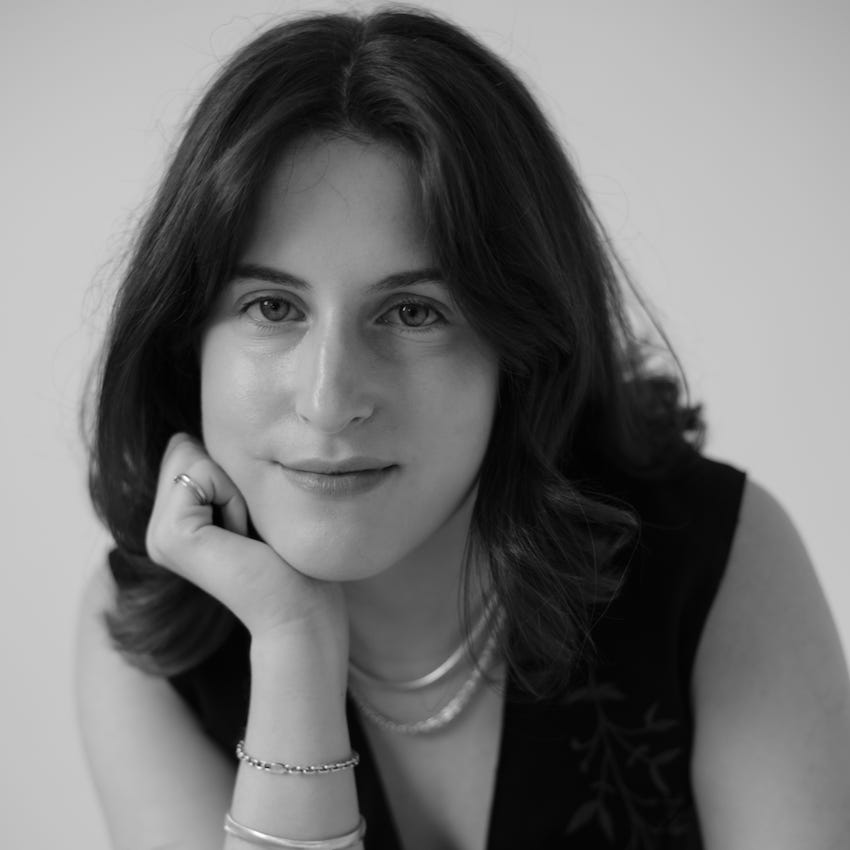
LILY KOVACS works across Heritage and the SFF Department at Curtis Brown. In her own words:
In terms of fiction, my favourite kind of stories blend narratives around suspense, mystery and psychological drama, and I especially love when this involves post-apocalyptic or survival plot lines. I’m also a big fan of a Gothic atmosphere, multigenerational sagas or morally ambiguous characters, as well as exploration of the queer experience. In non-fiction, I enjoy the riveting investigative journalism of (Empire of Pain), and raw vulnerability (Why Be Happy When You Could Be Normal?).
Across the wider SFF genre, I’m drawn to character-driven adventures, intricate and memorable world building, well-developed side characters, lots of banter, and slow reveals backed by subtle foreshadowing. Think Game of Thrones or Throne of Glass. I lean more towards fantasy than sci-fi, preferring varied and distinctive magic systems à la The Atlas Six, and am particularly on the lookout for a unique, non-elemental concept. I would love to find a speculative dark academia (Babel), an adult urban fantasy with a variety of magical creatures (The Shadowhunter Chronicles) and a magical realism-infused historical fiction (The Water Dancer).

Love your aesthetic and content. Strange Pilgrims is my pick for up and coming lit mag of the decade.
Is it okay to submit memoir pieces for the essay category?