



Hello fellow strange pilgrims, today’s published piece does not have our usual interview alongside it because the brilliant writer of the piece has just given birth to one of the most beautiful babies in the world and, friends, creating and bringing life into this world is a pretty good excuse to skip an interview, ha. In many ways, though, I feel this critique speaks for itself and I can’t wait to hear what y’all think, especially on this topic!


I’m not one to shy away from challenging conversations. In fact, if you were to ask my friends and family they’d probably indicate I actively seek them out. Speak with my Catholic grandmother about abortion rights? Sure thing. A conversation over drinks with my female jiu-jitsu friends about why they voted for Trump twice? Bring it on. Discuss the rise of cancel culture and sterilization of language in the literary world with other writers? Absolutely.
As a writer, these kinds of conversations feel natural to me—I believe words carry power, and that as artists we have a responsibility to engage our art with the world we find ourselves living in. We are products of our environment, after all. That’s why I write about violence against women; about climate change and environmental degradation; about religious abuse and control. The written word has always been a way to engage in conversation, to present ideas, perspectives, critiques, opinions, and lived experiences to a wider audience than our own social and familial circles allow. And, as readers on the other side, to be exposed to these things outside of our own, often small bubbles of existence. This has been true since humans first started putting pen to paper—from Dante to Machiavelli, Voltaire to Paine, Stowe to Melville, Wright to Orwell, Atwood to Morrison, and into the present. Their works (and works by many other writers) changed the conversations of their times. As a testament to the potency of such efforts, we’re still talking about their writing today.
It’s now 2026, though, and I’m worried about the state of art as a means of conversation. In particular, as a writer and a reader and a member of the publishing world, I’m worried about creative writing—whether fiction, poetry, or nonfiction—as a way for us to engage with the uncomfortable, with things outside of our own opinions, beliefs, or values.
In my first creative nonfiction workshop at my MFA program, I turned in an essay about having Guillain-Barre syndrome at the age of twenty—an autoimmune condition that led me to be temporarily paralyzed among other complications. It was a vulnerable piece, and one that I was proud of, as I had experimented for the first time with point of view in an attempt to capture the feeling of disassociation. I was eager to get feedback on whether or not it was working. But instead of focusing on the craft of what I had written, or trying to understand the intentions behind my approach, the conversation pivoted to a critique that the piece was inherently flawed. I didn’t acknowledge my privilege as someone who could access good hospital care in an emergency, or who could travel to Rwanda while taking time off from college, and as a result, a reader apparently wouldn’t feel empathy for the narrator (me).
In many ways, I am privileged—I am a white, cisgender woman who grew up in a financially well-off household. But that wasn’t the point of my essay, nor did I think it necessary to include that I worked two jobs for over a year while a full-time student to afford my international travels. I left the workshop that night feeling upset and confused. Having never been in a creative writing workshop before, I began to believe this analysis of work was the standard, an analysis not focused on craft but on the individual behind it (and whatever opinions, privileges, or beliefs they were presumed to hold). This idea was reinforced as I began to work with various literary magazines and engaged in conversations about whether or not to accept pieces of work. Why were we willing to publish writing that spoke badly of Christianity, but not anything that felt overtly religious? Why was a straight author not “allowed” to write a queer character? If an author had publicly held an anti-vaccine stance, or refused to wear a mask during COVID, why did that mean we shouldn’t publish their story on a completely unrelated topic? If a poet was a Zionist, why did that automatically mean their poem was “wrong”?
The conversations we were having about writing were often not about the quality or craft of the writing itself, but its alignment—and the author’s alignment—with what we believed was “right.” If a piece made anyone uncomfortable, if it challenged our own held beliefs, if the author identified in a way we disagreed with, then it was often dismissed as not being a good fit.
Looking back, it’s not surprising to me that this is where we’ve found ourselves. We are living through some of the most polarizing times in recent history, where differences in opinion and belief are more often a catalyst for disengagement (and hatred) than conversation. From cancel culture to book banning, to the shit show that is US politics, the effort on both sides is to silence anyone we disagree with rather than seek an understanding.
To me, this is a dangerous place for us to be.
Speaking with writer friends, many feel afraid to share or seek publication for anything that steps outside of what has been deemed “acceptable” in literary circles, even if it is true to their existence. And for those in the publishing sphere, there is a fear of publishing something that is later deemed to be controversial. But where does this leave us? If art is meant to be a form of conversation, what does it mean for us if that conversation has become increasingly one-sided and “safe”? What does it mean for us as artists if we are falling victim to the same narrowness of thought that exists around us?
To be clear: I don’t believe there is any reason to publish work that is inherently hateful or violent, that is racist, sexist, or promotes harmful rhetoric. But I do believe that art is for everyone, and that a diversity of opinions, perspectives, and beliefs make for a more well-rounded and compassionate society. I think, for example, that we should be willing to read and publish the work of someone who voted differently than us, or who holds beliefs about the universe that are different from our own. We should be willing to listen to someone’s experience even if it doesn’t fit our view of the world or how one should live in it.
I’ve been vegan for over a decade, and my husband is a voracious carnivore. We don’t agree, clearly, on what the best way is to eat in this world. I believe that a vegan diet is the best choice I can make as an individual to combat climate change, and that if I can get sufficient sustenance elsewhere there is no need for me to kill an animal to meet my needs. He believes that human beings are meant to eat meat while acknowledging that killing an animal for food is not an easy thing to do (he cried the first time he killed a chicken), and asserts that animal agriculture is an essential—and natural—part of a sustainable ecosystem for growing food. We’ve spent hours discussing what we both believe, sometimes heatedly, but it hasn’t changed our diets. I’m still vegan, he still eats meat. But through the conversations we’ve come to understand each other and why we each hold the beliefs that we do. We respect the freedom each of us has to eat how we want to. He makes me vegan meals, and I buy him meat from the grocery store.
More often than not, engaging in conversation with someone you don’t agree with won’t change your own opinion (nor theirs)—but it will help you to better understand where they are coming from and to see them as a whole, complete person rather than “the enemy.”
In “The Witch Trials of JK Rowling,” a podcast with Megan Phelps-Roper (an activist who was a former member of the Westboro Baptist Church), she presents listeners with five questions to ask in order to see if you are open-minded or not:
Are you capable of entertaining real doubts about your beliefs or are you stuck on certainty?
Can you articulate what evidence you would have to see to change your belief?
Can you articulate the opposing viewpoint with clarity and in a way they would agree with?
Do you cut off relationships over disagreements on this belief?
Are you willing to use excessive means against those who disagree with you?
I think these are the kind of questions we should be asking ourselves as writers and readers, as ,publishers of other people’s work. These questions don’t ask us to change what we believe, but to be open to conversation. Imagine if we started workshops or editorial meetings with these questions at the forefront?
I hope to be engaged in the literary world for my whole life, but I think we need to move away from a fear-based approach in our writing, reading, and publishing to one rooted in curiosity and compassion. If we don’t, we risk losing the potency of our art form. We risk contributing more to the problems of our times than rebelling against them. Art is meant to be a conversation—we just have to be willing to engage with it as such.
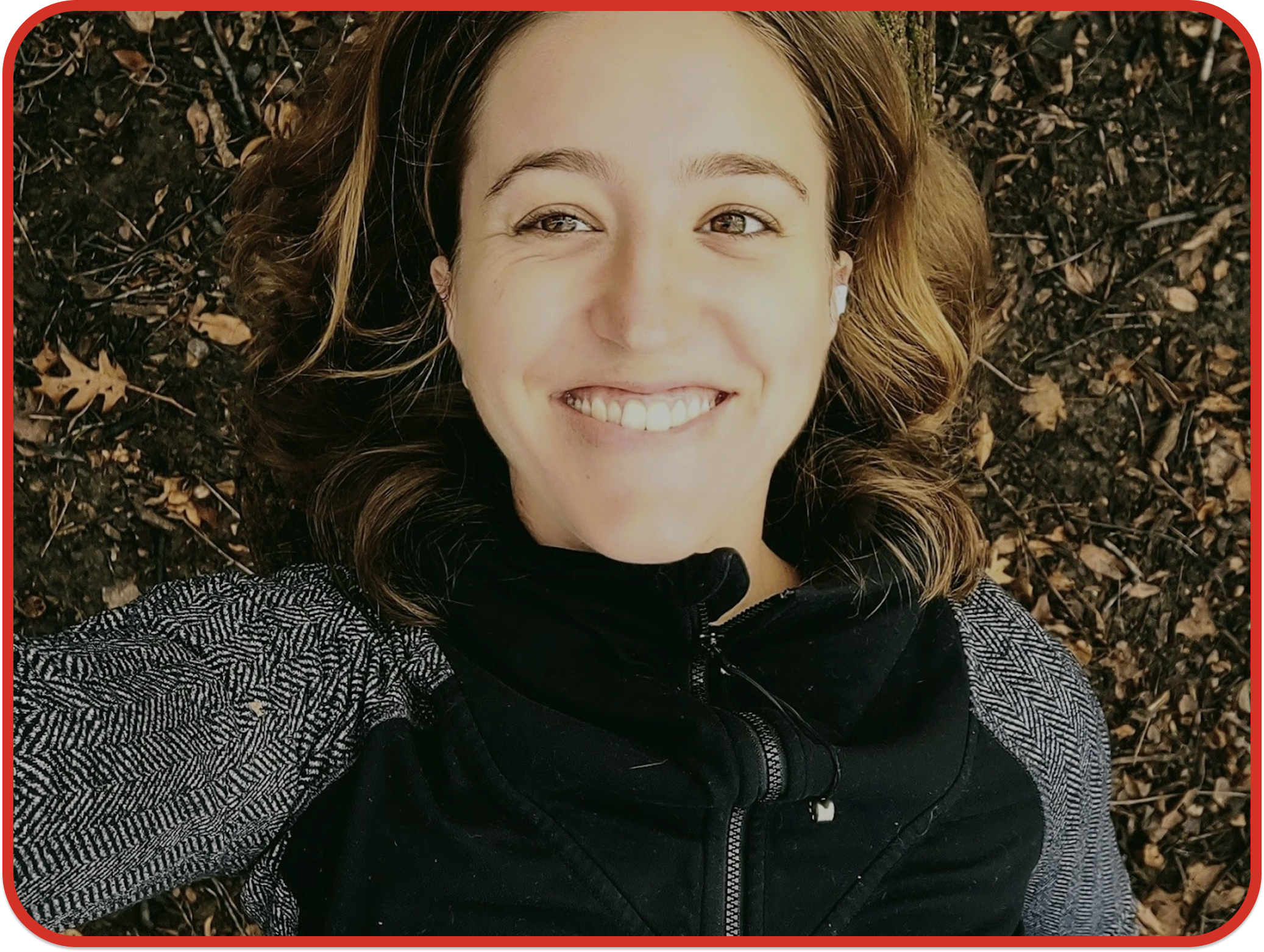
Justine Payton holds an MFA from the University of North Carolina, Wilmington where she was a recipient of the Philip Gerard Graduate Fellowship and the Bernice Kert Fellowship in Creative Writing. She has been published in Writerly Magazine, The Keeping Room, Wild Roof Journal, HerStry, The Masters Review, Roi Fainéant Press and others. Her first book, Between Our Legs: Silence-Breaking Personal Narratives on Gynecological Health, is coming out shortly out from University Of Iowa Press!

Notes on Art
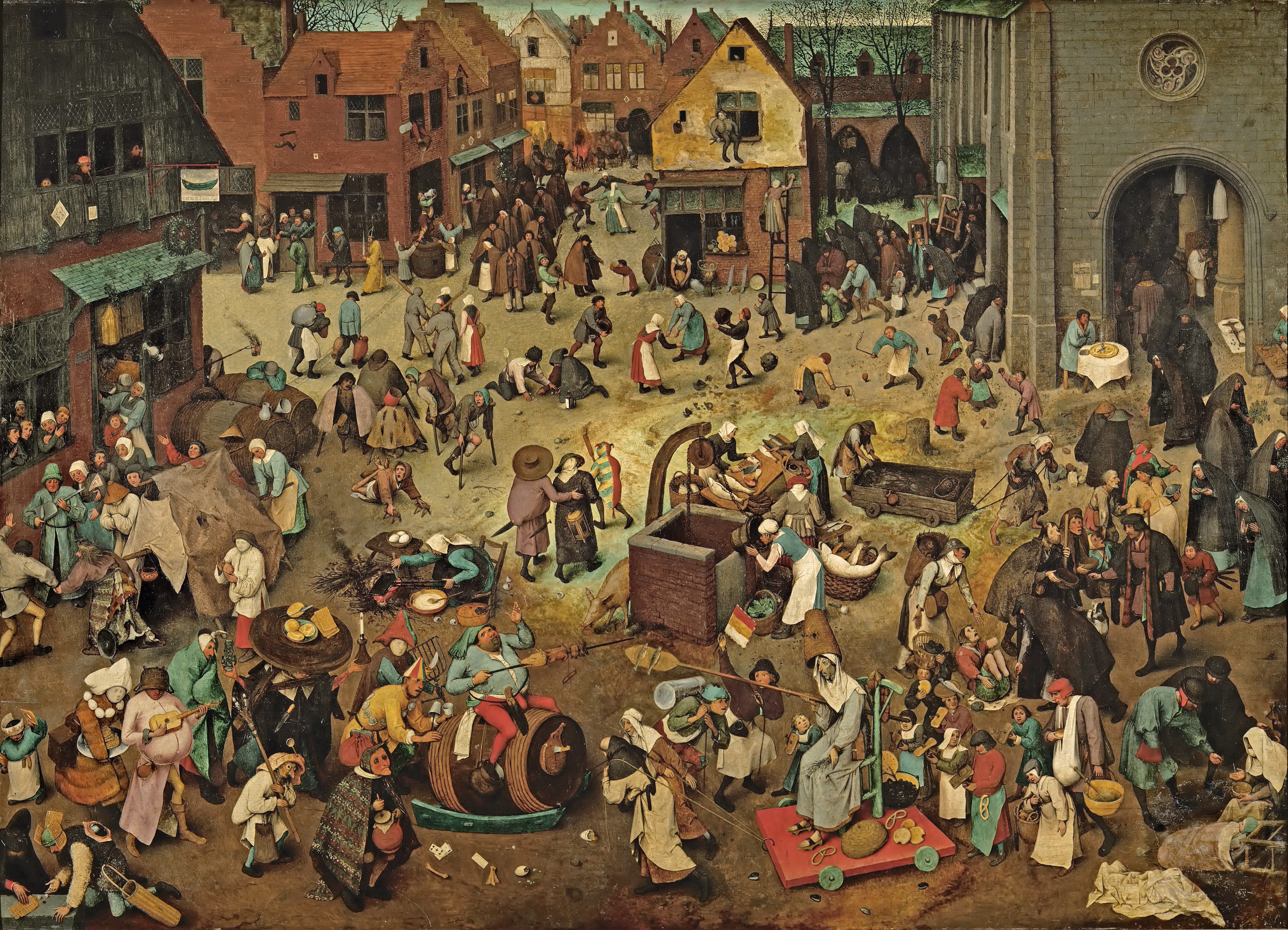
We’ve paired this piece with The Fight Between Carnival and Lent by Pieter Bruegel the Elder (1559)1. I’m sure there are countless literary and art-criticism-y explanations you can read about this painting, but what it simply evokes for me is the strangely pleasant chaos of coexisting in society…of being alive together. And I think in a way this is what Justine’s critique above is asking us to be okay with also.
Image: The Fight Between Carnival and Lent by Pieter Bruegel the Elder (1559). Used for editorial commentary purposes only. All rights reserved.

I'm a little confused. The author says she had never been to a creative writing workshop before, and implies this is the reason she starts believing "this analysis of work was the standard". I'm guessing there's other sources she absorbed this belief from, but without context I can only assume that she had a bad experience with one creative writing workshop. This absolutely might color one's perception of such workshops, but I find it a little unfair to come to the conclusion that all analysis will be the same at *every* workshop after only having gone to one of them.
I think that including context does a great service for writing, especially when we think about who might be reading it. Art is profoundly shaped and informed by the beliefs and perspective of the artist, no matter the topic at hand; this is something I learned as early as high school AP Literature, so I will never agree with the concept of a clean separation of art from artist - it just can't be done without harming the art itself.
When I'm writing something, I often like to think about who it's for, not on a commodification level, but on the level of a dialogue between a creator and their audience. Art carries an implicit message, an implicit belief, a feeling that was had when it was made, because it's a form of communication as well as entertainment. Writing an autobiographical piece, you are sharing a slice of life, like a story or a narrative from your own life experience. Is it that weird to expect that readers will want to know more about your background and where you come from, in order to more concretely place themselves in your shoes and see the ways in which they relate to you, and the ways in which they don't? In my opinion, empathy comes more readily when you can get a fuller picture of someone's life, including the ways in which they deal with socioeconomic & material constraints such as class status, employment, cultural background, because these are important factors in a person's life experience.
The people giving critique might have not used the best language for it, or might have come off too strongly, but I do think it's valuable advice to think about how you're communicating your ideas or your experience to other people while you're writing about it. Like everything else in writing, it's an incredibly difficult balance and you risk ruining the flow of the story, but the same things can happen with exposition, dialogue, etc.
The part of cancel culture that I do think is truly harmful and even scary, and that I have seen time and time again in creative spaces, is the aversion to even writing about negative or taboo topics such as sexual assault, paraphilias, stigmatized mental illnesses like bpd or aspd, racism/xenophobia, and other such topics, just because 'people don't want to read/watch something about that', or fear of grossing people out or offending them. The aversion to feeling negative emotion of any kind is one that I think needs to be talked about more in writing spaces, and I was hoping this critique might go into that a little bit more, because I have been met with backlash from even *within* alternative spaces like LGBT and furry communities for making and supporting art that is just a little bit too "out there" and might risk offending some pearl-clutchers who oppose the idea that I should have human rights as a transgender person.
Excellent piece - the author's experience writing about her chronic illness only to be scolded for not being an example of an intersection of hardship really rings true to me. It shouldn't be about 'who wrote this' only it should be about 'what are they saying and why?" Too. But all to often now it's about communicating self only, and only the parts of self that are acceptable to the zeitgeist. Excellent piece.